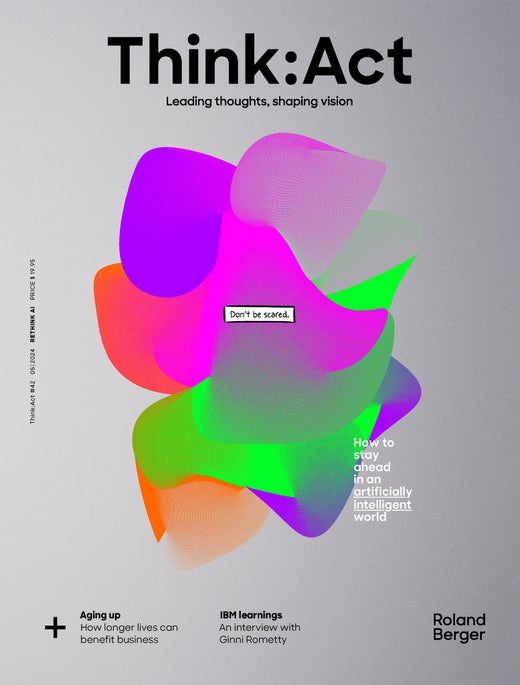

Artificial intelligence is opening up a brave new world. Think:Act assesses four key areas which the nascent technology will transform: the boardroom, the workplace, society and ourselves. How we respond collectively and individually to intelligent machines is set to have a long-lasting impact.
The rapid rise of artificial intelligence, or AI, was the headline news of last year with a number of major breakthroughs that have resonated into 2024. These systems can now compose marketing campaigns and analyze medical imagery. They can comb through resumes and purport to better match applicants with required skills. But they also invent statements and can provide guidance on building bombs and bioweapons. They repeat and amplify toxic tropes, giving long-standing biases a deceivingly factual facade. And they use absurdly large amounts of computing power, all of which has implications for carbon footprints. Yet the enterprise world as well as private users can't get enough of AI, with each week bringing more news of breakthroughs and such systems – for the most part based on large language models – going off the rails or leaking proprietary data.