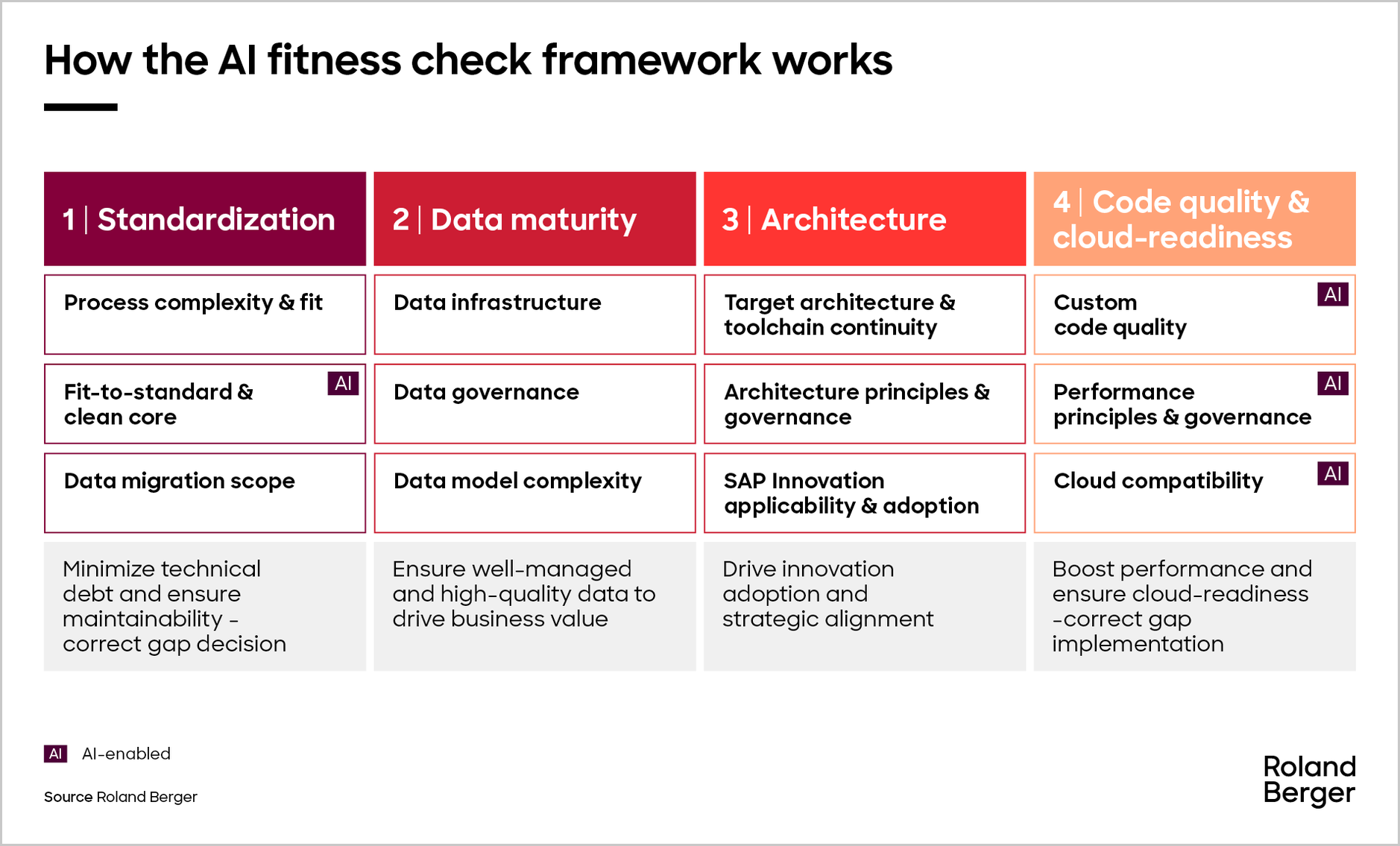
1. Standardization and deviations in process and system design
The AI Fitness Check digs deep into the details: Is the logic behind deviations sound? How cleanly is the gap between the standard and customization being implemented? Will the ERP template design support long-term adaptability and efficient maintenance, especially with a view to the adoption of
agentic AI
capabilities? Or could questionable decisions run up a heavy technical debt going forward?
2. Data quality and maturity
A mature, unified data foundation is of crucial importance for any company looking to deploy AI agents at scale. Clean, semantically consistent data is the lifeblood of AI agents. Conversely, fragmented data leads to AI outputs that will ultimately be untrustworthy and even dangerous. The quality of the data itself must also be supported by a data infrastructure that is equally mature and unified. This requires well-designed data governance roles and processes, but also careful attention to deviations from standard ERP processes and the resultant data complexity.
3. Scalability of the architecture and toolchain
A third focus of the AI Fitness Check validates whether the ERP architecture will be able to handle future AI workloads and agentic systems. An ability to adopt innovations seamlessly and efficiently must be baked into the way the architecture is set up and governed if rapid ongoing developments in AI are to be accommodated at scale.
4. Code quality
Given that deviations from the standard are unavoidable in practice, it is vital to ensure that all customized code is developed cleanly and to a high quality. Only then will the overall system be able to deliver a quality of ERP workflows and outputs that lines up with the organization’s strategic ambitions.
As part of the AI Fitness Check, Roland Berger’s experts conduct workshops, analyze data and interview key people to uncover inefficiencies, misalignments and potential obstacles to future progress. Such obstacles can include fragmented data, inconsistent process standards and substandard legacy code that could hinder integration and automation.
From diagnosis to prioritized action
Identifying vulnerabilities and inconsistencies is only the first step. Next, we work closely with the client to channel all these outcomes into a prioritized roadmap across all four dimensions. Specifically, processes and templates are harmonized to clear a path to efficient AI deployment (standardization). The following step is to improve the quality, accessibility and governance of data in the interests of friction-free AI data models (data maturity). The architecture as a whole must be modernized to ensure that it remains flexible, secure and scalable (architecture). Lastly, customized code may need to be refactored and documented to facilitate rapid experimentation (in the context of generative AI, for example) as well as deployment (code quality).
The role played by AI in our AI Fitness Check
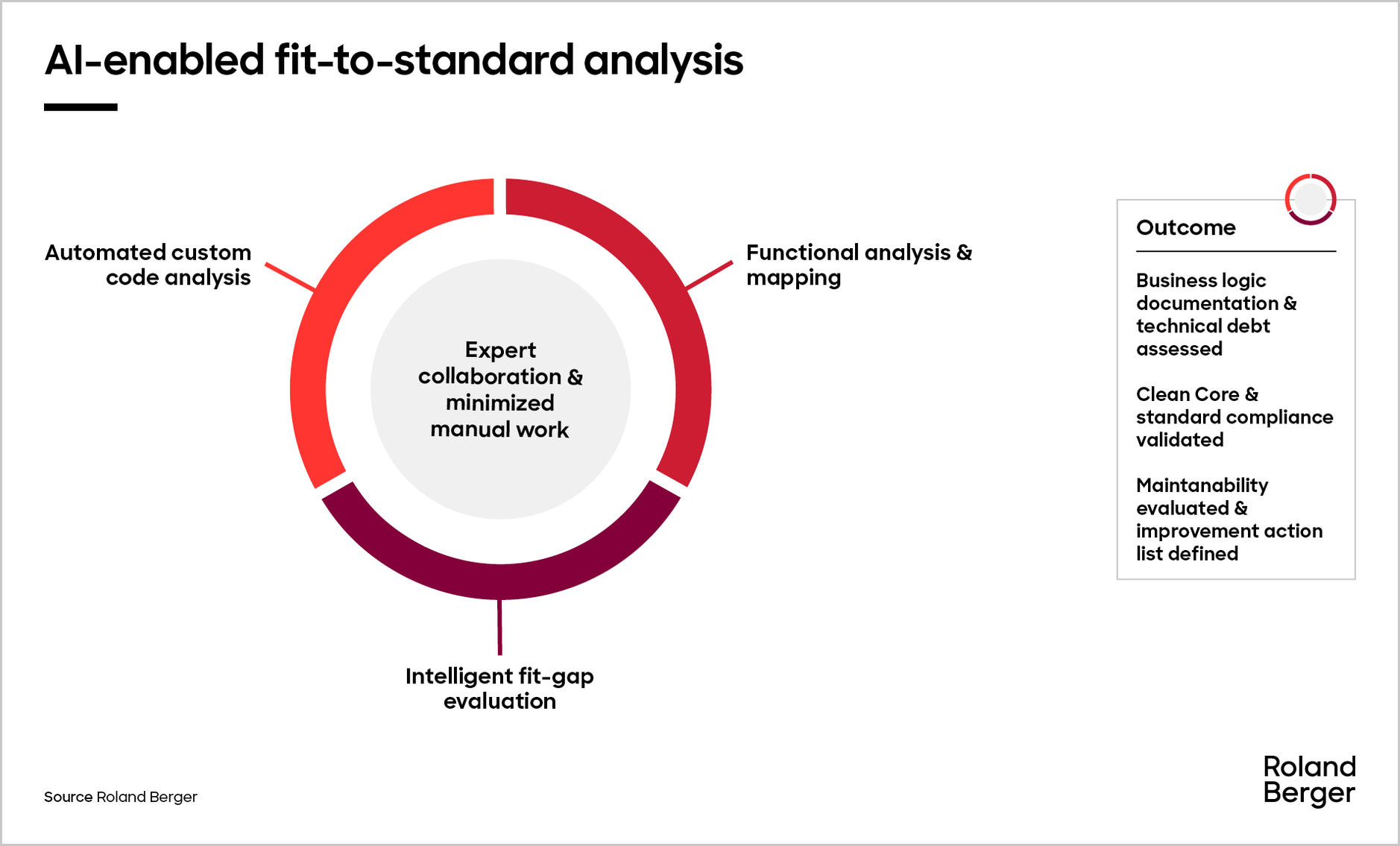
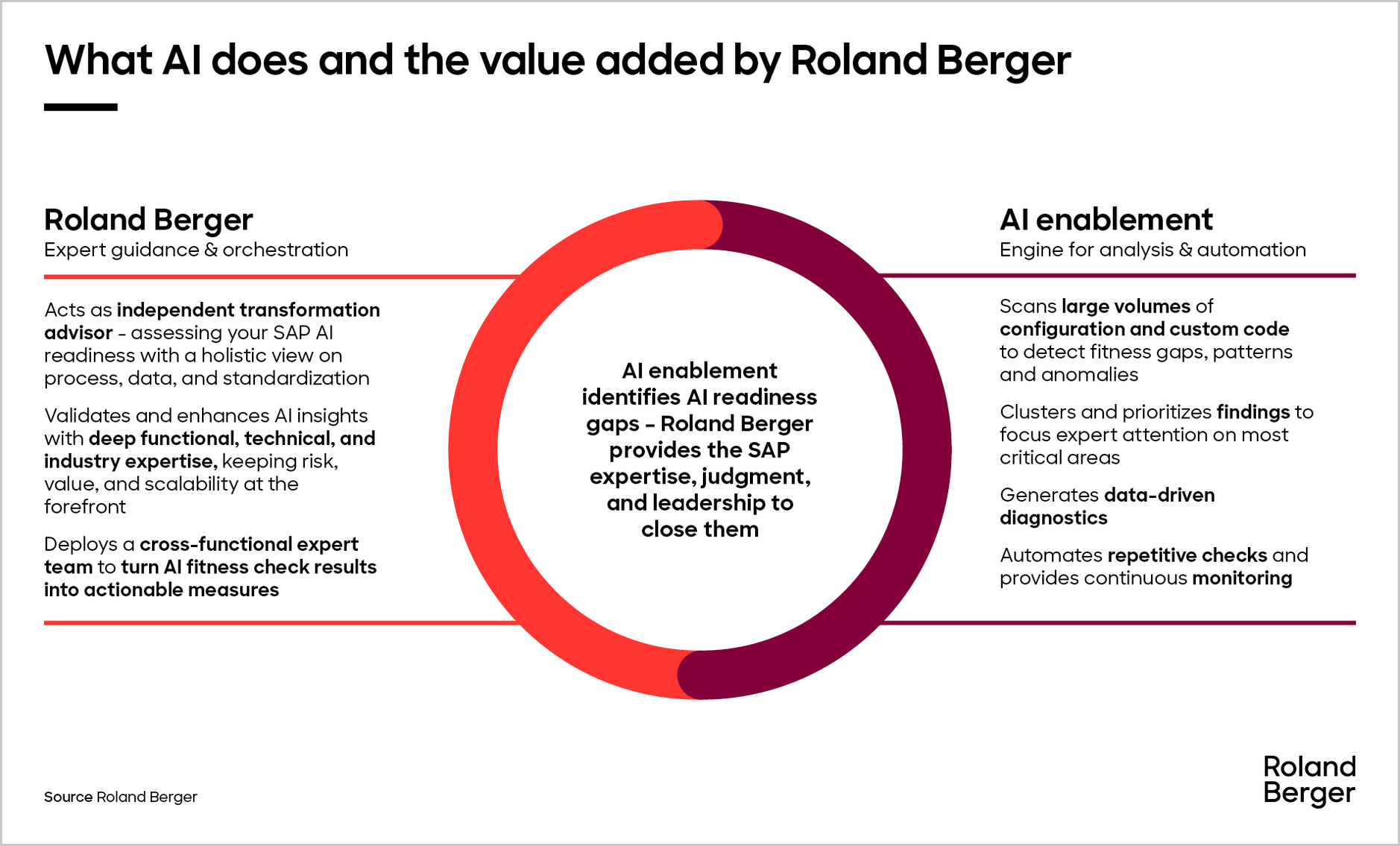
We actively use AI capabilities to streamline and accelerate various aspects of the AI Fitness Check itself. Examples are listed in the figure below – showcasing the gains that stand to be realized as agentic AI comes into play.