Looking Ahead
To stay competitive, global companies must quickly source their energy and raw materials from alternative sources. This will take time, however, which will result in even more short-term price increases and potential shortages. But it can be done.
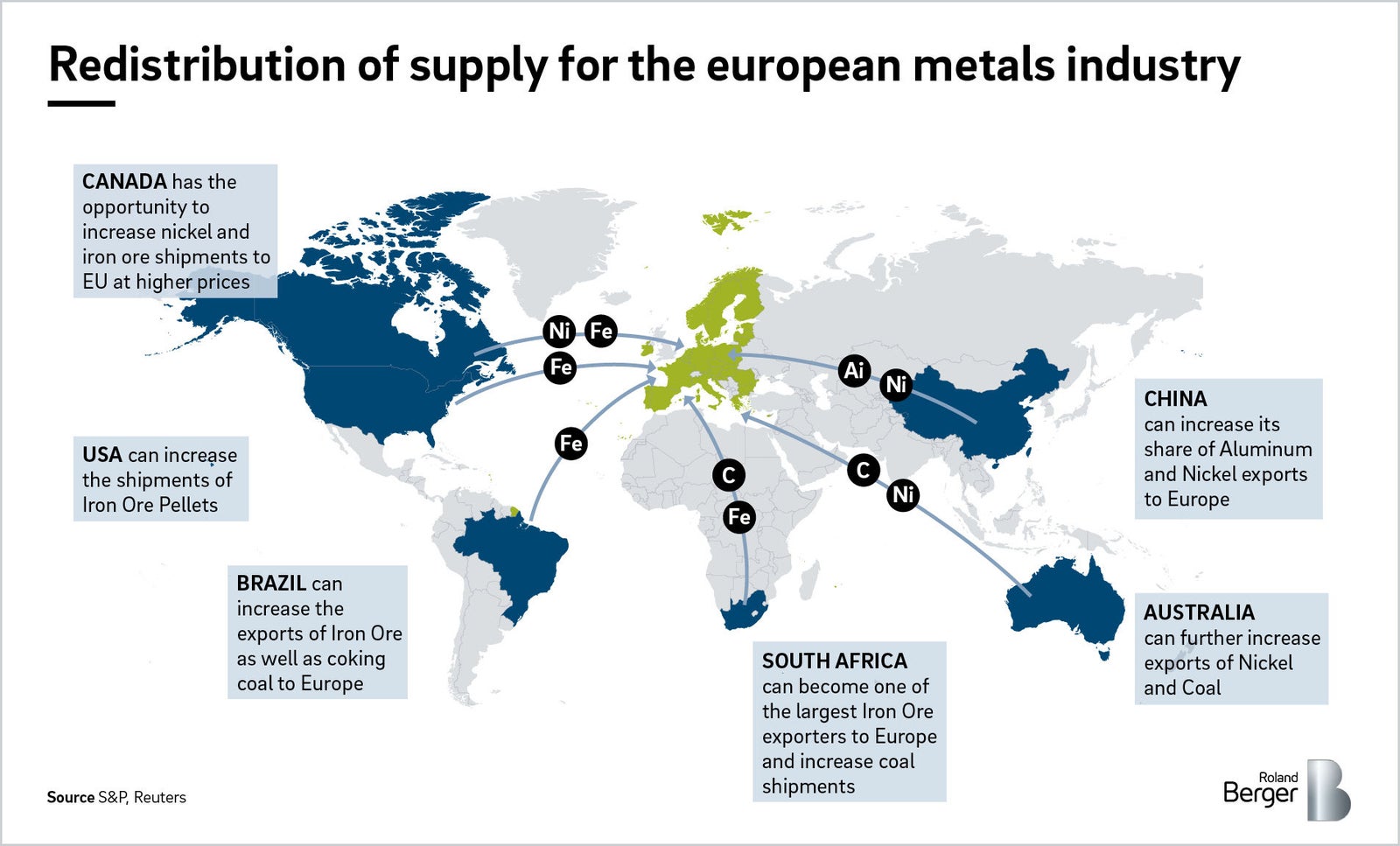
Take the metals industry, for example. Promising new exporters to Europe might include Canada (nickel and iron ore, albeit at higher prices), US (iron ore pellets), Brazil (iron ore and cooking oil), South Africa (iron ore and coal), China (aluminum and nickel), and Australia (nickel and coal).
To get the most from their future supply chains, companies must first assess their disruption vulnerability with potential exporters, and take advantage of risk transfer mechanisms such as “Order to Cash” and “Procure to Pay” cycles.
To help them accomplish this, Roland Berger has developed a "Designed for disruption" framework that allows global companies to navigate the a world with continued and intense disruptions. The journey isn’t easy, but based on our past client success, we know it’s attainable.
For more detailed information on the crisis and the most appropriate response to it, please read How increasing disruptions are affecting global manufacturing or contact us today