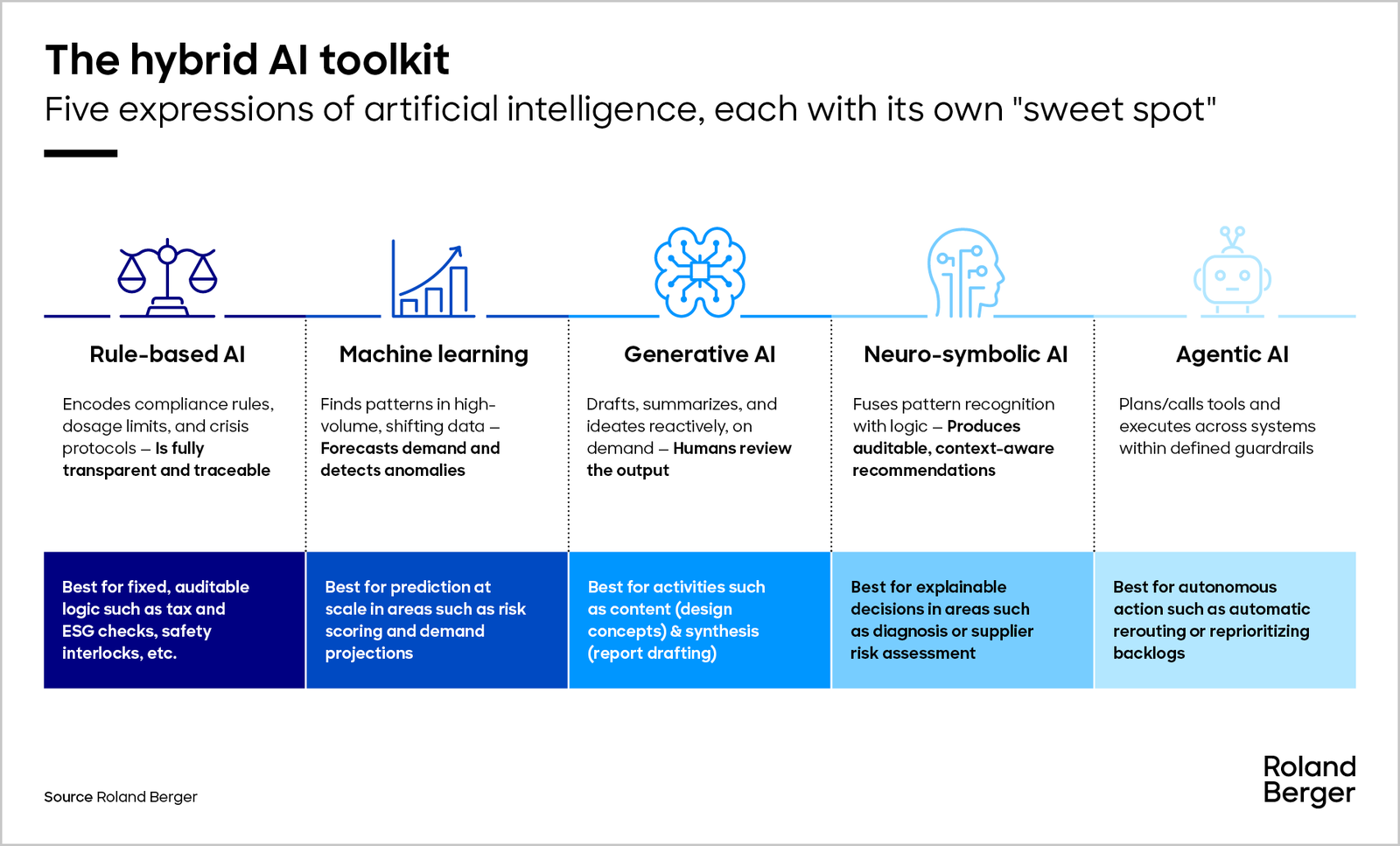
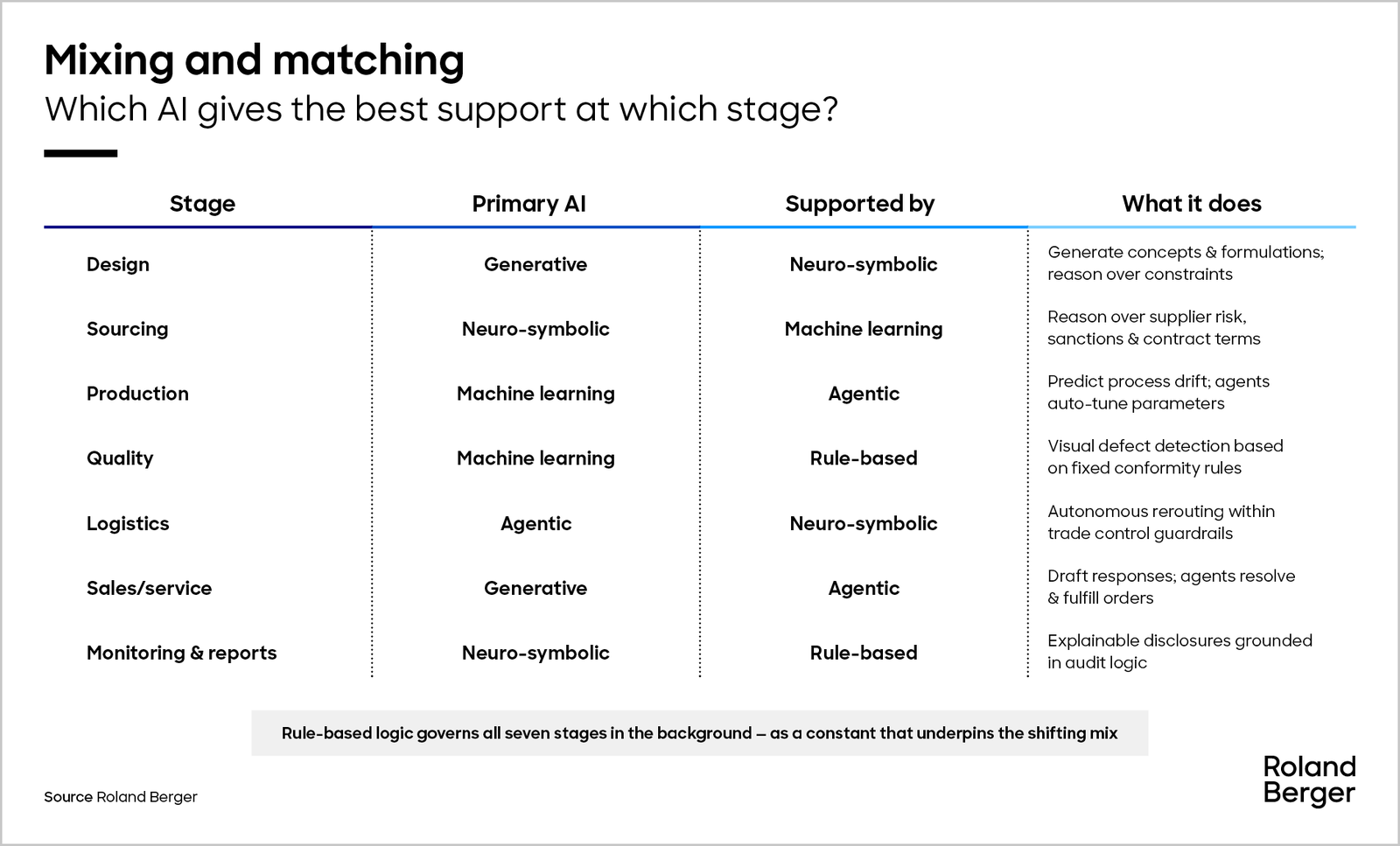
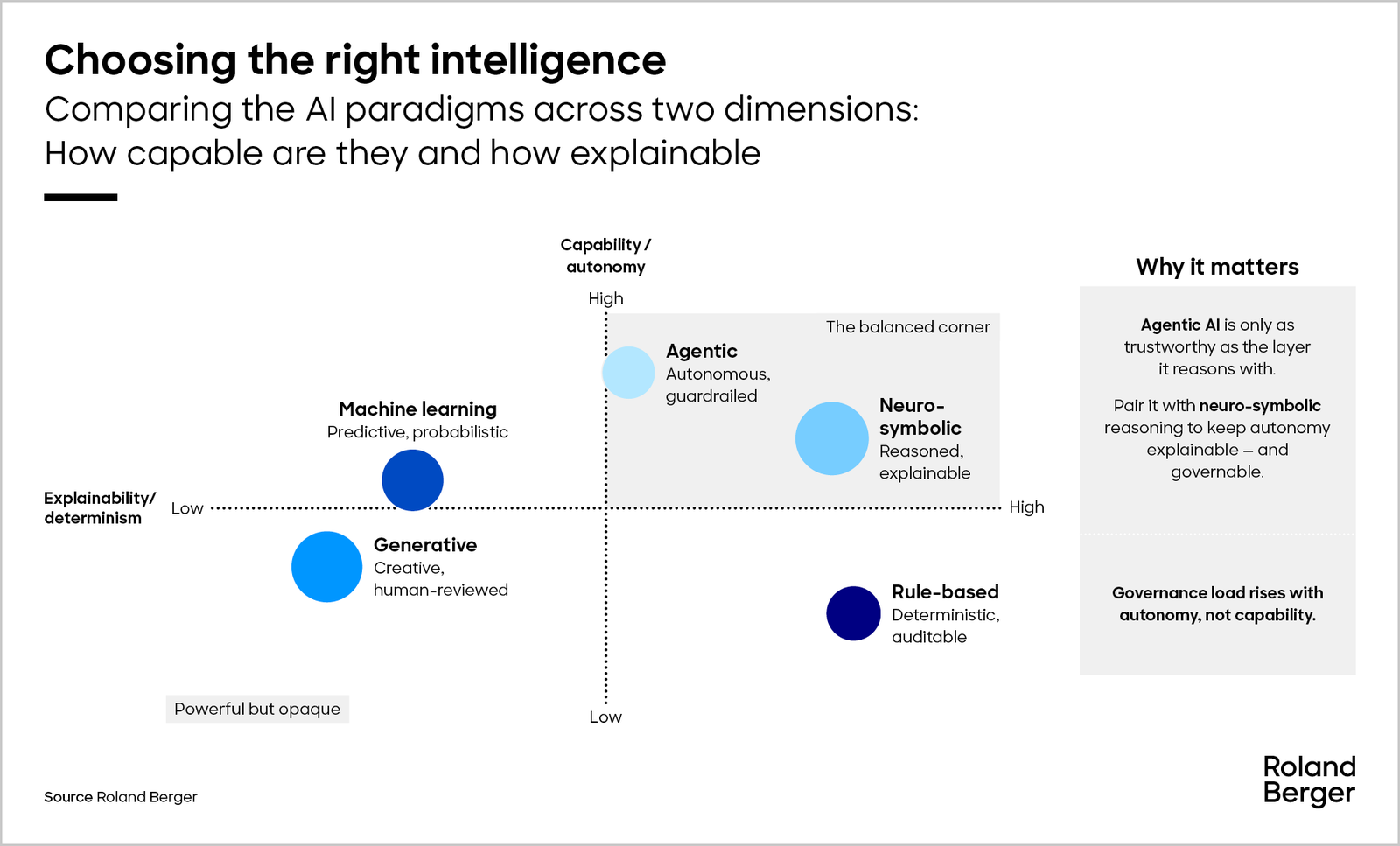
We believe that hybrid AI fills many of the gaps that most AI tools, often deployed in isolation, have so far been unable to bridge satisfactorily. But how? And what are the gaps that need plugging?
Why most companies are anything but resilient
The opposite of resilient is fragile or brittle. Easily breakable, in other words. This is an apt description of enterprises that are designed only for efficiency. They optimize in preparation for what they see as predictable conditions: streamlined processes, rigid and recurrent product roadmaps, quarterly targets, and so on. The problem is: The moment conditions shift, the system's fragility is exposed. Adaptiveness and agility are not built into a system that is efficient but has no room to maneuver. Decisions slow down as management ponders how to respond. Product development falls behind as competitors disrupt the playing field. Essentially, this situation reveals two critical gaps:
- Blind spots
Organizations are drowning in data but starved of insight. In a sea of unorganized and impenetrable data, risk signals hide in plain sight – buried in supply chain feeds, customer feedback loops, market sentiment reports. Management simply cannot connect the dots fast enough to act with agility, often because the data is spread across siloed systems.
- Static products
Traditional product management follows rigid cycles, such as quarterly reviews and annual roadmaps. But in a disruptive world, the market has often moved on before a product even gets to market. It is hard to sell a product that meets yesterday's needs today.
Taken together, these gaps become unbridgeable and can threaten a company's survival. A radically different approach is therefore needed – even to the AI tools in which so much hope is placed – if this situation is to change and brittle companies are to become adaptive and resilient. So, let's look at hybrid AI.