Policy shifts changed what investors value
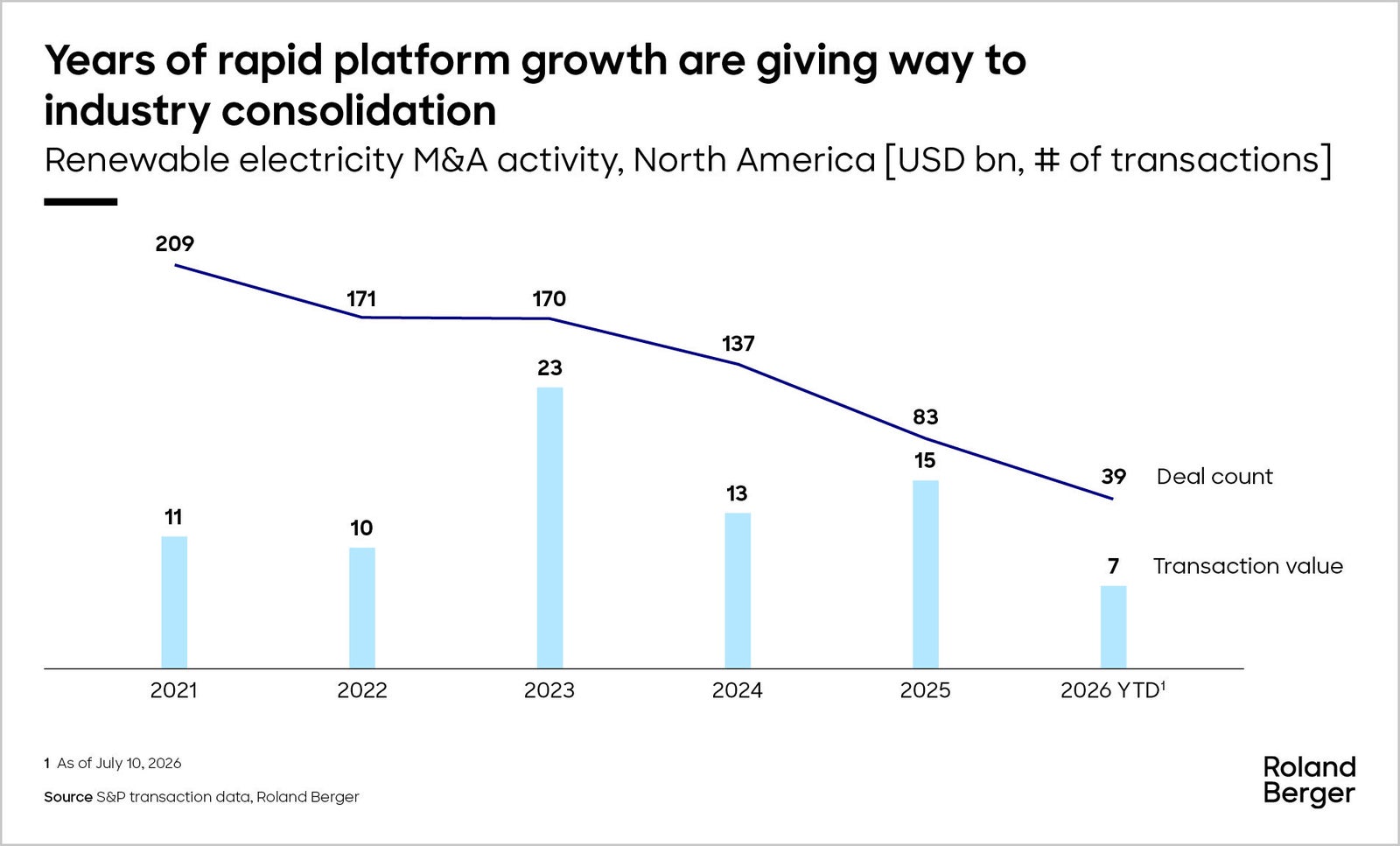
The market began shifting following FERC's 2023 queue reform, which increased the capital required to develop utility scale renewable projects through larger interconnection deposits, stricter commercial readiness requirements and higher withdrawal penalties. Combined with rising interconnection costs and longer development timelines, these changes favored larger, better-capitalized developers.
The shift accelerated following changes to federal clean energy policy in 2025. The accelerated phase out of tax incentives for many future renewables projects changed development economics for assets that had not already secured eligibility through construction timing or safe harbor strategies. Across the industry, developers focused on preserving tax credit eligibility and protecting the value of existing pipelines, while many delayed new project origination.
Financing also became more challenging. With interest rates roughly 500 basis points above early 2022 levels, policy uncertainty and wider valuation expectations made capital raises and strategic sales increasingly difficult, particularly for smaller distributed generation platforms (FRED 2026).
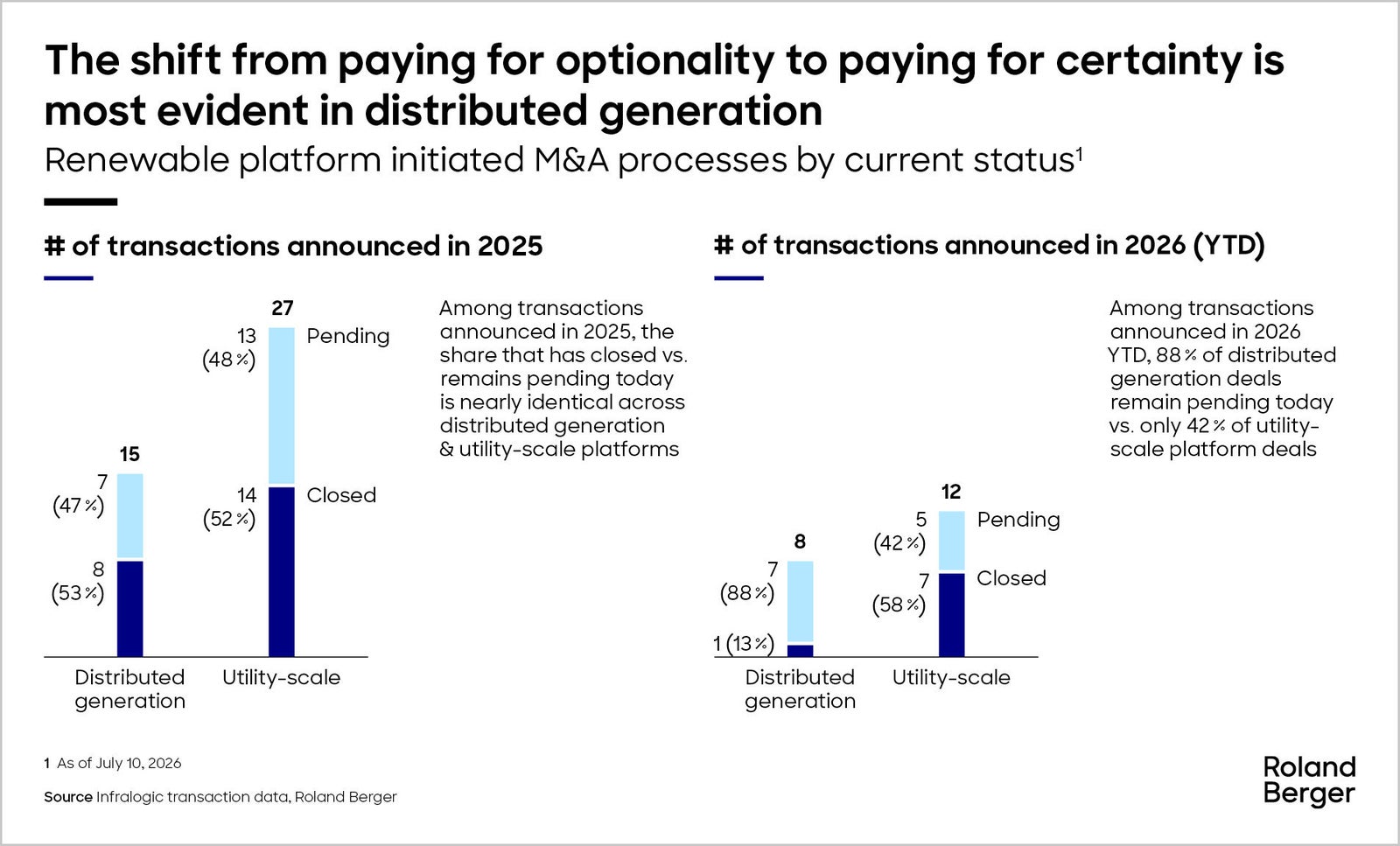
Over 40 North American renewable platforms launched M&A processes in 2025, with roughly half unsuccessful or still ongoing. This illustrates how quickly buyer underwriting standards changed.
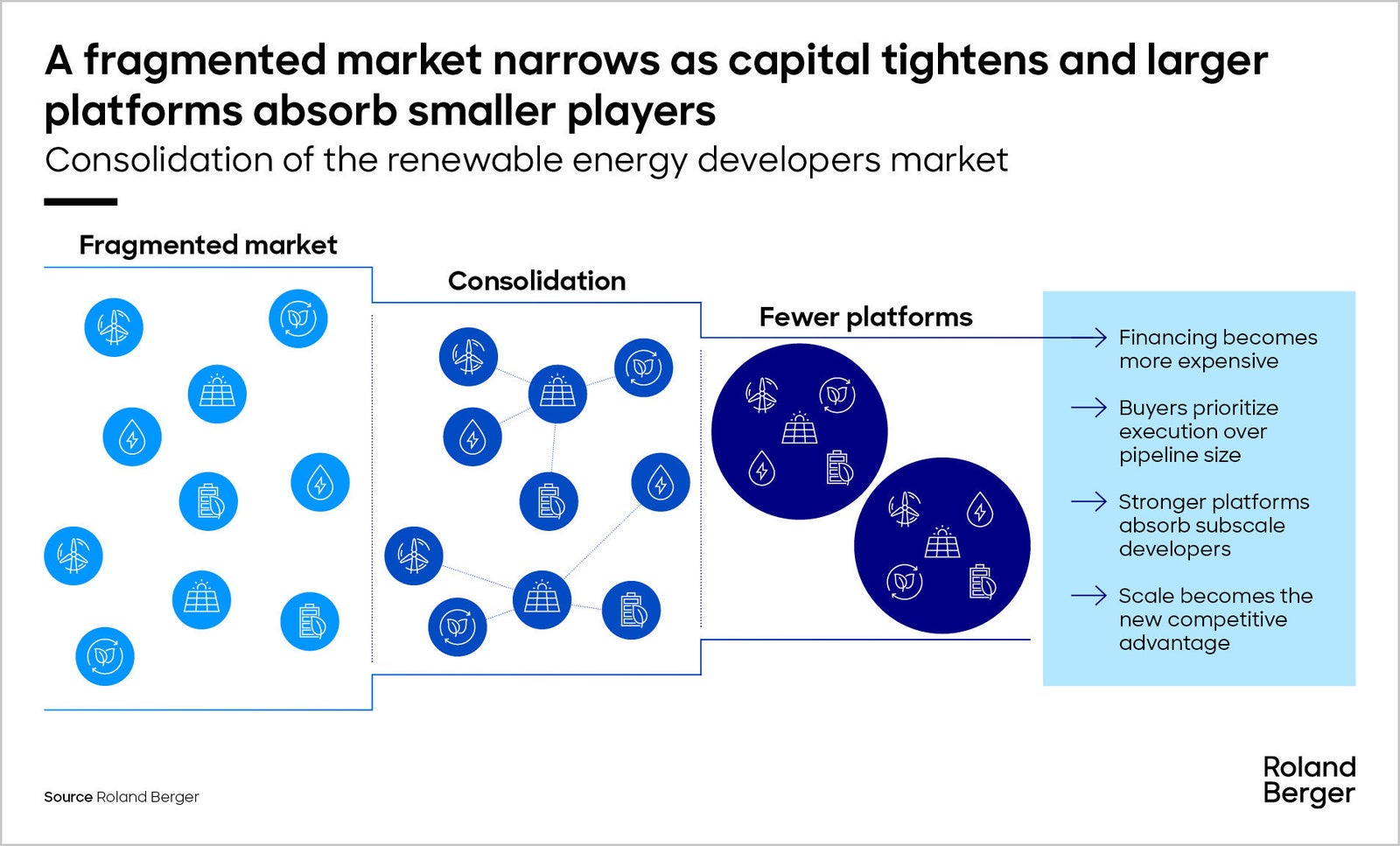
The distributed generation market remained particularly crowded and capital constrained. Many founder-owned platforms are seeking strategic capital to continue growing independently, while buyers increasingly prefer scaled platforms with meaningful operating assets and proven execution capabilities. This disconnect is creating attractive acquisition opportunities for well-capitalized consolidators.