Charging infrastructure expansion continues despite market headwinds
While EV sales declined, Romania's charging infrastructure posted a 33% year-on-year increase to just over 4,500 charging points. The rate may slowed compared with the previous year, but its continued growth reflects both ongoing private-sector investments and national recovery plan commitments.
For instance in May 2025, Romania opened its largest EV charging hub, on the A1 motorway, featuring 34 fast-charging points. Half the charge points have a 400 kW capacity specifically designed for electric trucks. This project, partially backed by European funding through the Connecting Europe Facility, represents part of a broader initiative to install 328 high-speed charging points across Romania in 2025.
However, progress toward the government’s target of 22,400 charge points by 2026 remains slow, with completion at around 20% at the end of 2024. While some major contracts have already been signed to further support EV charging infrastructure expansion, this ambitious timeline demands a major acceleration to stay on track for the 2026 milestone.
Consumers report charging concerns and low EV mileage
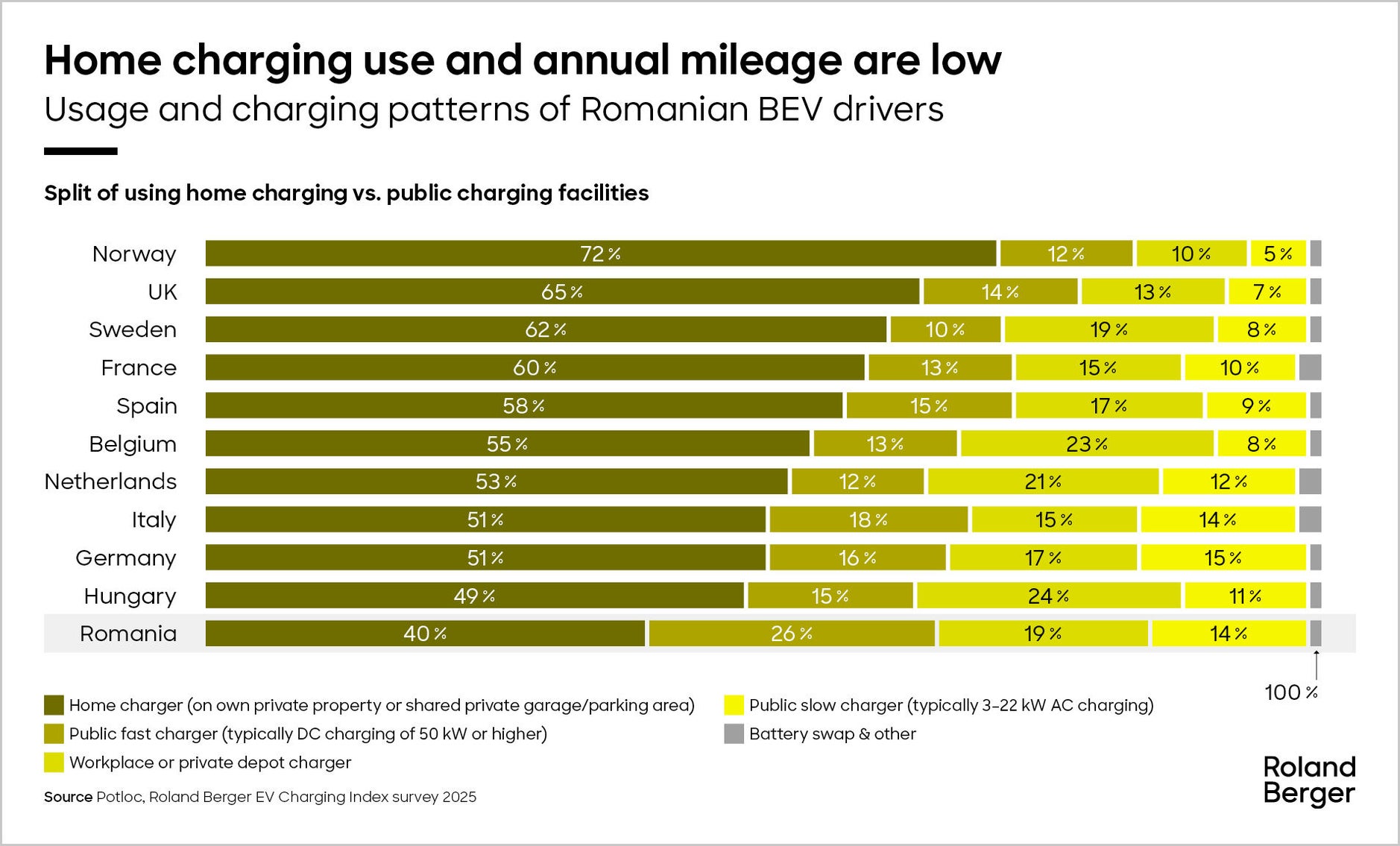
The latest EV Charging Index survey of EV drivers in Romania revealed distinctive usage patterns and persistent infrastructure concerns. Romanian users demonstrated one of the lowest home charging rates globally at approximately 40%, with 38% lacking access to any home charger. This dependency on public charging infrastructure places additional pressure on network sufficiency.
Despite infrastructure expansion, 60% of respondents considered public charging insufficient, while almost half cited charging times as too slow. On the positive side, the share of public fast-charging usage reached 26% of kilometers traveled, among the highest globally, reflecting the availability of DC fast-charging infrastructure. In Romania, 42% of public charge points are DC – more than double the European average of 17%.
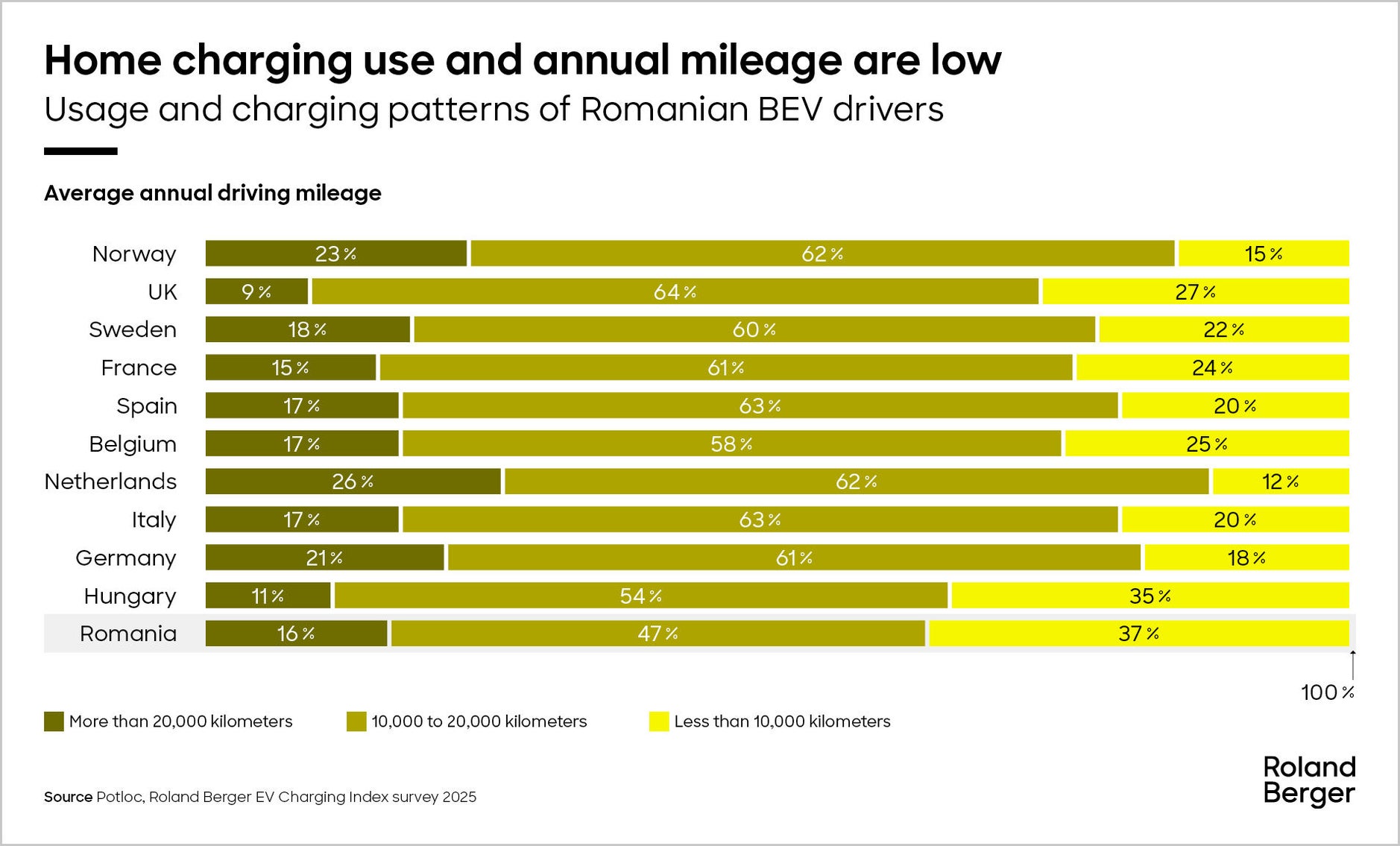
Over 75% of survey respondents still consider purchasing a BEV again as their next car, though this represents one of the lowest shares among the 33 countries we analyzed. Usage patterns also differ significantly, with 37% of respondents reporting annual mileage below 10,000 km compared with a 20% average across all surveyed countries.
Cost considerations dominate purchase decisions, with 60% of buyers citing lower usage and maintenance costs as key decision criteria, while 50% mentioned environmental protection and around 30% highlighted suitable range and tax advantages.