Evolving business dynamics in the charging market
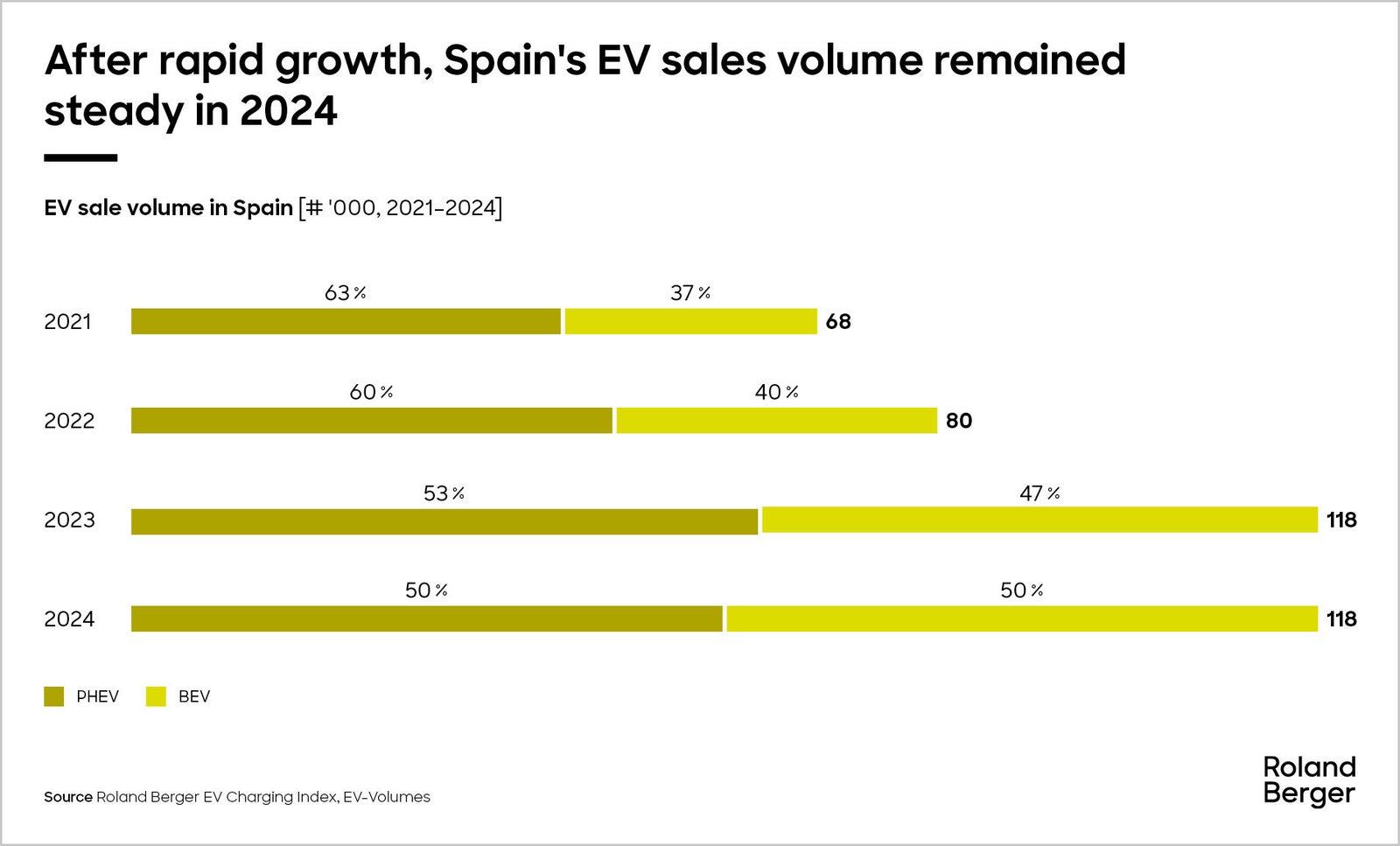
Spain’s EV charging market entered a new phase of maturity in 2024, driven by obligations in the EU’s Alternative Fuels Infrastructure Regulation (AFIR), the relaunch of Spain's national subsidy schemes (MOVES) and a growing EV parc.
Against this backdrop, competitive intensity has shifted from early rollout to scale, integration and differentiation. Players with strong capital access, such as major companies, utilities firms and specialized high-power charging (HPC) operators, have moved decisively to secure network positions, consolidate fragmented capacity and enhance value propositions through bundled energy solutions.
The year’s developments highlight the emergence of two distinct competitive archetypes: integrated energy champions leveraging balance-sheet strength and renewable assets, and agile challengers focused on customer experience and ultra-fast corridor charging.
During 2024, five competitive moves stood out:
- Strategic repositioning and electrification plans from integrated energy majors: Repsol, for instance, integrated EV charging into its service station portfolio and delivered 136% growth year-on-year, while Moeve committed EUR 300 million to charging infrastructure.
- Acceleration of network scale through M&As and partnerships: For example, TotalEnergies acquired Wenea’s 200 fast and ultra-fast charging sites, saving build time and securing prime strategic locations. Acciona Energía also acquired Cable Energía, adding 396 operational charging points and 321 in development.
- Specialist HPC challengers raised financing and won recognition: For instance, Zunder secured a EUR 225 million green financing package and was awarded “Best Charging Operator in Spain 2024.”.
- Enhancement of the value proposition: Utilities are leveraging balance-sheet strength and renewable integration to bundle charging with solar and storage solutions. For example, Iberdrola opened a new fast-charging parking lot in Madrid integrated with on-site solar generation, enabling lower operating costs and improved sustainability credentials for clients.
- National coordination to fill HPC gaps: Spain’s transport ministry launched coordinated builds for HPC along expressways, with new stations announced in Asturias, Barcelona, Cantabria, Córdoba, Cuenca, Madrid, Valencia and Zaragoza. This creates opportunities for large operators and strategic partners to secure concessionary or prime locations aligned with the EU’s AFIR corridor requirements.
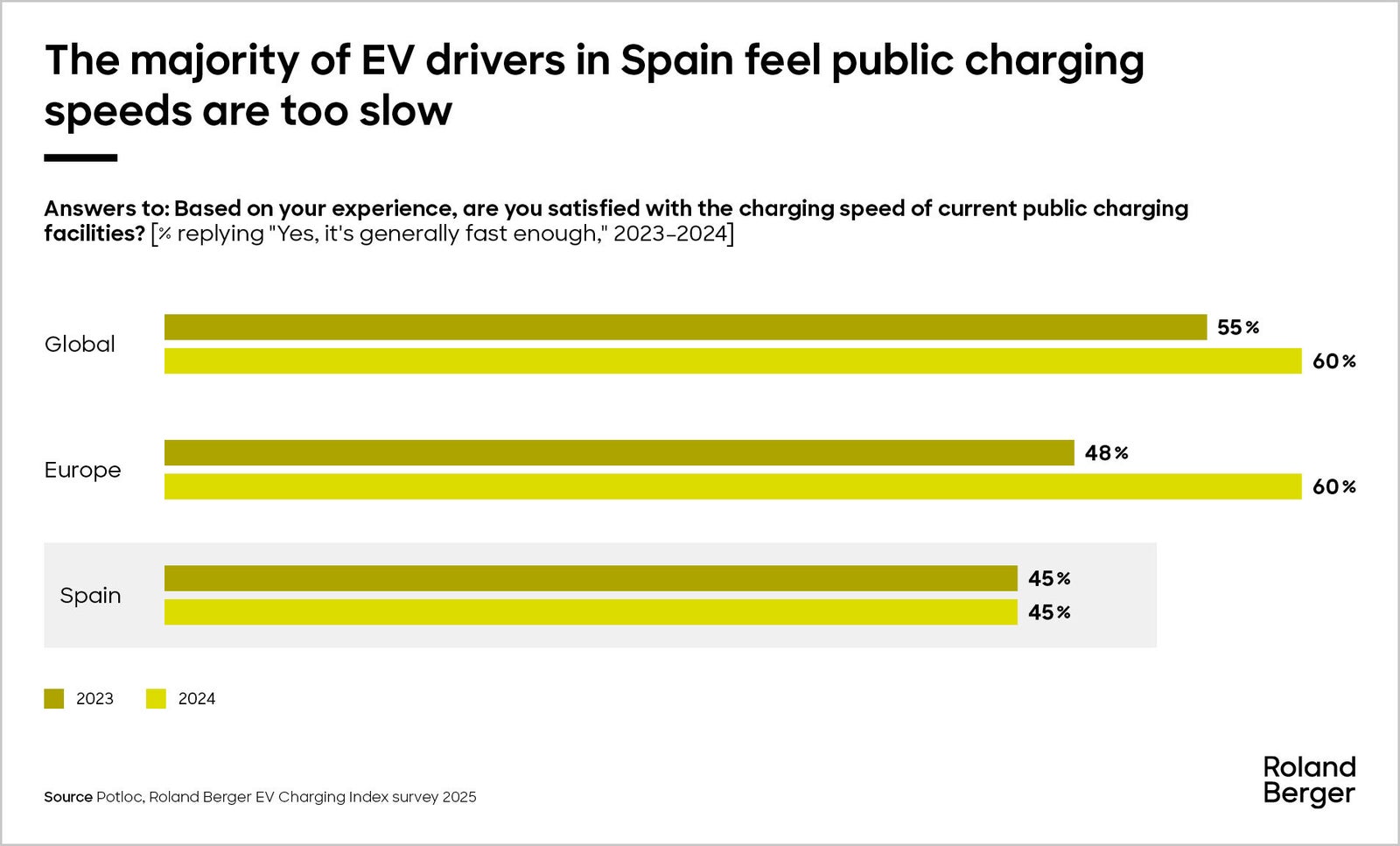
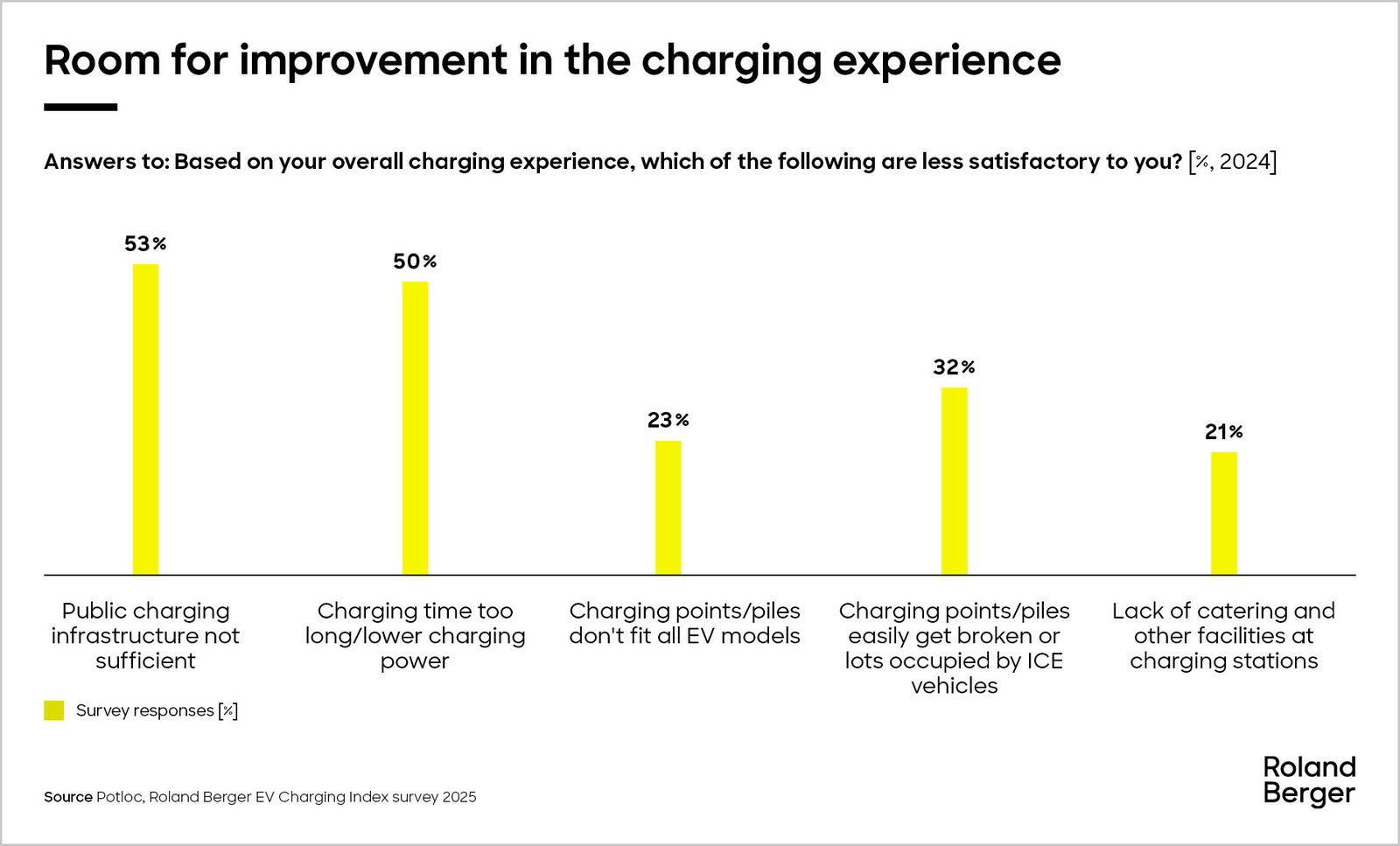
At the same time, persistent operational and systemic obstacles remain in infrastructure expansion. Administrative delays around permitting and grid access for new installations can stretch to 15 months or more, significantly slowing rollout. The scale and quality of the charging network remain a work in progress and are the clearest value-creation levers for operators.
What’s more, interoperability is limited, with only an estimated 9% of charging points supporting card payments, according to the Payment Innovation Hub and Afi, highlighting friction for users and potentially limiting adoption. Lastly, regulatory and grid clarity gaps persist, and business models are constrained by low utilization, raising questions on infrastructure returns.
Strategic opportunities to lead the charging market
We see numerous strategic opportunities for businesses in or looking to enter the charging market. These include:
- Fleet depot charging, especially for logistics and corporate fleets
- AFIR-driven highway hubs with a focus on under-served stretches and cross-border nodes around France and Portugal
- Parking-operator electrification, with incremental upside from reliability retrofits (such as metering, payments, operations and maintenance), services (such as seamless roaming and single-invoice solutions) and energy optimization
Companies that can deliver ultra-fast charging, reliable uptime and easy ad hoc payment options will be well positioned for growth. They can also leverage Spain’s MOVES programs running from 2025 to 2027, including the latest MOVES Corredores initiative and the new AFIR corridor requirements. Together, these factors create a strong opportunity as Spain’s public charging network expands beyond 46,000 charging points and shifts toward higher-power, more reliable infrastructure.