The regulatory environment adds further complexity. The European Union is advancing mandatory disclosure and carbon pricing at pace. The United States remains fragmented, with meaningful action concentrated at the state level. China is expanding its national emissions trading scheme and moving toward absolute emissions caps by 2027-2030. For multinational manufacturers, this patchwork of requirements demands a coordinated, forward-looking approach rather than a market-by-market response.
The economics of CO₂-optimized products are shifting
Under current cost structures, products designed for lower carbon footprints typically carry a cost premium compared to conventional alternatives – primarily due to the price of low-carbon materials and the process adjustments required for decarbonization. However, as carbon prices rise in line with regulatory changes, the economics shift materially. Roland Berger's cost forecast models point to a clear breakeven point: in the mid- to long-term, CO₂-optimized products become not only compliant but also economically competitive.
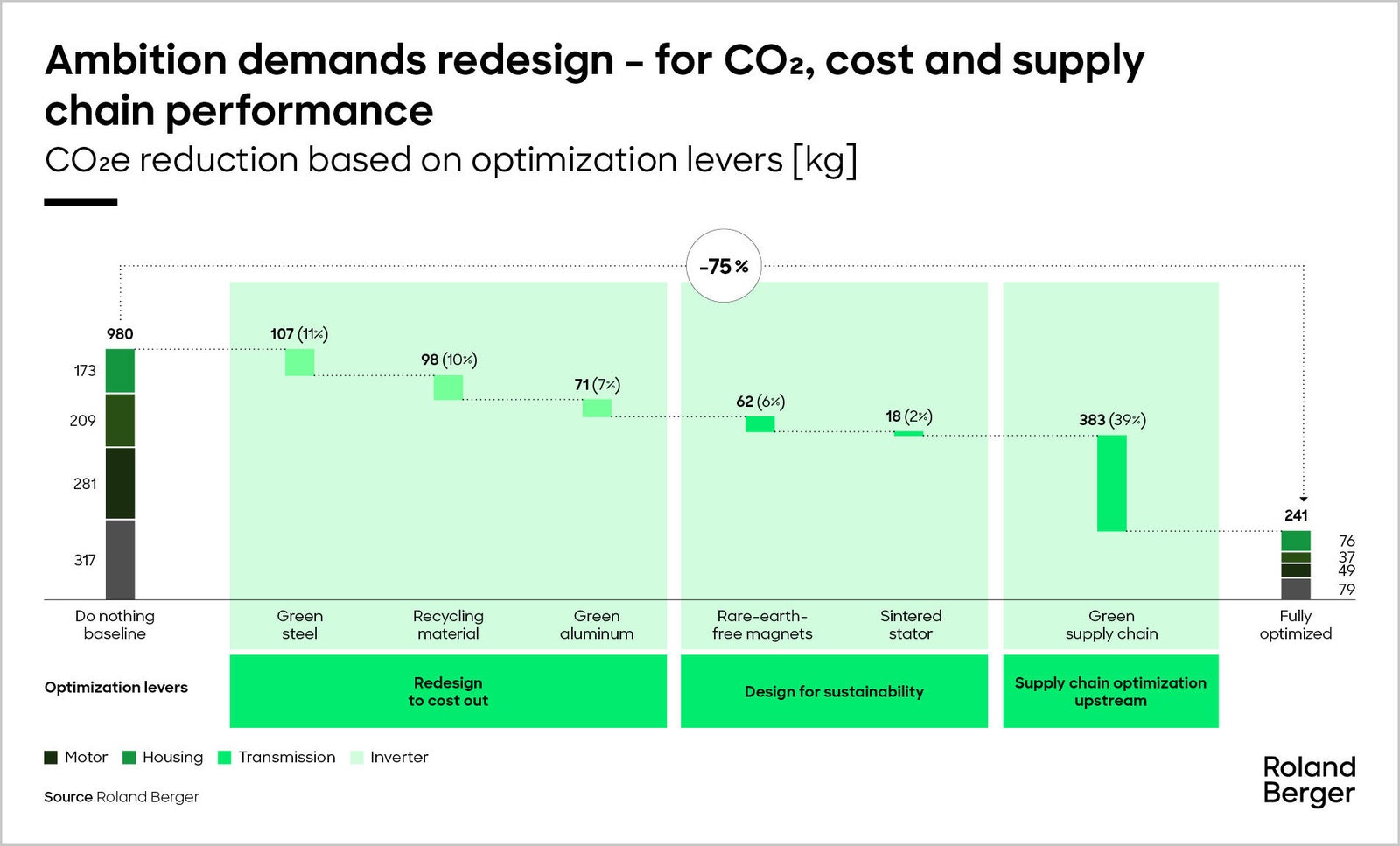
A case study of a European electric motor manufacturer illustrates this dynamic. Without action, carbon certificate costs alone could add approximately EUR 195 per motor by 2035 – a 13 percent increase in unit cost. By acting across three levers – incremental material substitution, redesigned product architecture, and supply chain restructuring – CO₂ reductions of 60 to 75 percent of the embeeded upstream supply chain emissions are achievable. The challenge is that product development cycles span multiple years, meaning that decisions made today will determine a company's carbon cost exposure well into the 2030s.