Balance short-term recovery with long-term transformation
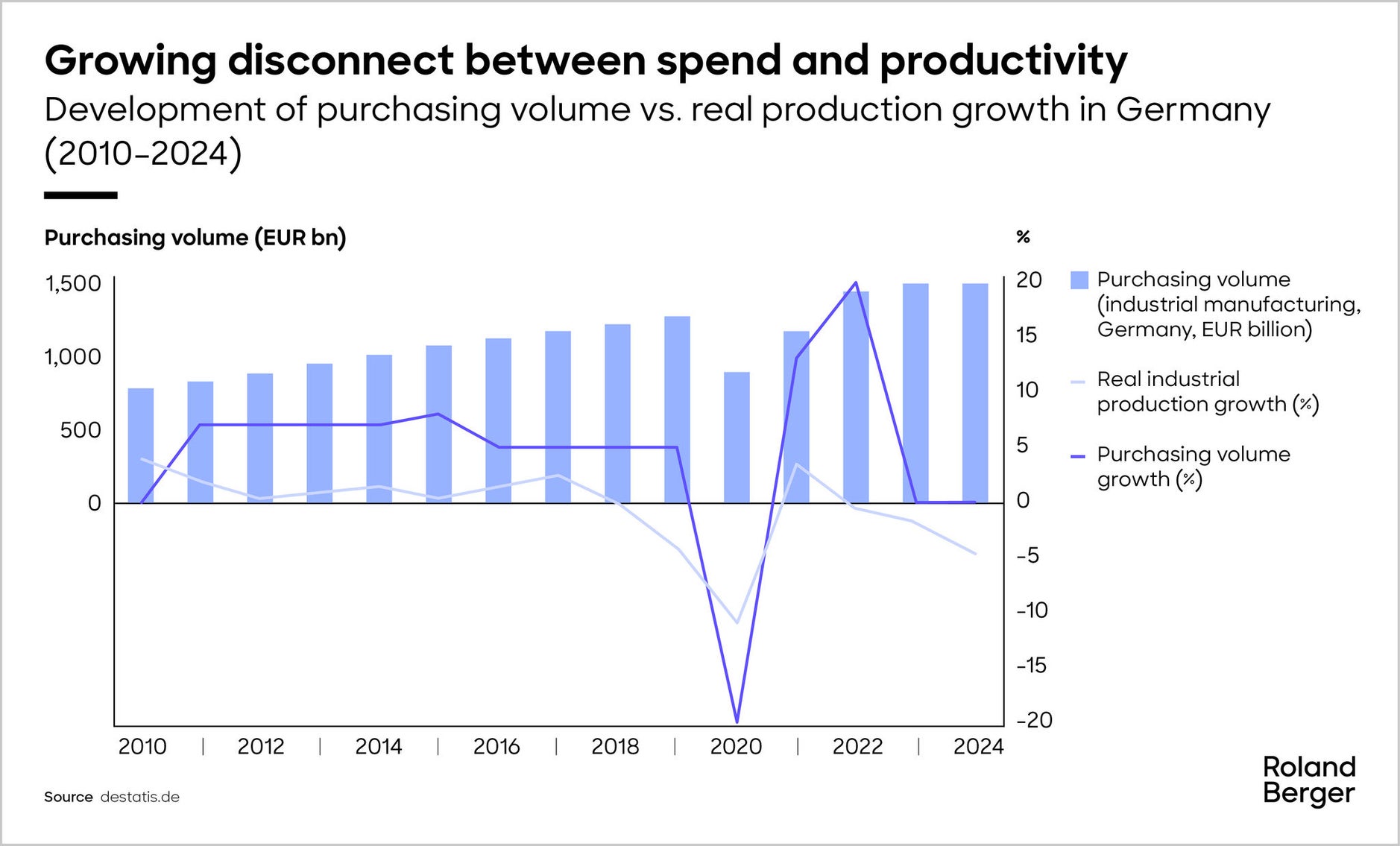
Still, there is a major opportunity here: smarter procurement could unlock up to EUR 100 billion in material cost savings across German industrial firms – equivalent to boosting industrial GDP by several percentage points.
How can this be achieved? In a new report, we analyze current
procurement trends
in German manufacturing and present a dual-track strategy that balances short-term recovery with long-term transformation.
- Rebound: Recover money lost to inflated costs through contract renegotiations, supplier consolidation, and tail-spend optimization.
- Prepare: Build up resilience by diversifying suppliers, hedging price volatility, integrating cost pass-throughs, and making sustainability a sourcing priority.
Procurement needs to move from reactive firefighting to strategic foresight. Our study also takes a detailed look at four major purchasing categories, highlighting the need for tailored action. For each one, we look at volatility, key drivers of change, the implications for procurement teams, and benchmarks to guide industrial firms in their strategic decision-making. They are:
- Industrial and precious metals
- Energy and utilities
- Chemicals and plastics
- Freight and logistics
By executing this dual-track strategy, German manufacturers can ease current margin pressures and secure long-term supply chain resilience. Ultimately, we believe they can reduce material costs by between 5% and 10% in many categories.