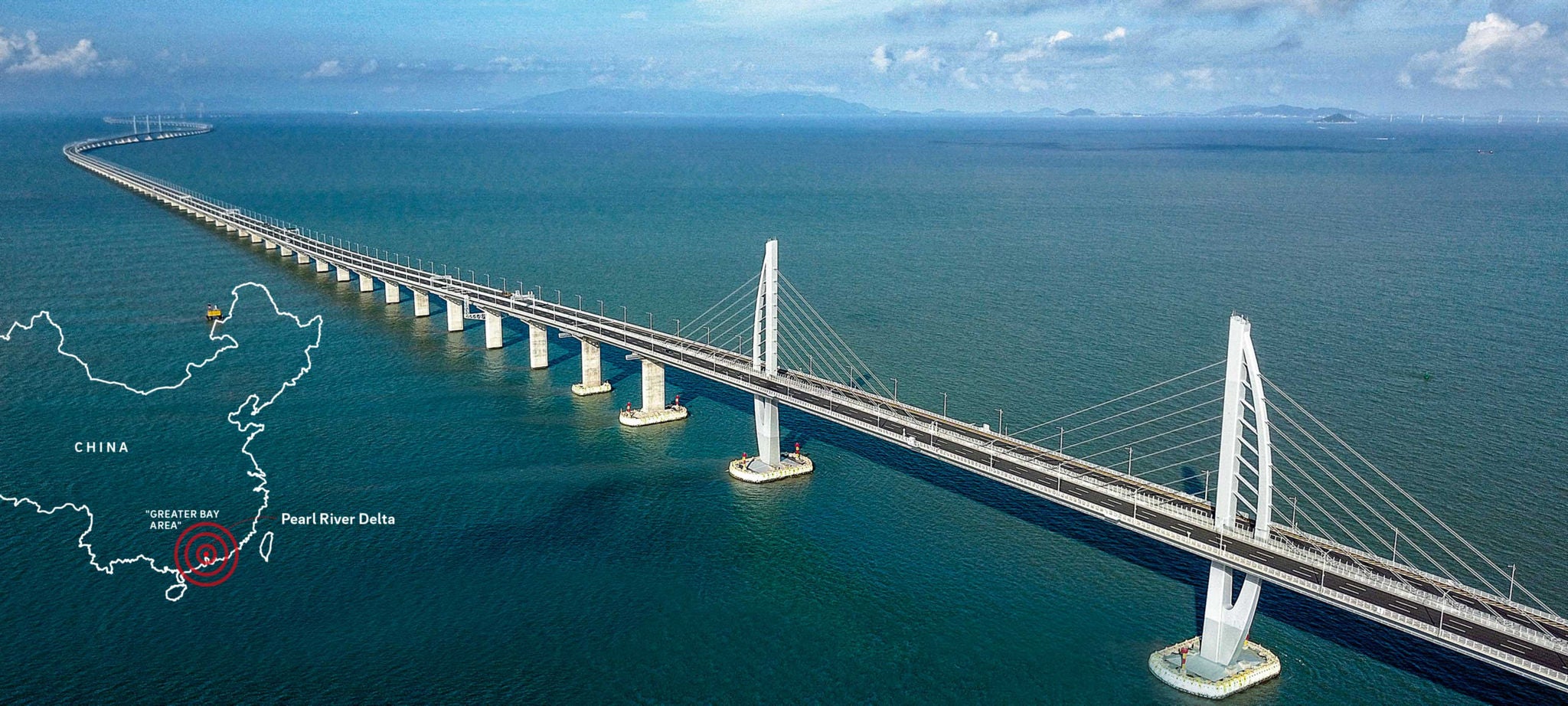
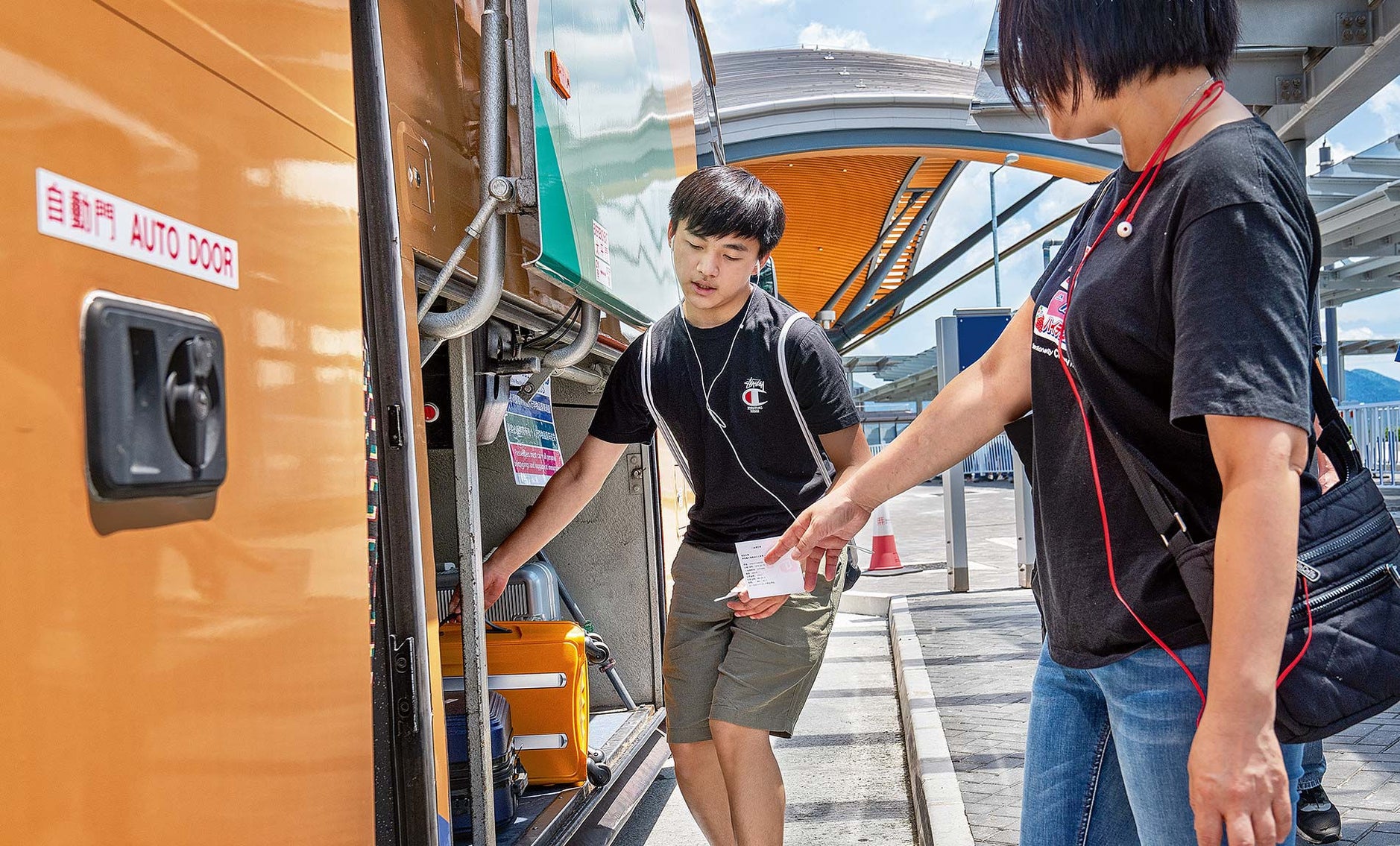
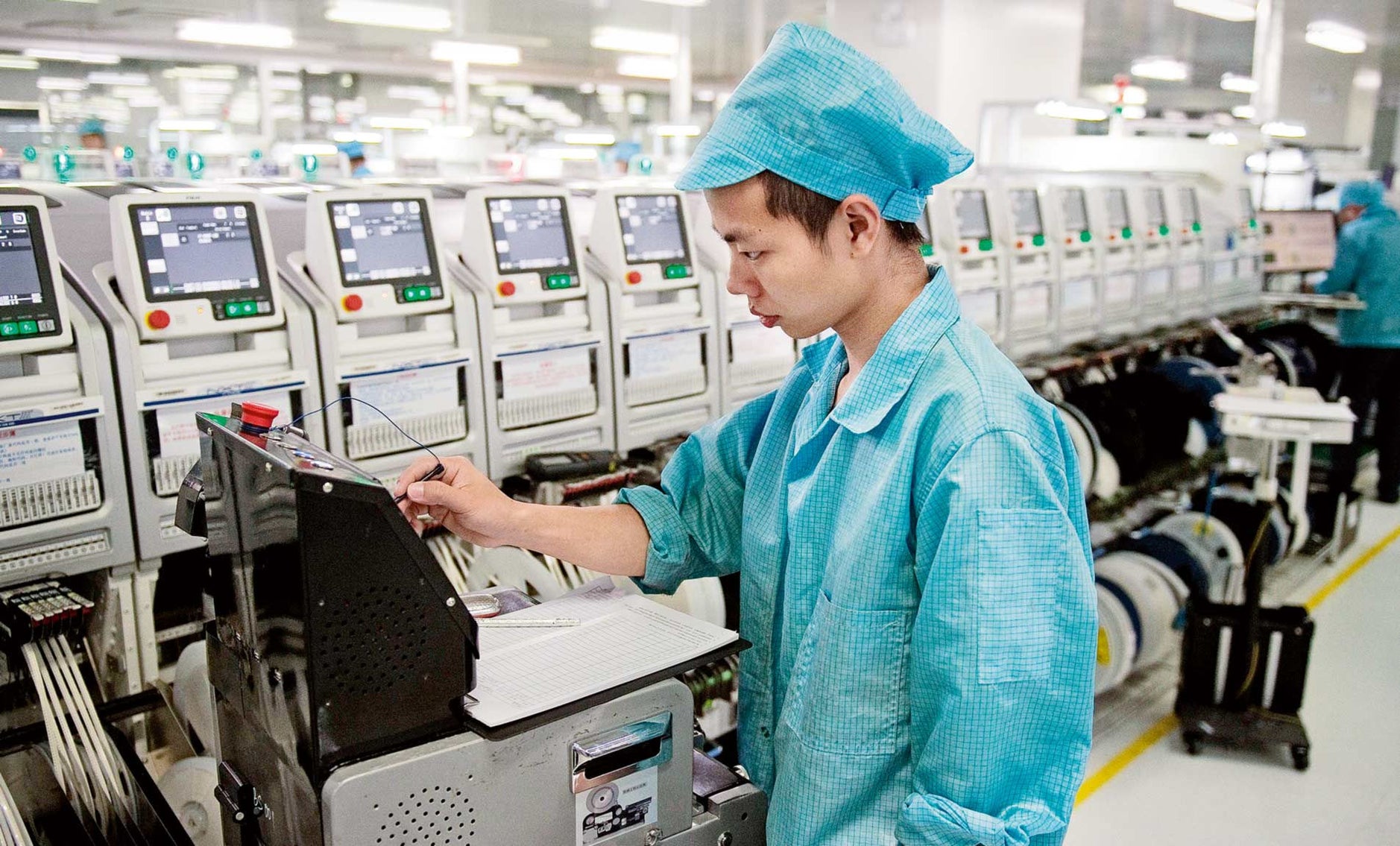
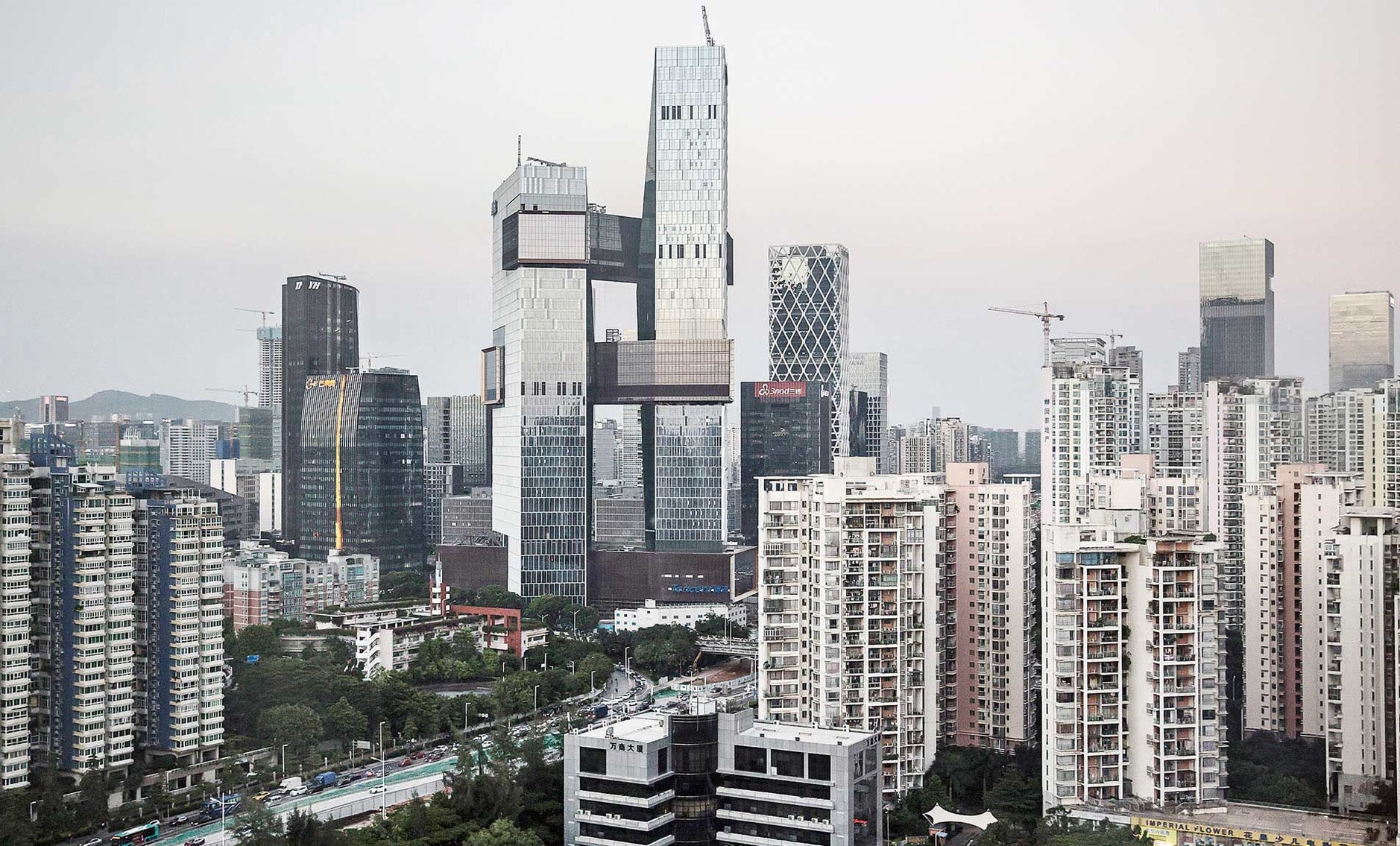
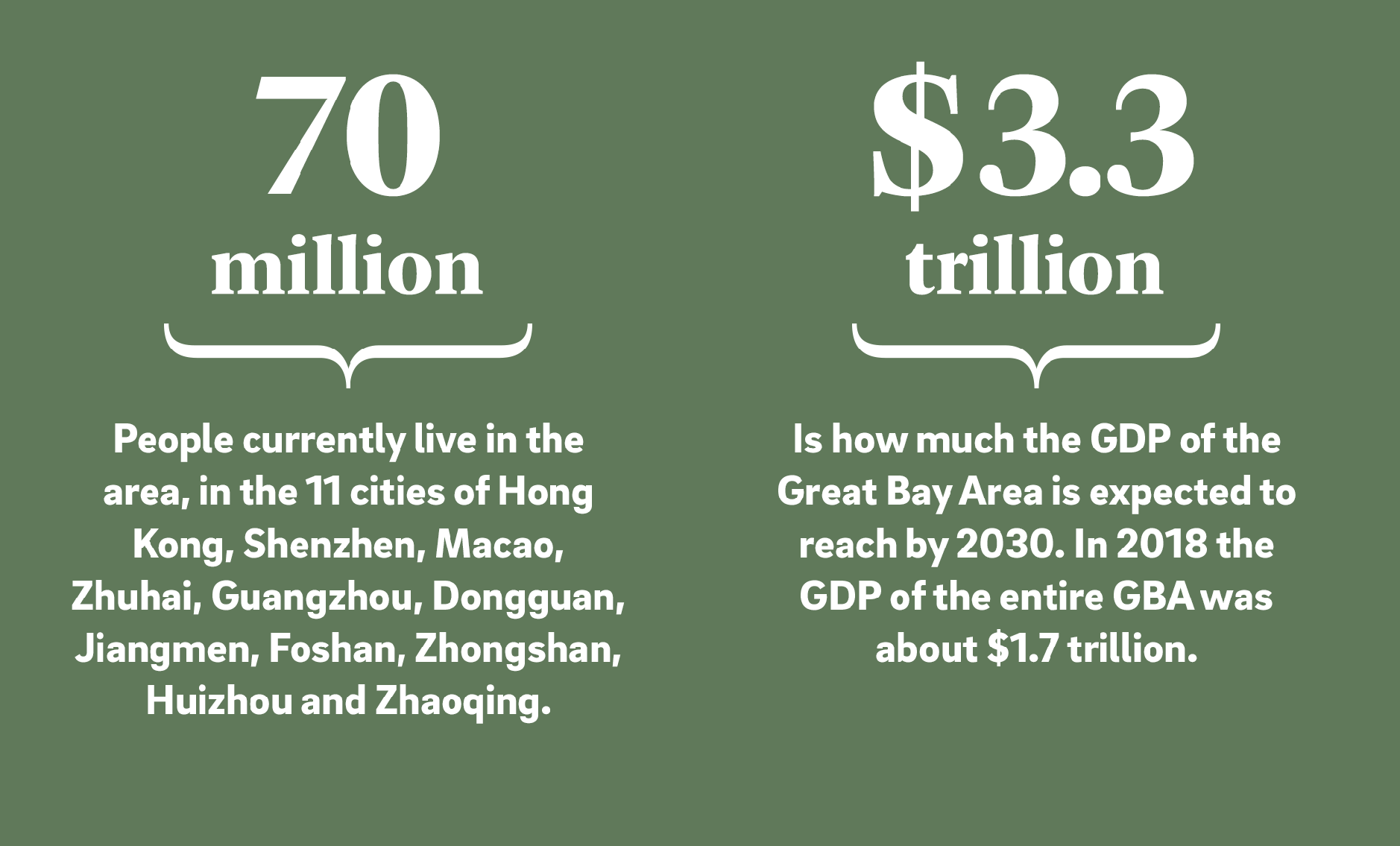
The Greater Bay Area, or GBA, with its bridges and speed trains, is already a formidable economic powerhouse. About 70 million people currently live in the area, in the 11 cities of Hong Kong, Shenzhen, Macao, Zhuhai, Guangzhou, Dongguan, Jiangmen, Foshan, Zhongshan, Huizhou and Zhaoqing. The delta, which makes up only about 1% of China's territory, already produces 37% of the country's exports and 12% of its total GDP. It already has more people than Italy producing a bigger GDP than Indonesia.
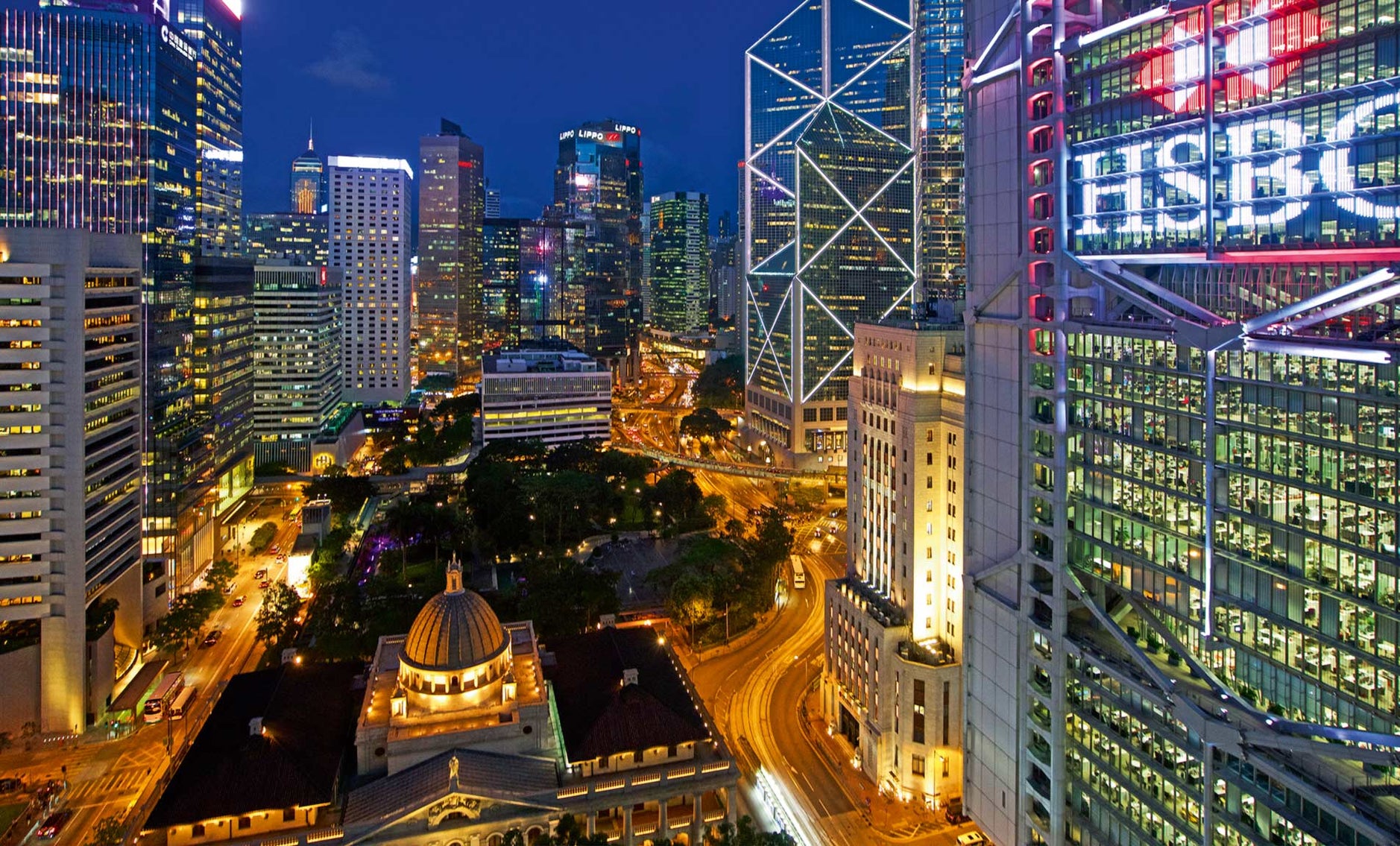
In a high-rise office overlooking the busy Hong Kong harbor, Kelvin Lau extrapolates such figures into the future. A senior economist with Standard Chartered Bank, he watches the GBA. "We believe there will be productivity gains due to the increase of the population, which some forecasts see growing from the current 70 million to 100 million by 2035," he explains. "It's about unblocking connections between people, information, goods and capital. The bigger the size of a city, the easier it becomes to match business needs."
A short subway ride from the financial district, in Hong Kong's Quarry Bay, analysts monitoring China for the Economist Intelligence Unit (EIU) are more skeptical. Nick Marro, one of their experienced China-watchers, points out the current hurdles for China's bay area integration, which are plentiful. "The government of mainland China has very strong capital controls in place. Hong Kong's capital account, however, is almost completely liberalized," he says. In other words, a lot of regulations will need to be relaxed in China – or tightened in Hong Kong – to achieve a better flow of capital in the region. "You can say the same about the movement of people (visas) to the movement of goods (customs) and so on," says Marro. "Until a lot of these technical questions can be ironed out, they will constrain the potential that this master plan could offer the region."