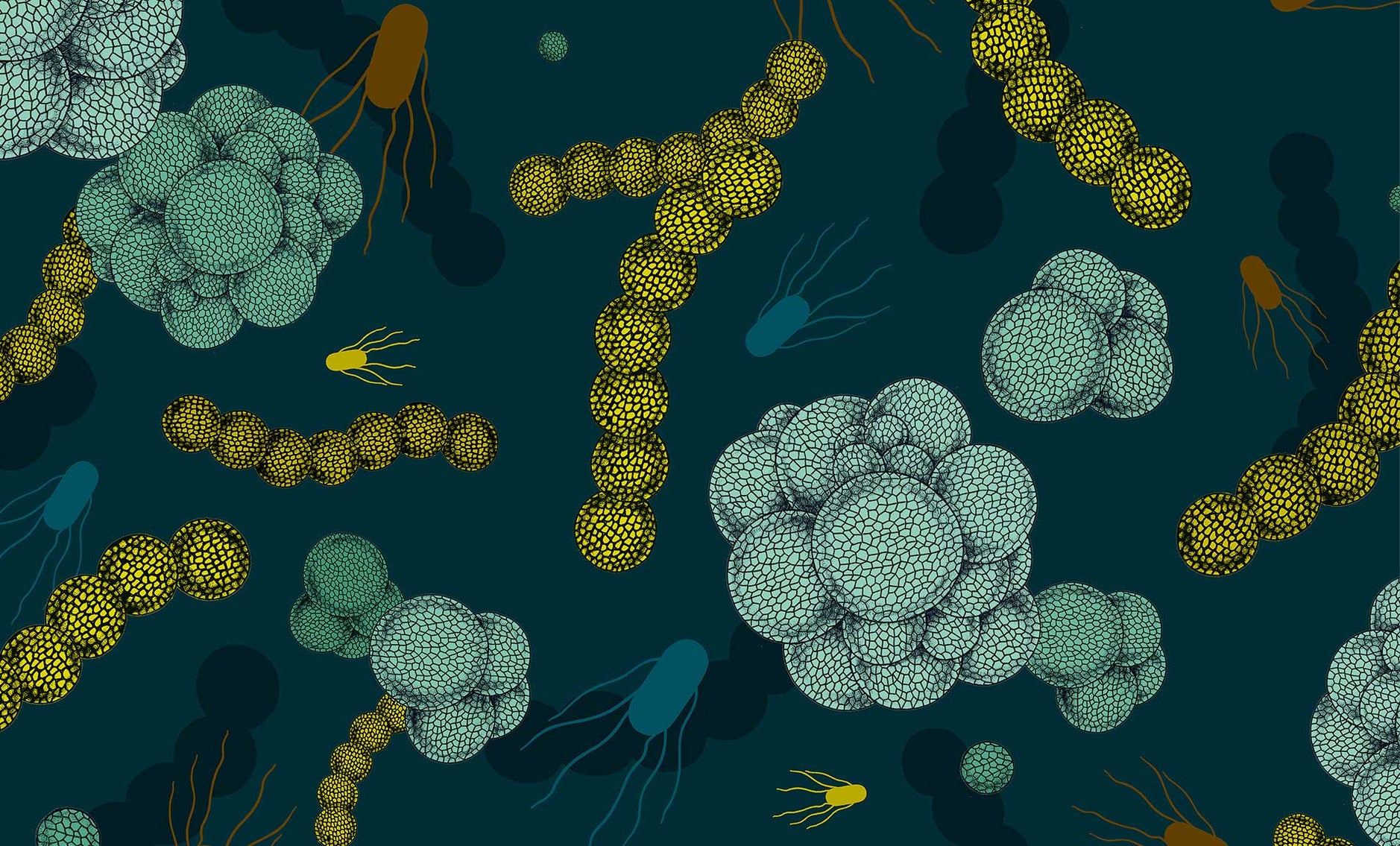
The E. coli bacterium reacts to stress with behavior opposite to our own. When we are under stress, we produce adrenaline, the fight-or-flight hormone. Adrenaline is a powerful survival tool – but unfortunately it’s useless when we are facing multiple and/or unknown threats. If the adrenaline-powered brain wants to fight or flee, but can't decide how to react, it goes into panic mode. Bacteria, however, go into an experimental mode. "They prepare themselves for the unknown," says Hengge, by opening up for a myriad of potential solutions. E. coli's opener of unknown doors is a substance called Sigma S that activates its entire DNA strand. Like humans, most bacterial DNA is usually dormant. But when under stress, the whole DNA is unleashed and starts to produce whatever substances it can. Most of them are useless – but one may, by pure coincidence, lead to survival. It's anarchic and chaotic, but at least it's a chance.
Sure, companies aren't E. coli bacteria. They don't follow biological instincts, but they can decide how to act. And if confronted with multiple and/or unknown threats, it may be less wise to go into panic mode like human beings do, but instead switch to experimental mode like bacteria. Survival of the fittest? Or the most attractive? Maybe. But in the new digital landscape ahead it might, ironically, not be quite so binary. If the bacteria can teach us anything, it might be that survival depends on being the most resourceful.