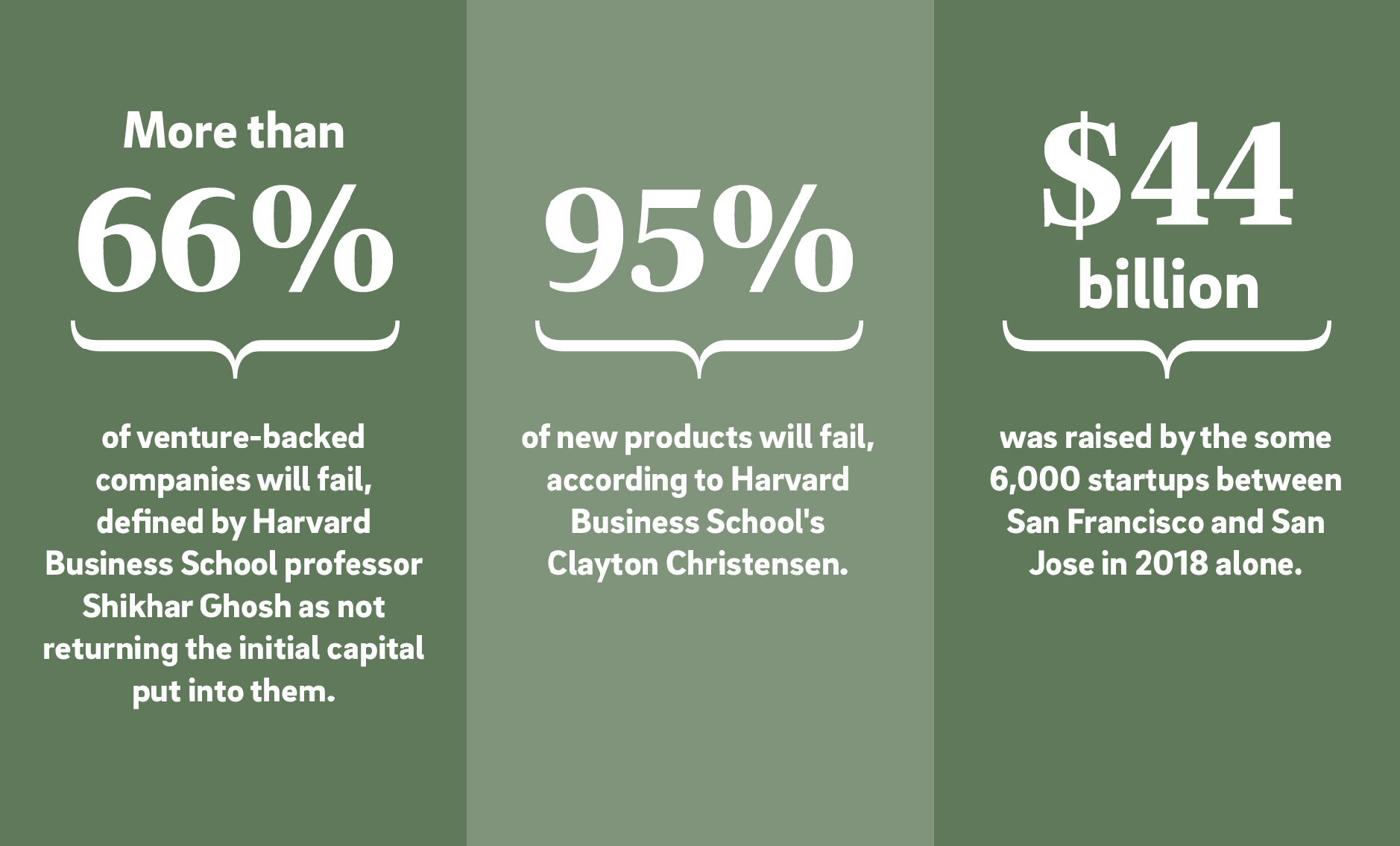
Between San Francisco and San Jose, at any given moment an estimated 6,000 startups are busy trying to come up with the next big thing. For that, they raised almost $44 billion last year alone and another $9.2 billion in the first quarter of 2019, according to CB Insights. When those funds are used up and investors are unwilling to front more money, Sherwood recoups what can be recouped. "We are an extension of the venture capital and venture debt world when they have decided they won’t get the returns they need," Pichinson says.
That kind of unseemly exit is more common than the industry lets on. Harvard Business School professor Shikhar Ghosh has been crunching the numbers of the tech ecosystem for years. Analyzing about 13,000 venture-backed companies going back two decades, he estimates that at least two-thirds of them are failures, not returning the initial capital put into them."VCs like to bury their dead very quietly. While something might be great for a small market with a nice $5 million business, venture capitalists don't want that. They want $5 billion," he explains. The herd of startups that VC firms bet on in their portfolios therefore needs to be culled fast to identify the few with the potential for a big exit. "Most companies should not exist," Ghosh says, defending the approach. If you do it quickly, it's not a bad outcome for everybody."
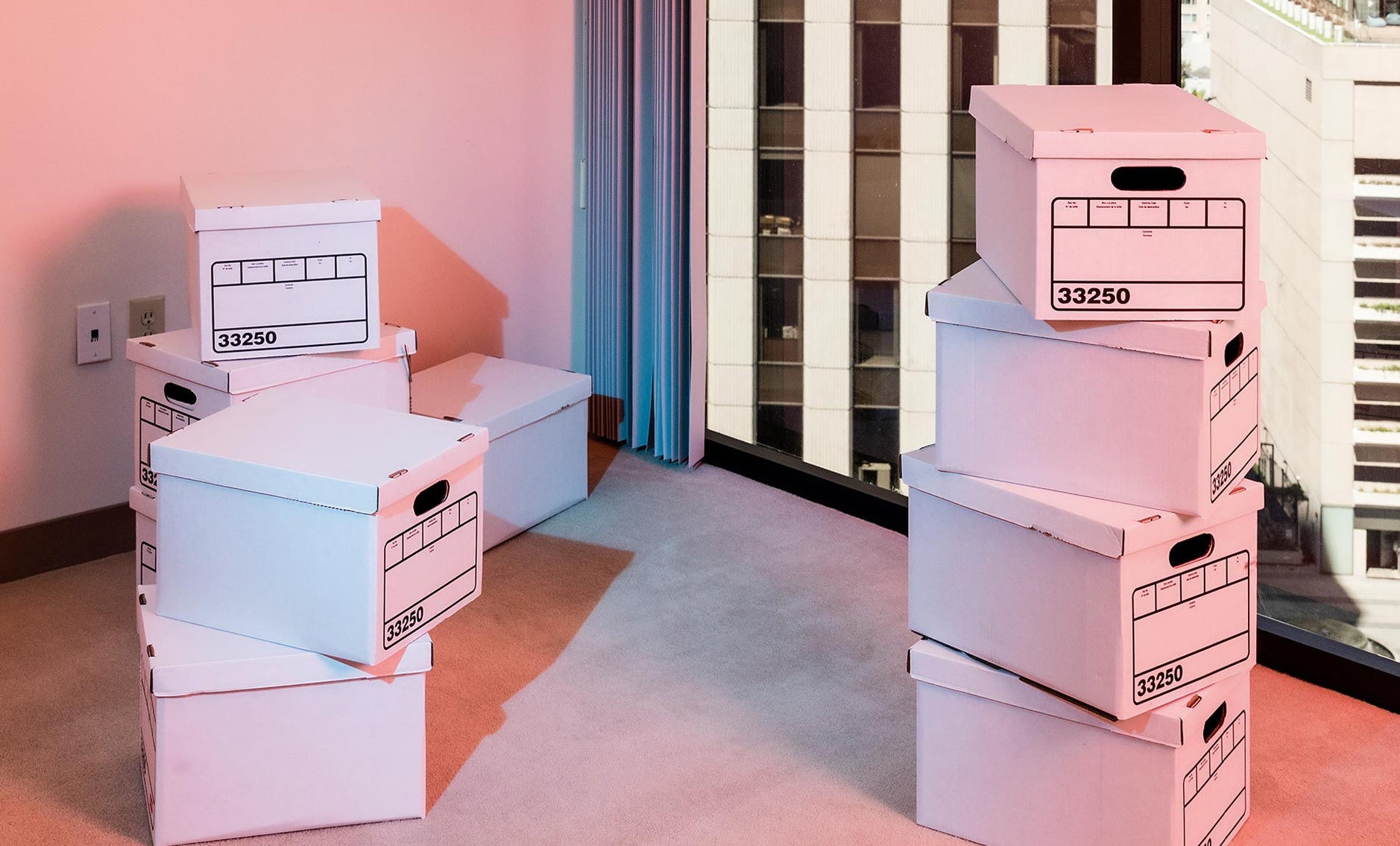
Sherwood has developed a well-oiled system over the years. After the call comes in, it takes about a week to compile a rough overview of assets and liabilities, followed by a timeline and budget for liquidation. Hardware auctions are outsourced, while the intangible assets are shopped around to a growing database of about 16,000 people in tech. Pichinson, in the meantime, sets up a temporary shell company to safeguard the remains, even taking over the domain name of a dead dotcom. "It pays to keep the lights on, pay the engineers and cloud services, keep filings up to date in order to have something marketable," he explains. Some IP might not find a new home, sitting on his shelves for a year. It will eventually be buried like the many other documents from the defunct company.