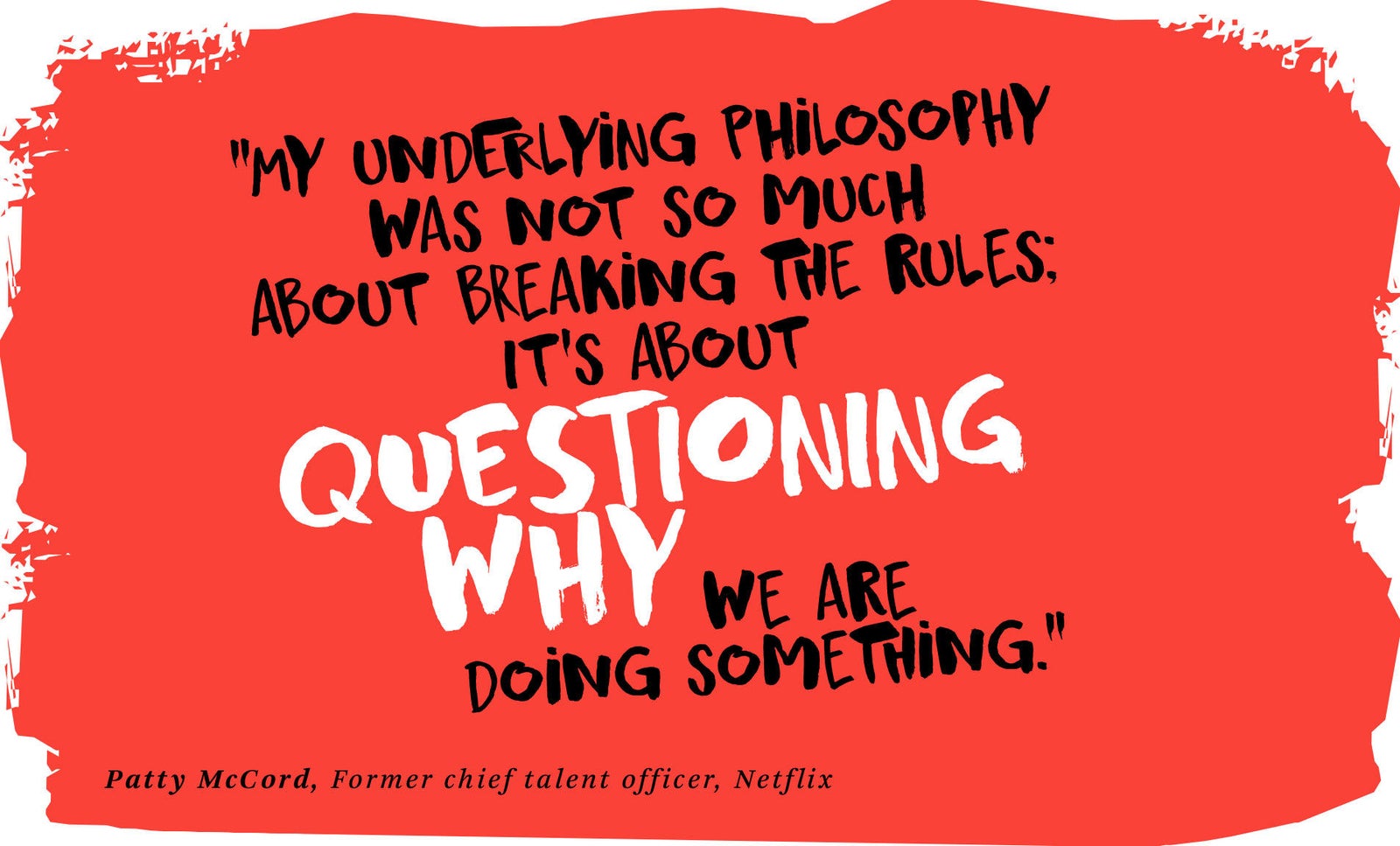
One of her prime goals is to encourage people to embrace her doctrine of radical honesty by avoiding such practices as anonymous surveys in favor of group meetings. "One of the reasons I hate anonymous surveys is that they teach people you can only give honest feedback anonymously," she explains. Such group meetings also offer a great opportunity to clarify your cultural priorities, she adds. "You can say, 'No, actually, we're not going to be bringing back the kiwi-flavored water. We all know you were upset about that, but we're not. Any other questions?'"
Beyond the culture of radical simplicity that she continues to evangelize, McCord also suggests that human resource managers need to change their approach. In the past, HR has often been a function that is a little out of step with the rest of the business. "What I find when I talk to executives about their HR people, they have a lot of preconceived notions: A) They are not very smart. B) They're not good business people. C) They are people-people and sensitive," she says. "I say to them, 'Okay if you really think that the person who's running HR isn't very smart, doesn't understand your business and isn't able to hold their own with the rest of your executives, then get a new one. But before you do that, start by just demanding more.'" HR should be seen as more than just a support function. It "should be able to weigh in on a business decision with an equal weight. Because every business decision is going to involve an employee, somehow, someway," McCord maintains.