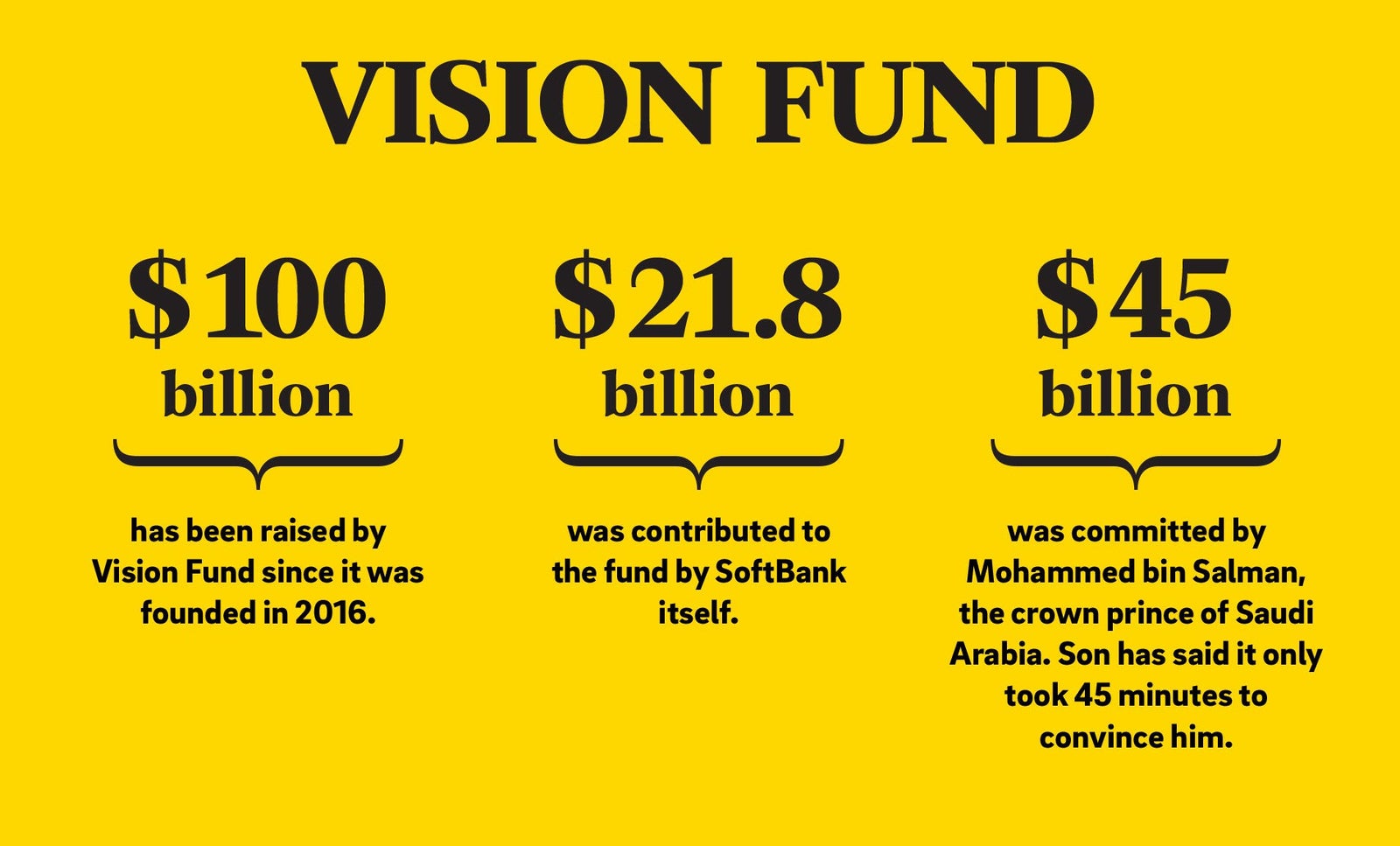
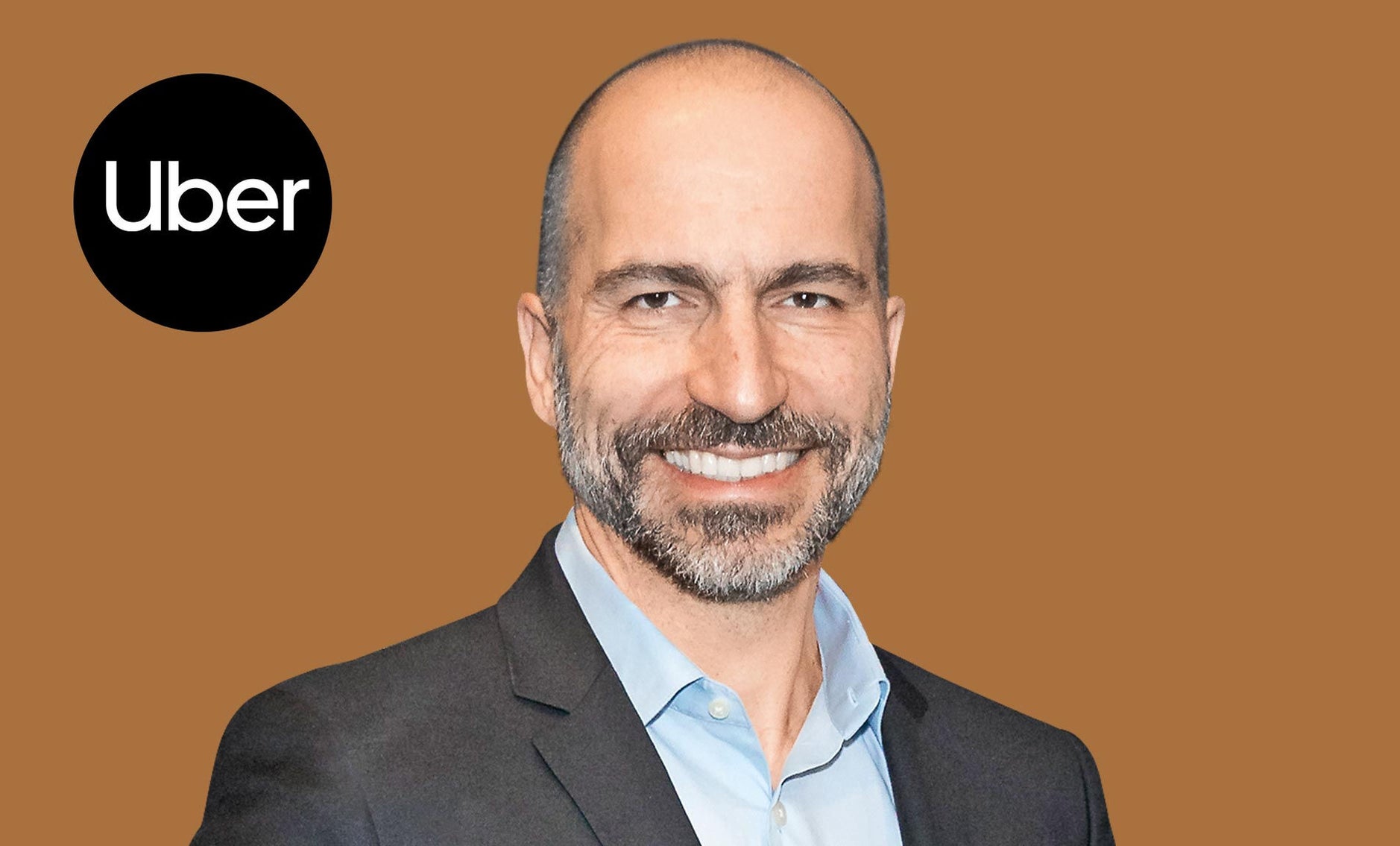
It's all about scale and winners need to create platforms or ecosystems of businesses that help each other beat or swallow up more and more of the competition like the gravity of a new planet aggregates intergalactic dust. It’s a useful metaphor to understand Son’s biggest endeavor. His Vision Fund pulls together companies of seemingly unrelated expertise, among them the British chipmaker Arm Holding (which SoftBank had acquired in 2016) and newer entrants with less proven business models such as co-working company WeWork and ride-sharing phenomenon Uber, complemented by dozens of startups in AI, robotics and automation. The fact that Son's gargantuan Vision Fund has cobbled together such a peculiar solar system and, so far, kept its parts together speaks to the charisma of its founder. When Son met Mohammed bin Salman, who is now the crown prince of Saudi Arabia, it took him 45 minutes to get him to commit $45 billion to the fund. Other investors, from Apple to Daimler to a government-owned investment fund in Abu Dhabi, were equally willing to accept mind-boggling valuations as the price to building this new planetary system. SoftBank's own contribution to the Vision Fund is reported to stand at $21.8 billion.
But size can slow you down and bring new risks. A fund this big can only make very large investments in a limited number of companies with a valuation of a billion or more, or "unicorns." "Given their size and the limited number of unicorns, an exit that yields two to three times their initial investment is good for them. But you can achieve that by investing in a public company as well," says Victor Orlovski, managing partner at Fort Ross Ventures. For him, Vision Fund is not a traditional venture play anymore, but a new breed of investment vehicle. Lars Leckie, managing director at Silicon Valley firm Hummer Winblad, agrees with this assessment. "They are certainly disrupting the venture space by anointing category winners early and have forced a lot of later-stage firms to react by raising larger funds," he says. "They seem to be in a race to build the biggest checkbook to compete, and with history as our guide I don’t know if large funds have any chance of venture returns." Some academics go further, wondering if Vision Fund distorts the innovation game because it deters competitive entry and could slow down technological change, as a Harvard Business School case study recently examined. Orlovski also doubts that Son's Midas touch, largely based on his Alibaba gamble, can last. "Mr. Son is making very risky bets on companies whose business models aren't yet proven. The question is what will be their big failure, and how will markets react to it?"
Son himself is consumed by another question: Who will be the successor to his ambitious 300-year vision? While he initially wanted to retire at age 60 and had groomed former Google executive Nikesh Arora to take over the helm, he changed his mind in 2016 and decided to stay on another 5-10 years. "It's not good to hand over the company when I'm not emotionally ready," Son said. The entrepreneur instead appointed a trio of executive vice presidents – fueling speculation who will be the future star in SoftBank's outsized solar system.
Masayoshi Son's cosmos of VIPs and companies all over the world
The tech entrepreneur's cosmos of influence and investment includes mentors and businesses. Here's a view of just some of the leading figures and companies that SoftBank and Vision Fund have in their orbits.