
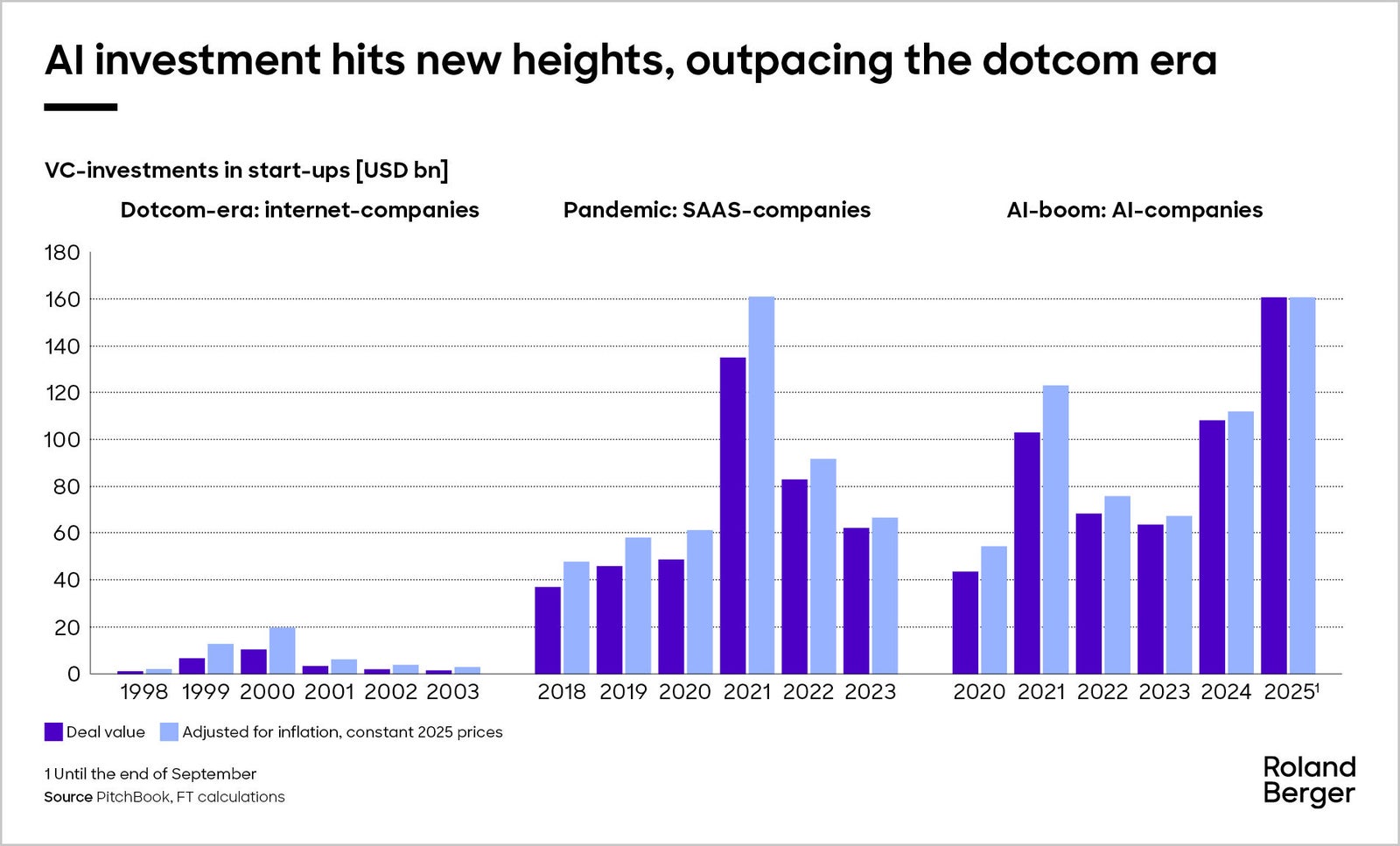
Assessing the current state of the US economy is no easy task. On the one hand, the economy is growing at around 2% and the stock market is booming; on the other hand, inflationary pressures are resurfacing and the labor market is losing momentum. Forecasts vary widely, even among Federal Reserve officials, highlighting the impact of shifting policies and conflicting data on the outlook. A significant part of the recent growth can be attributed to substantial investments in AI infrastructure, which raises the crucial question of whether AI can truly deliver the productivity and profit potential that many currently anticipate. For the time being, the fundamental strength of the US economy appears to prevail. According to the latest projections, GDP growth is expected to reach 2.4% in 2026 and 2027, with inflation gradually easing toward 2.5% by the end of 2026. This stable baseline remains contingent on effectively addressing the current challenges.

Article
Big economy, bigger challenges
Assessing the current state of the US economy is no easy task. On the one hand, the economy is growing at around 2% and the stock market is booming; on the other hand, inflationary pressures are resurfacing and the labor market is losing momentum. Forecasts vary widely, even among Federal Reserve officials, highlighting the impact of shifting policies and conflicting data on the outlook.
Published December 2025. Available in