India’s
demographic profile
represents a significant economic asset, often referred to as a “demographic dividend”. With a median age of about 28 years, the country has one of the youngest populations in the world. This demographic advantage provides India with a large working-age population that can contribute to sustained growth and development over the coming decades. However, translating this demographic advantage into economic gains will require substantial investments in human capital: education, skills training, and healthcare.
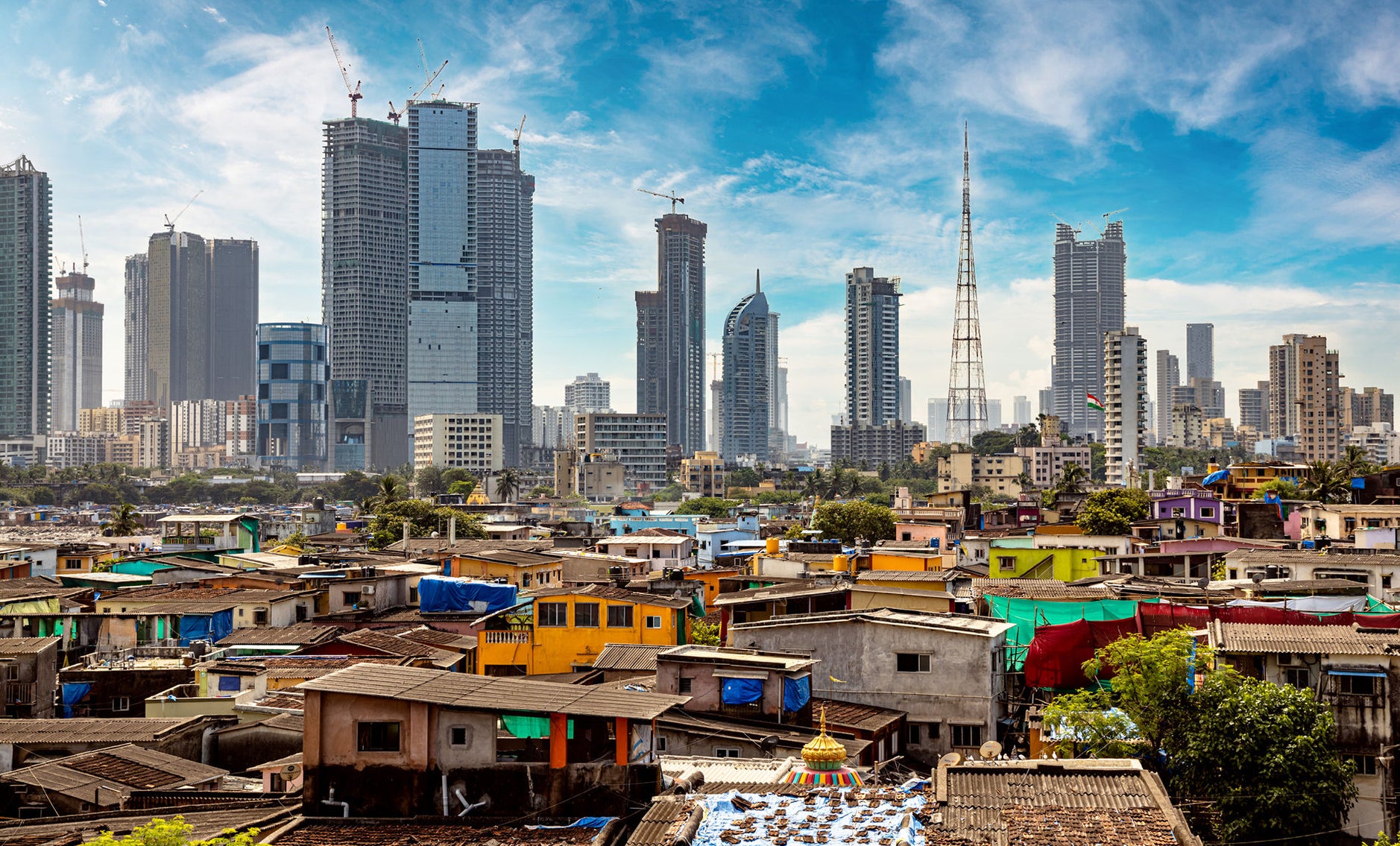
Urbanization is another key driver of India’s economic growth, with profound implications for its domestic market. As of 2023, approximately 35% of India’s population were residing in urban areas, and this figure is projected to rise to over 47% by 2050. This rapid urbanization is transforming India’s economic landscape by creating new hubs of economic activity. The agglomeration of industries in urban areas leads to economies of scale, greater innovation, and more efficient use of resources. These productivity gains contribute to overall economic growth, as urban economies tend to be more diverse and specialized than rural ones. As urban centers become innovation hubs, they not only contribute to India’s economic growth, but also position the country as a global leader in sectors such as information technology, biotechnology, and renewable energy.
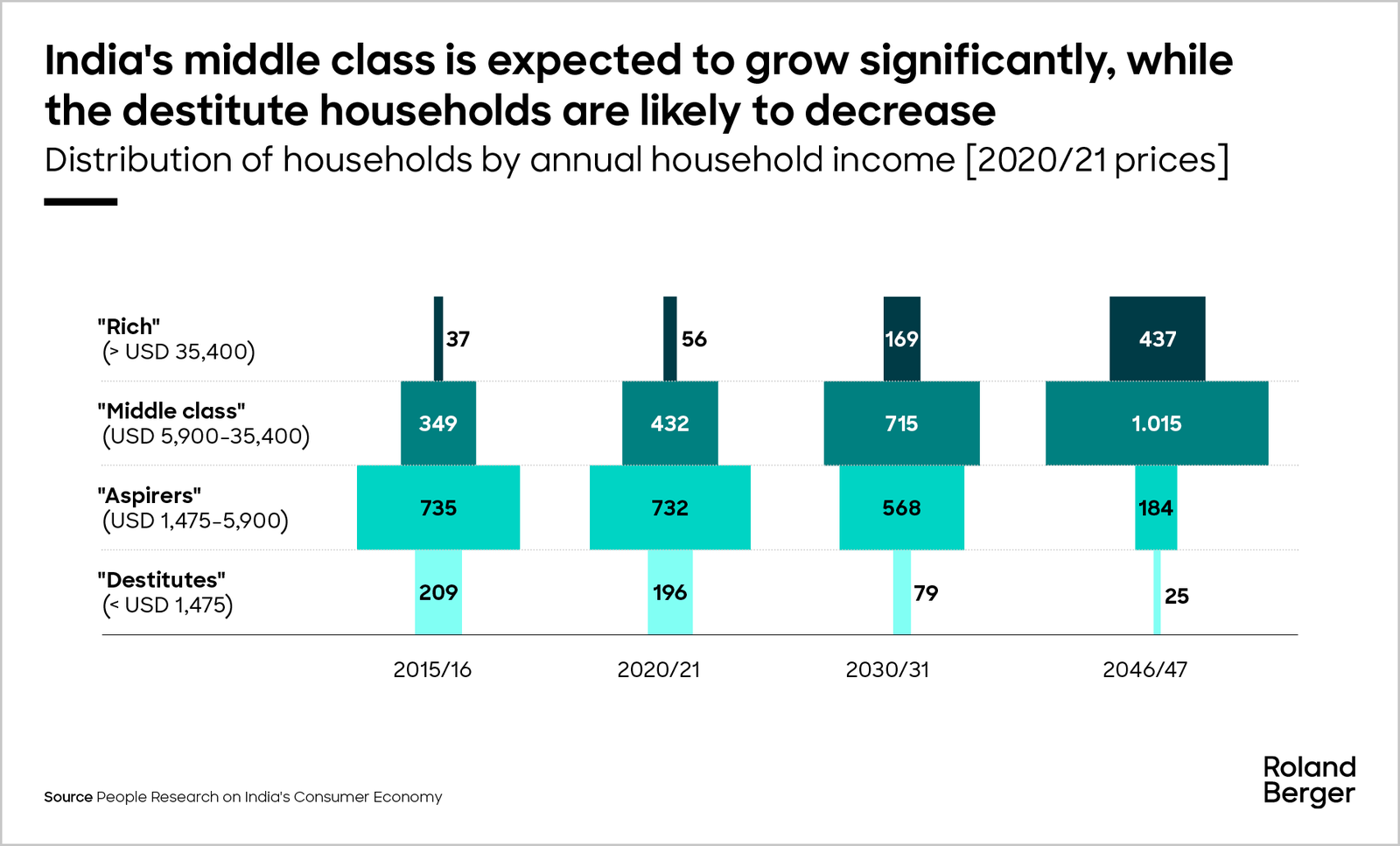
Urbanization is also closely tied to the expansion of India’s middle class: As people migrate to cities, they typically experience higher wages, better access to education and healthcare, and an improved standard of living, which in turn increases their purchasing power. Thus, India’s middle class is expected to account for 46% of the population by 2030 and more than 60% by 2047. This growing middle class is a major driver of consumption across a wide range of sectors, including housing, retail, automobiles, and services such as healthcare and education. The growing demand for goods and services fosters new business opportunities, which in turn creates a cycle of economic growth. The growing urban middle class also creates new markets for innovative products and services, from tech gadgets to healthcare solutions.