
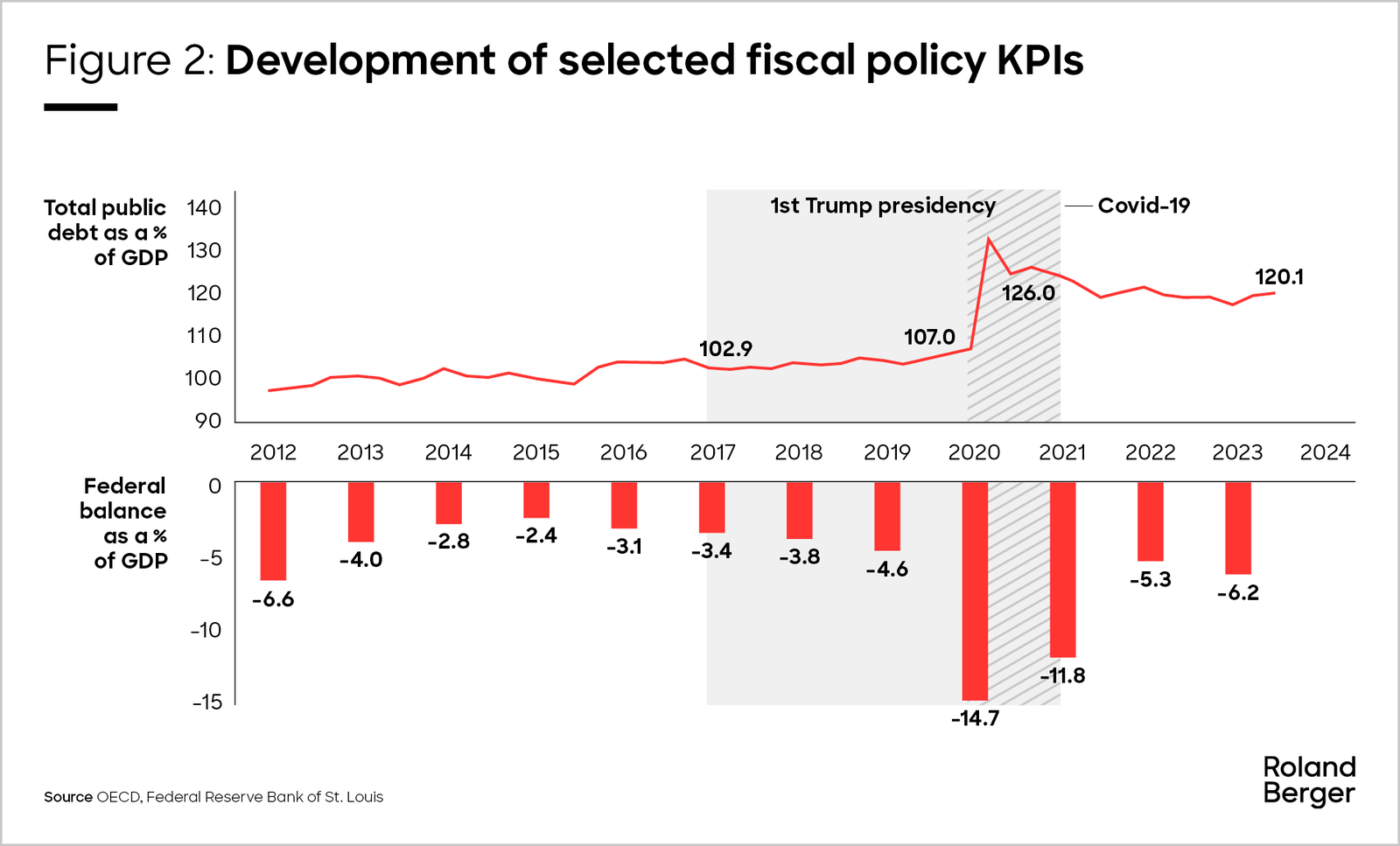
The 2024 United States presidential election is approaching, and there is much speculation about the possible outcome and its potential impact on the economy. What would be the likely changes in the economy if Trump were to win again? And what would be the key takeaways for executives to ready their businesses for Trump 2.0? In our latest study we take a step back from the clamor of daily headlines, and instead we dive into the data and present a sober and fair assessment of what can be anticipated about the economic impact if a second Trump presidency comes to pass. In 2017, Trump's first term was marked by major tax cuts, especially for corporations and individuals, as well as cutting down regulation regarding environmental protection and the financial industry. He also pursued a protectionist trade agenda, imposing tariffs on many countries, especially China, to reduce trade deficits and protect US industries. While GDP growth was solid during Trump’s first term – at least until Covid-restrictions took their toll – both the tax cuts and the measures to counter the impact of the pandemic drove public debt to new heights. Furthermore, despite the imposition of new tariffs, the US trade deficit continued to widen.




How can globalization endure? The future of European trade in a world of rival great powers
As the US and China become less reliable partners, Europe must rethink its trade strategy to secure lasting prosperity.