Government response: supply diversification and decarbonization
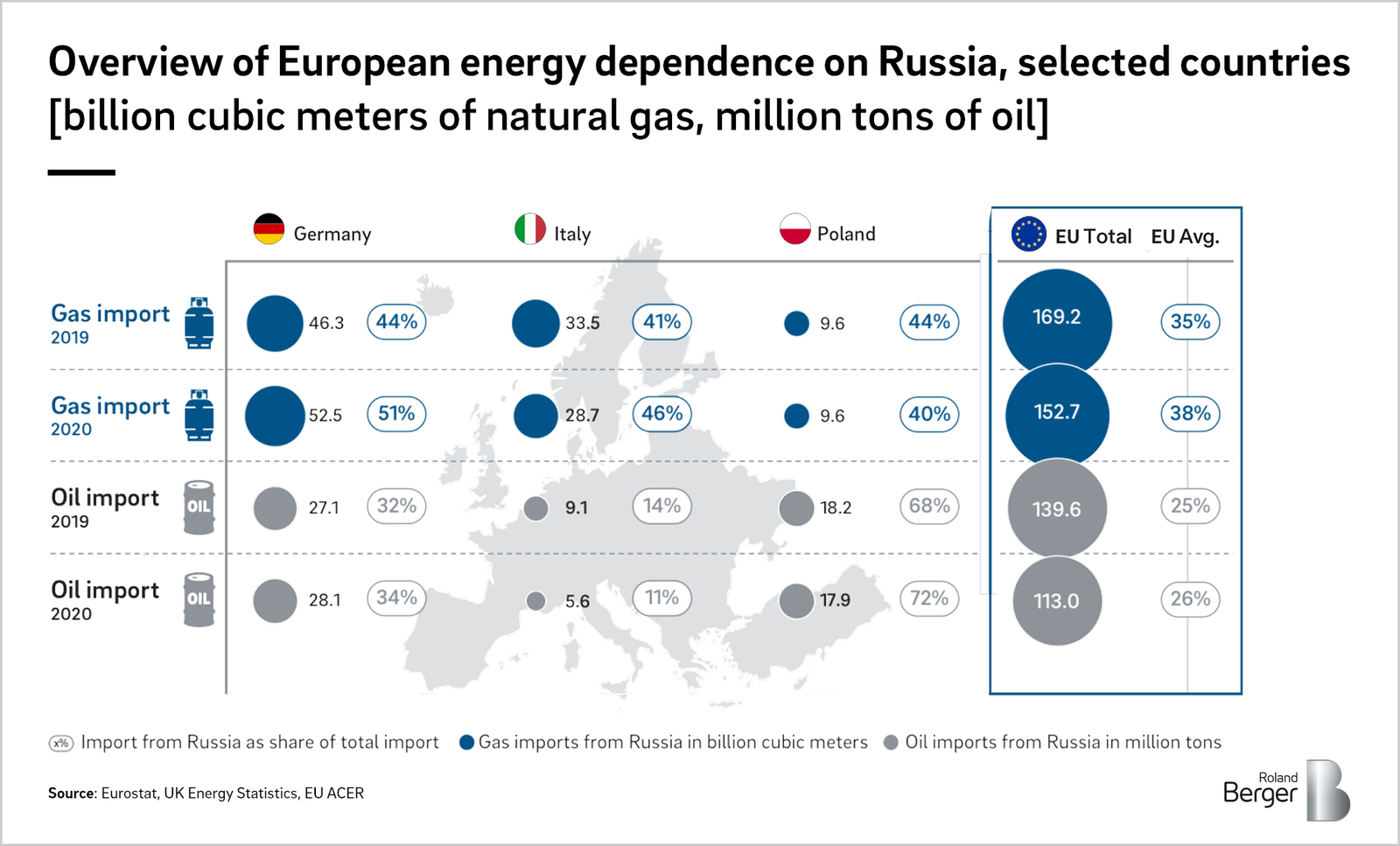
In response to the severe supply risks associated with dependence on Russia, many Western governments are now prioritizing diversification of the energy supply. This has led to the observation by some analysts that the goal of rapid diversification could to some extent undermine the decarbonization efforts of recent years.
We suggest taking a longer-term view. We believe that while the emergency situation has shifted some priorities in the short term, the longer-term goals of diversification of the
energy supply
and decarbonization are not in fact mutually exclusive. Indeed, the two goals may actually be synergistic: decarbonization could be the key to ensuring supply security and energy independence for Europe and many other OECD countries. Thus, if the European Union meets its target of 27 percent renewables in final energy consumption by 2030 and fulfills its objective of reducing CO2 emissions by 80-95 percent by 2050 compared to 1990, it will make itself significantly less dependent on Russian oil and gas in the process.
Achieving the dual goal of energy independence and
decarbonization
is not an easy task. It requires a concerted effort by key stakeholders such as government ministries, the central bank, major energy companies and financial institutions such as banks, insurance companies and so on.
Some of the areas of a unified government response are improving preparedness for potential sanctions on fuel imports from Russia, "nearshoring" oil and gas (in other words, increasing domestic and regional supply), increasing oil and gas storage obligations, improving the physical security of strategic reserves, and boosting the resilience of energy systems. In parallel, such a response should include pushing decarbonization as the key to the energy transition, fast-tracking renewable and low carbon projects, and providing regulatory and investor support for the energy transition.