Paul J. Siegenthaler, a London-based executive who specializes in assisting corporate transitions, also starts every engagement by talking to people. "It's all about listening skills, asking open questions and capturing not only what the individuals answer, but also thinking beyond the words to capture what they are saying," he says. "Then dig through the layers of the organization, downwards, to detect any disconnect between the thinking of the senior management and what people perceive below them."
But don't stop at middle management: "The CEO of Coca-Cola, the CEO of PepsiCo, all these people, always, in a regular disciplined way, interact with the customers and with the frontline employees. So they get a very good feel for what is happening in addition to the information that comes from the information systems," says Ram Charan, a celebrated executive coach, advisor to many Fortune 500 companies and CEOs and author of 25 books on business. At the same time, executive coach Carol Kivler advises that you shouldn't listen to every rumor you hear. "If somebody starts to give information on somebody else, shut that down... third-party information – you can get into a lot of trouble with that."
Lost in translation
The second challenge is making sure you understand what you've heard, which is not always easy, even if people share a common language. "One assumes there is a clear and transparent understanding when in fact, depending on one's cultural background, the same words can mean something quite different," says Siegenthaler. "The Americans have many famous jokes regarding what the British say and what they actually mean." He suggests getting around this problem by probing more deeply. "My way of finding out what is hidden behind the spoken words is to ask the respondents to illustrate their statements with a few examples that give more tangible meaning to statements – a short story or scenario gives a clearer illustration or definition of the issue the responder is trying to discuss," he says.
"Transference of real thought is not the same in every culture," agrees Charan. "You've got to build trust, you've got to listen more intently and when you get the idea from the other person, you've got to verify it. Go slow – don't go fast – and connect." Charan recommends a technique he calls "crystallizing" – concisely summarizing what the other person has just said. "It's a 100% learned skill," he says. "If you are working in a company and you have a boss or colleagues who do that, you will learn very quickly how to do that... you can pick it up in four or five weeks."
Of course, it's important to keep in mind that the difficulty in making the connection may not lie with the other person: Of the 11 million pieces of information our brain receives every second, we are only conscious of approximately 40 items. "All of us have preconceptions about people based on their social and ethnic background, and those impressions influence how we respond. We can't help it," says Sara Taylor, author of Filter Shift: How Effective People See the World. We aren't doomed to misunderstand, however. Taylor says it takes eight or nine hours to learn how to "filter shift" – that is, to compensate for the unconscious filters that may be preventing you from fully understanding a person with a different background, and to be aware when the same thing is being done to you.
Trusting your intuition
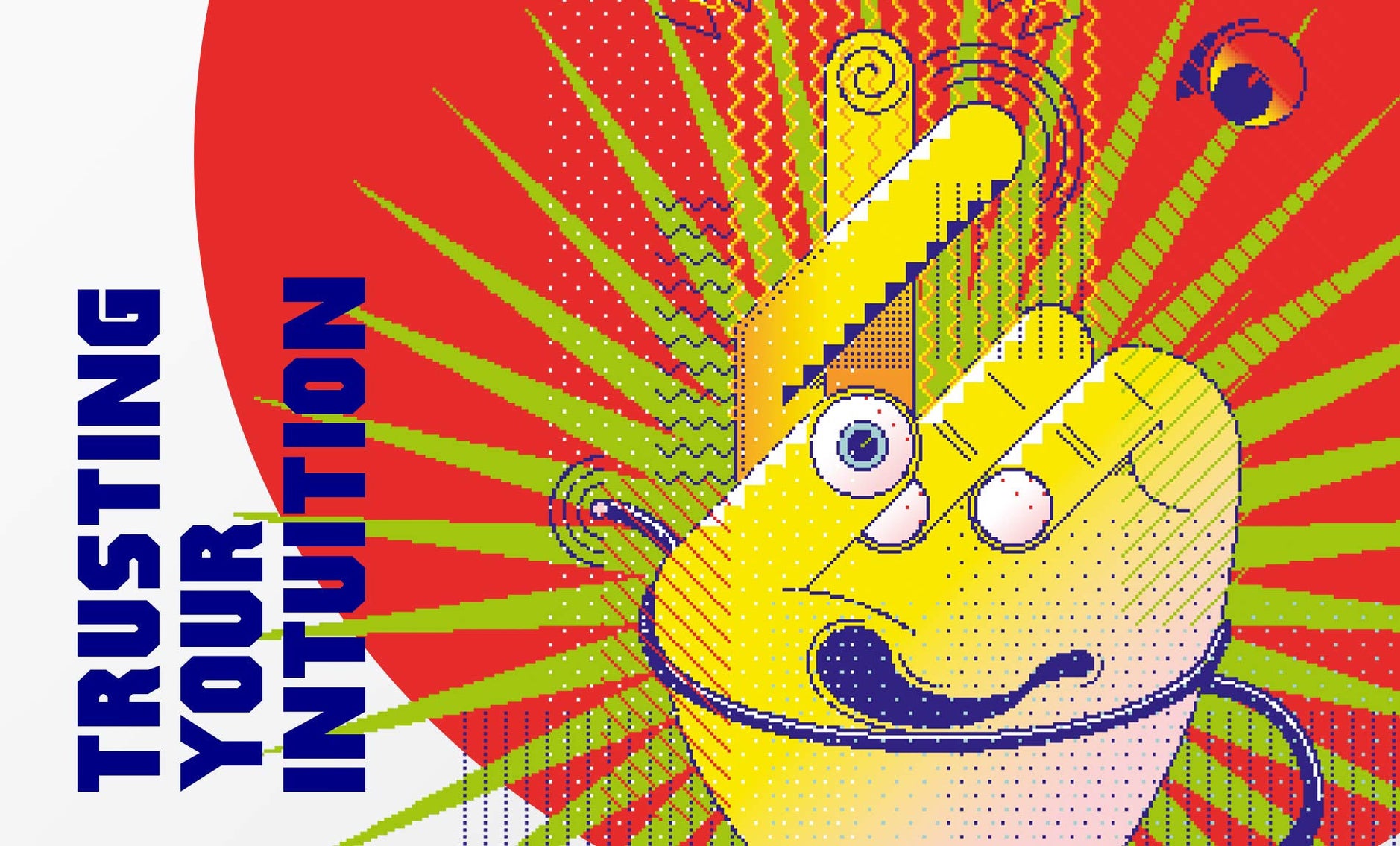
In other situations, however, the subconscious can be a powerful tool for better decision-making. A Dutch-American research team conducted experiments in 2008 in which they found that people tended to make better decisions about complex problems when they didn't have very much time for reflecting on the particulars. Loran Nordgren, part of that team and an associate professor of management and organizations at the Kellogg School of Business at Northwestern University, likens conscious thought to a spotlight that is narrowly focused on one aspect of a problem. Unconscious thought, on the other hand, "is more like a child's night light, casting a dim light on the entire decision space without focusing on any one particular thing."
Gerd Gigerenzer, director at the Max Planck Institute for Human Development, director of the Harding Center for Risk Literacy in Berlin and author of Risk Savvy: How to Make Good Decisions, also advises trusting your gut instinct, if the decision is in a field that you know well. Not acting on your intuition can be expensive: Gigerenzer has surveyed managers who said that as many as two out of three decisions they made were defensive. That is, they chose the path that carried the least personal risk, not the one they believed to be best for the company. This kind of behavior tends to be particularly prevalent in organizations with a negative error culture, according to Gigerenzer. A positive error culture openly acknowledges mistakes and adjusts the system to ensure that they don't happen again. In a negative error culture, however, mistakes should never be made. As a result, when mistakes are made, they stay hidden, and the problems remain uncorrected. How do you know whether you're working for a positive or negative error culture? If you speak on the subject and the audience greets you with a deafening silence, Gigerenzer says, you are probably working in the negative kind.