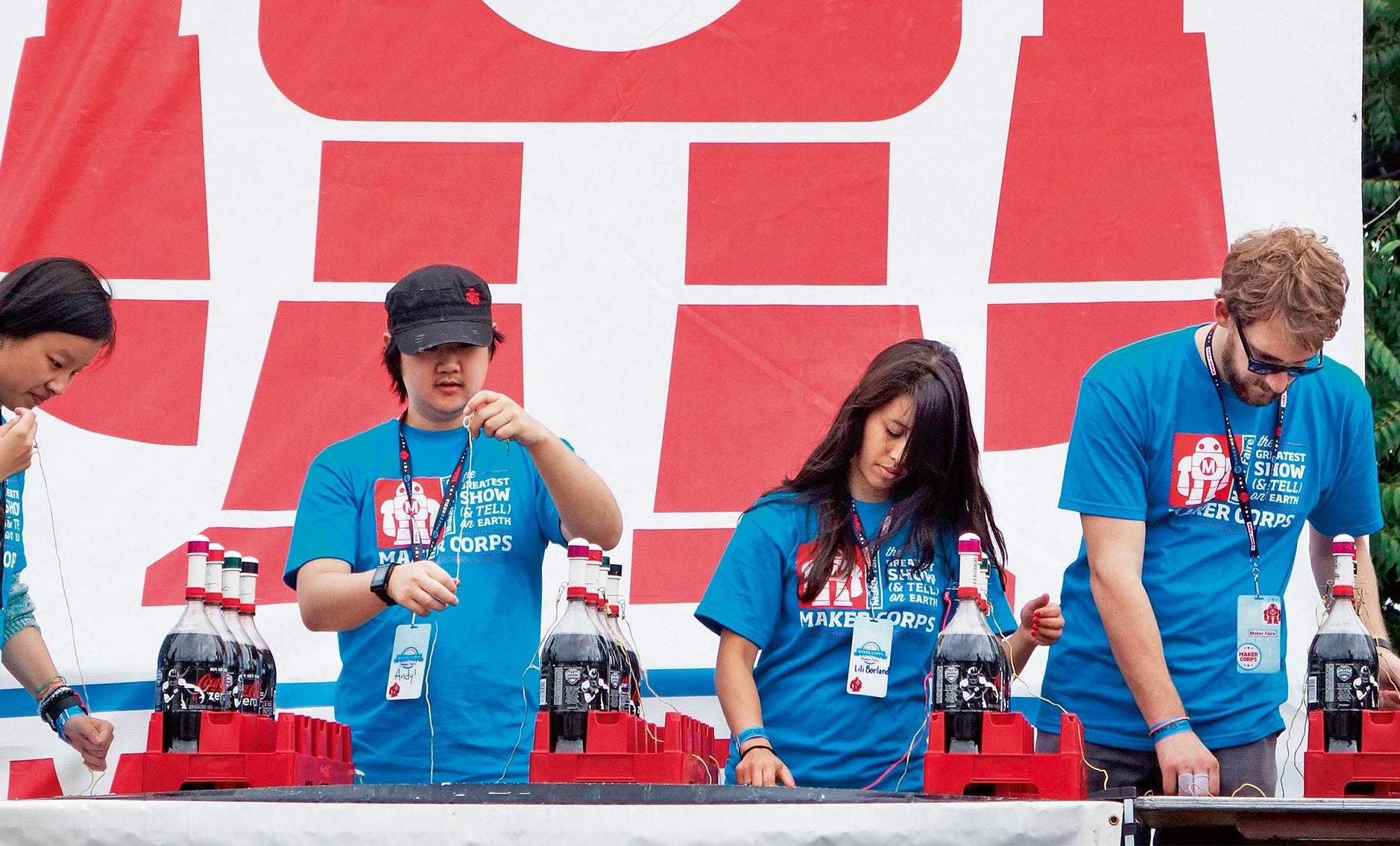
But it doesn’t necessarily pass any economic test. Why would anyone else want it? Where are you going to sell it? How do you compete with China? A fraction of those makers might have aspirations to entrepreneurship, and they’re going to have to ask those tough questions about market size, distribution and building materials, etc. But that’s the minority.
The great liberating thing about the maker movement is that you don’t really need a good reason to do anything. When the cost of creation is so low, you don’t have to overthink stuff. You can just do it and see what happens, and let the marketplace pull you into entrepreneurship, rather than falling in love with a dream, pursuing it obsessively on your own for years, releasing it into the world to a giant shrug and then having your spirit crushed.
Was it similar when you started your companies?
Always. I got pulled into all this. I just did stuff, and most times people ignored it. Every now and then people liked it, and when they liked it I made more of it. Every weekend I do projects –sometimes doll houses with my daughters, sometimes software, or electronics, or mechanics. Every weekend it’s a struggle and I’ve accomplished something – or not. And I’m like: "Okay, does that feel like I want to do more of it, or not?" And sometimes I’m like: "That was hard. I don’t like doing that. I’m going to stop." And sometimes I’m like: "That was actually amazingly cool. I had no idea I was going to get so far – I think next weekend I’ve got to do more." It’s like raising kids: It’s full of failures and struggle, but the occasional successes are so inspiring that they’re worth everything else.
Is there anything you’ve learned from running 3DR that’s made you question some of the things you were writing when you were a writer?
Absolutely, yes. And the book to test it against is "Makers", which was written before I came on full-time at "3DR". When I wrote it (in 2011) I was still the editor of "Wired". The memory of starting the company at my dining room table with my children was still pretty fresh and I still had one foot in the garage and the maker movement. You could see how we got there, but what was less clear was how to get from five to 50 to 100 employees – you know, the scaling part.