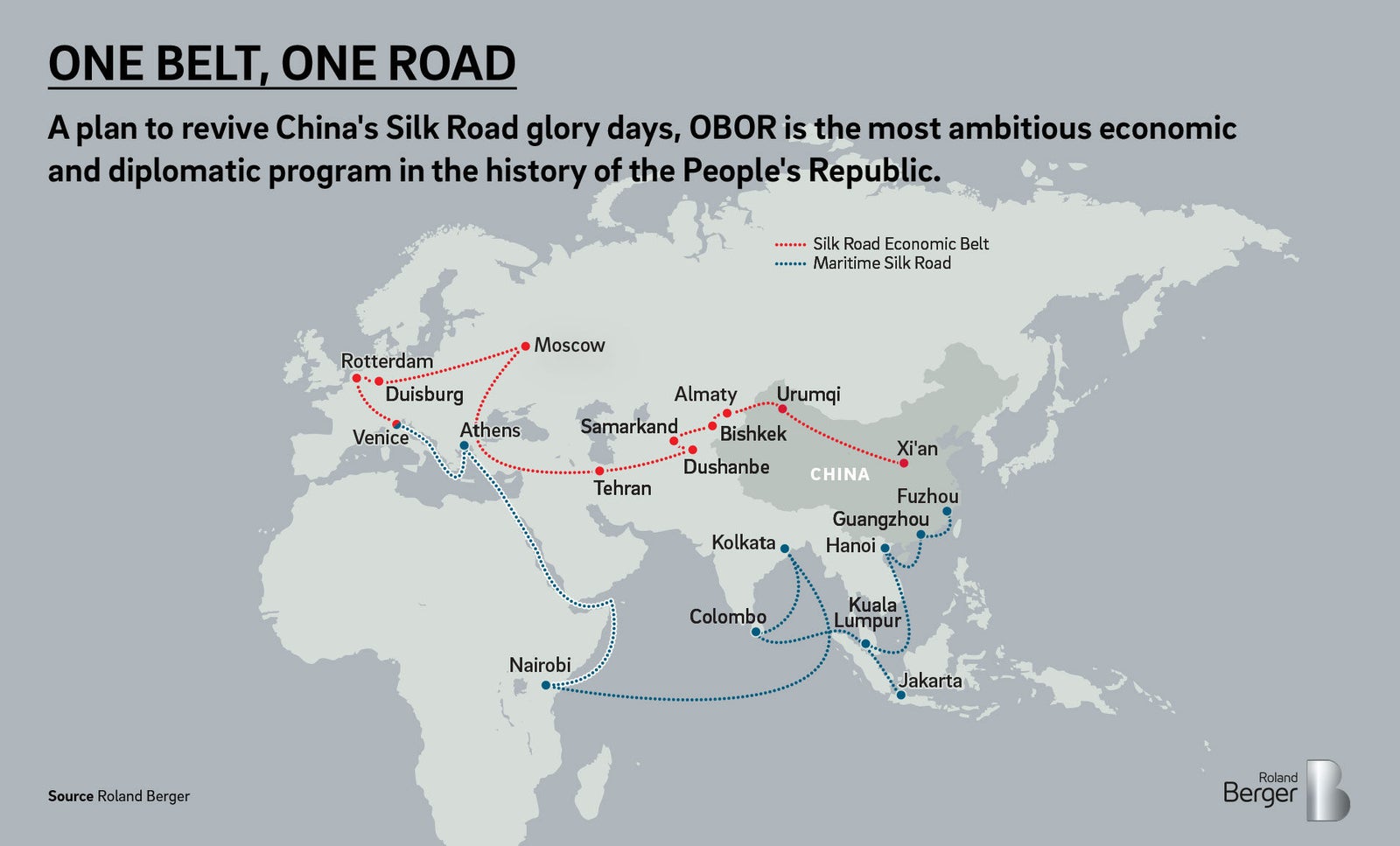
The most important step in that direction so far has been the creation of the Asian Investment Infrastructure Bank (AIIB), set up in Beijing in 2016 – China's answer to the World Bank. After begging political leaders for many years to give China more clout in international institutions, and being brushed off consistently, Beijing has now started to create parallel institutions – ones that critics fear it aims to dominate itself. China's president denies it, but when he uses the word globalization, he still means this new "Globalization 2.0," a new global world order shaped much more by Chinese interests. Yet, many observers warn about confusing China's ambitions with its abilities. "Giving a speech is not enough to dominate the global trade system," says Michael Pettis, professor of finance at Peking University's prestigious Guanghua School of Management and author of the book "The Great Rebalancing: Trade, Conflict, and the Perilous Road Ahead for the World Economy". China cannot become the new master of global trade before it puts its own house in order, argues Pettis. "China would have to be in the position of showing very, very large trade deficits so that the world can run reciprocal surpluses – as the US is currently doing," says Pettis.
Already, there are warnings that with multi-billion dollar investments in railroads, nuclear power plants and port projects from Sri Lanka all the way to Greece, Beijing is overstretching its reach. The double-digit growth that China enjoyed for a long time has recently slowed to 6.5%. The years of China's economic miracle are over. And even the current growth is financed to an alarming extent by credit. China now needs globalization more than globalization needs China. Its national debt has reached two and a half times the country's GDP. "Debt is increasing faster than China's ability to pays those debts back," warns Pettis. It would already take more than $2 trillion to clean up China's debt problem. In order to return to sustainable growth, China's economic planners would have to begin serious economic reforms to increase household income and stimulate domestic consumption. But those reforms are nowhere in sight. China's ambitions to lead the world are currently being foiled by… China.
The US and European business community in China has grown increasingly skeptical regarding pledges of globalization and free trade. "The mood among US businesspeople here at the moment is not very positive when it comes to China. That has really changed," says James McGregor, a former "Wall Street Journal" correspondent and author of the best-selling book "One Billion Customers: Lessons from the Front Lines of Doing Business in China". McGregor, who now works as chairman of the public relations firm APCO in Beijing, is, like other foreign businessmen, eyeing the Made in China 2025 plan with suspicion. They fear China has started to buy high tech companies abroad, while investments by US and European companies in China remain restricted.
The word "reciprocity" has found its way into official publications at the European Chamber of Commerce in Beijing. "China now invests four times as much in Europe than Europe in China," says Jorg Wuttke, who served as president of the European Union Chamber of Commerce in Beijing until May 2017. Beijing has armed its large state-run enterprises with cheap loans and instructed them to invest in Europe on a large scale in strategically important sectors like IT, including cloud computing and semiconductors, or robot technology. European companies, on the other hand, are still forbidden from investing in many sectors, with insurance and banking services the most glaring examples. China is allowed to buy harbors in Greece, airports in France and robot companies in Germany, while similar deals in the other direction are still unthinkable. In Europe, says Wuttke, people are asking: "And… where are we?"