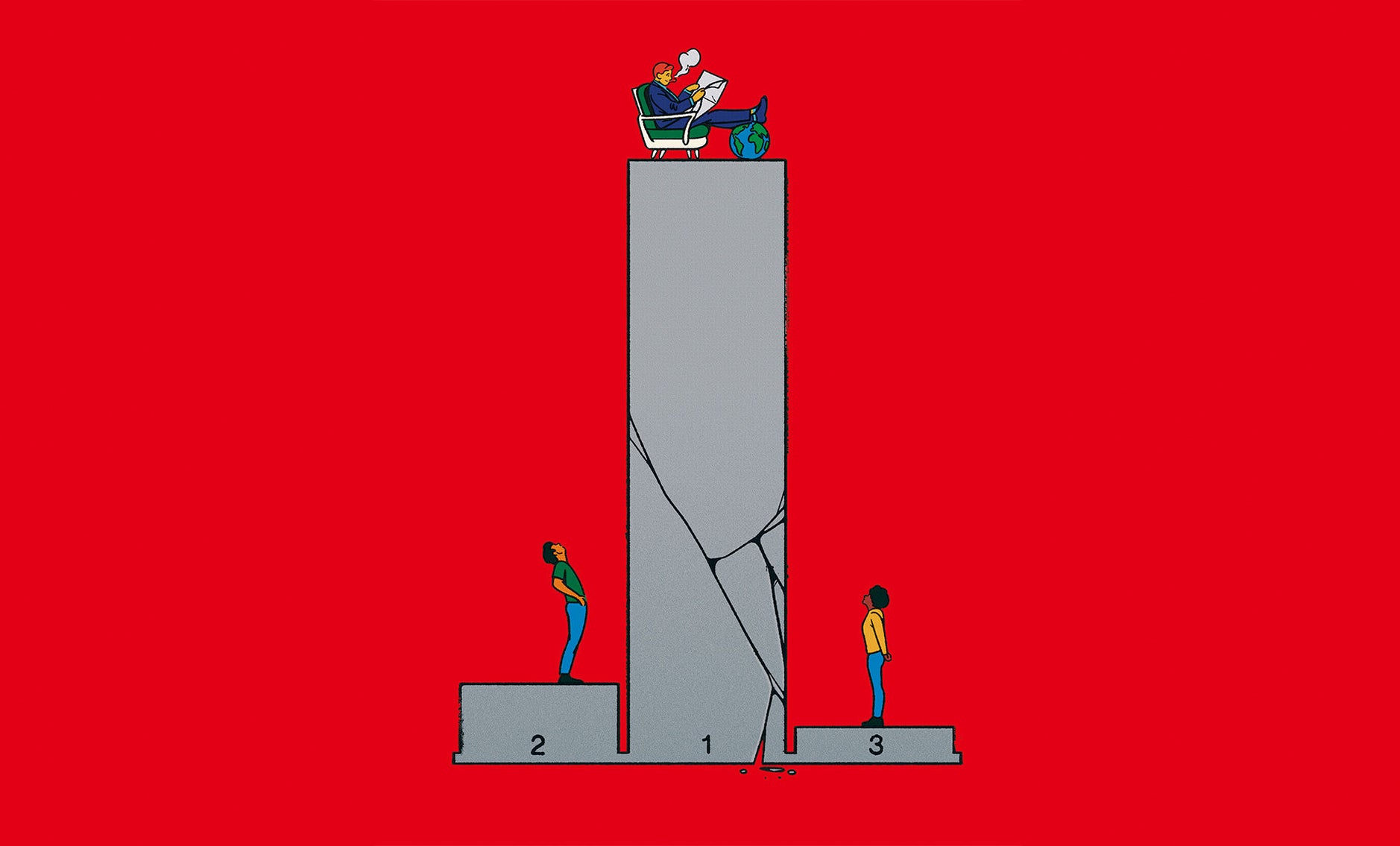
According to Wolff, the "[the US has] peaked: The American Empire is now in decline." The solution? Introduce far more democracy into the community of shareholders. Under the current system, 10% of shareholders hold 80% of the shares. The rule is one vote per share. Switching to one vote per shareholder would be so much fairer, Wolff argues. "I want to convert the businesses of this country, factories, offices, into one-person, one-vote democratic communities," he says. "I believe you will get decisions that are radically different about our economic life if you do that."
How did American corporations come to place the interests of shareholders above all else? The foundations of that philosophy were laid down in the 1970s, when a team of economists, including Milton Friedman, envisioned a bigger role for corporations in society. They identified profit maximization as an objective that should be achieved at all cost, in a free market, with minimal government intervention. The man who turned that philosophy into a mantra, not just for himself and his company but for all of corporate America, was
Jack Welch,
chairman and chief executive of General Electric for 30 years – the man who, on departure, collected a severance payment of more than $400 million.
In his book on Welch, The Man Who Broke Capitalism, David Gelles describes the late executive as "hungry for power and thirsty for money" and "an ideological revolutionary who focused on maximizing profits at the expense of all else." Under "Neutron Jack," he writes, GE went from "an admired industrial behemoth known for quality engineering and laudable business practices'' to "a sprawling multinational conglomerate that paid little regard to its employees and was addicted to short-term profits." Because Welch got rid of more than 100,000 employees while at the helm and went on to be named "Manager of the Century" by Fortune, he became a model that other US corporations and chief executives followed: by dedicating themselves to the cause of short-term profit.