What are the current key trends within e-mobility in Belgium?
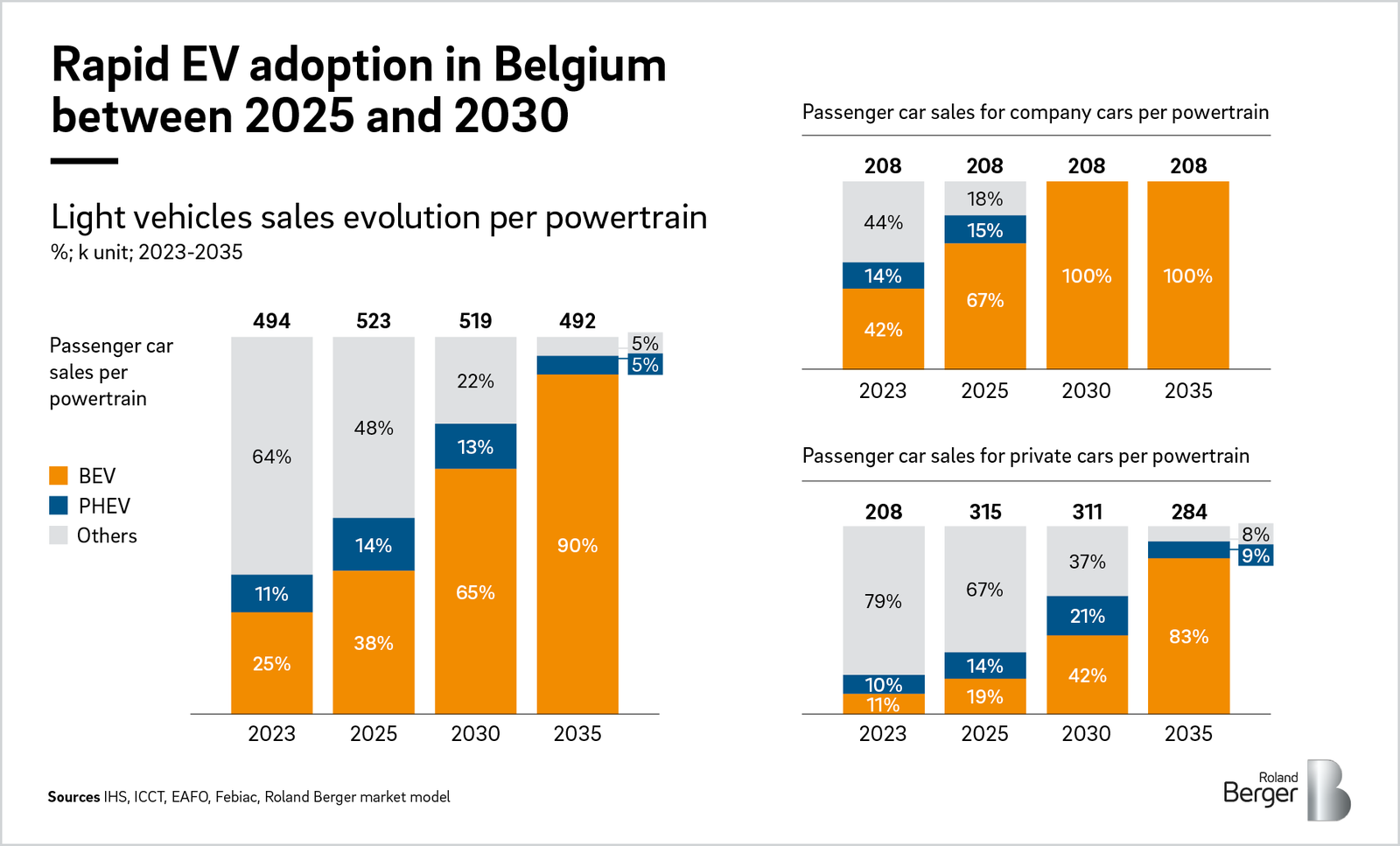
The country is a solid performer in terms of EV adoption, with a 30% xEV sales penetration rate – the global average is 16%, while the top three nations average 61%. However, we expect it to soon take a leading position. Electric and hybrid-electric vehicles are expected to grow to 78% of total car sales in 2030.
There are two specific drivers for increased EV adoption. Firstly, Belgium has an exceptionally high number of company cars – roughly 40% of all new cars sold are
corporate lease vehicles
. By 2027, only EVs will be fully tax deductible, so we expect corporate fleets to be more than 65% electric by then. This will have a knock-on effect for the private market when leases expire and cars are sold as second-hand vehicles. Secondly, there will be an increase in low-emission zones within certain cities, restricting entry for non-electric vehicles. The precise nature of these laws is still be decided.
In terms of charging infrastructure, the government is issuing large tenders to equip regional roads with sufficient charge points, which is triggering investment from larger players like ENGIE.