What are the current key e-mobility trends in Indonesia right now?
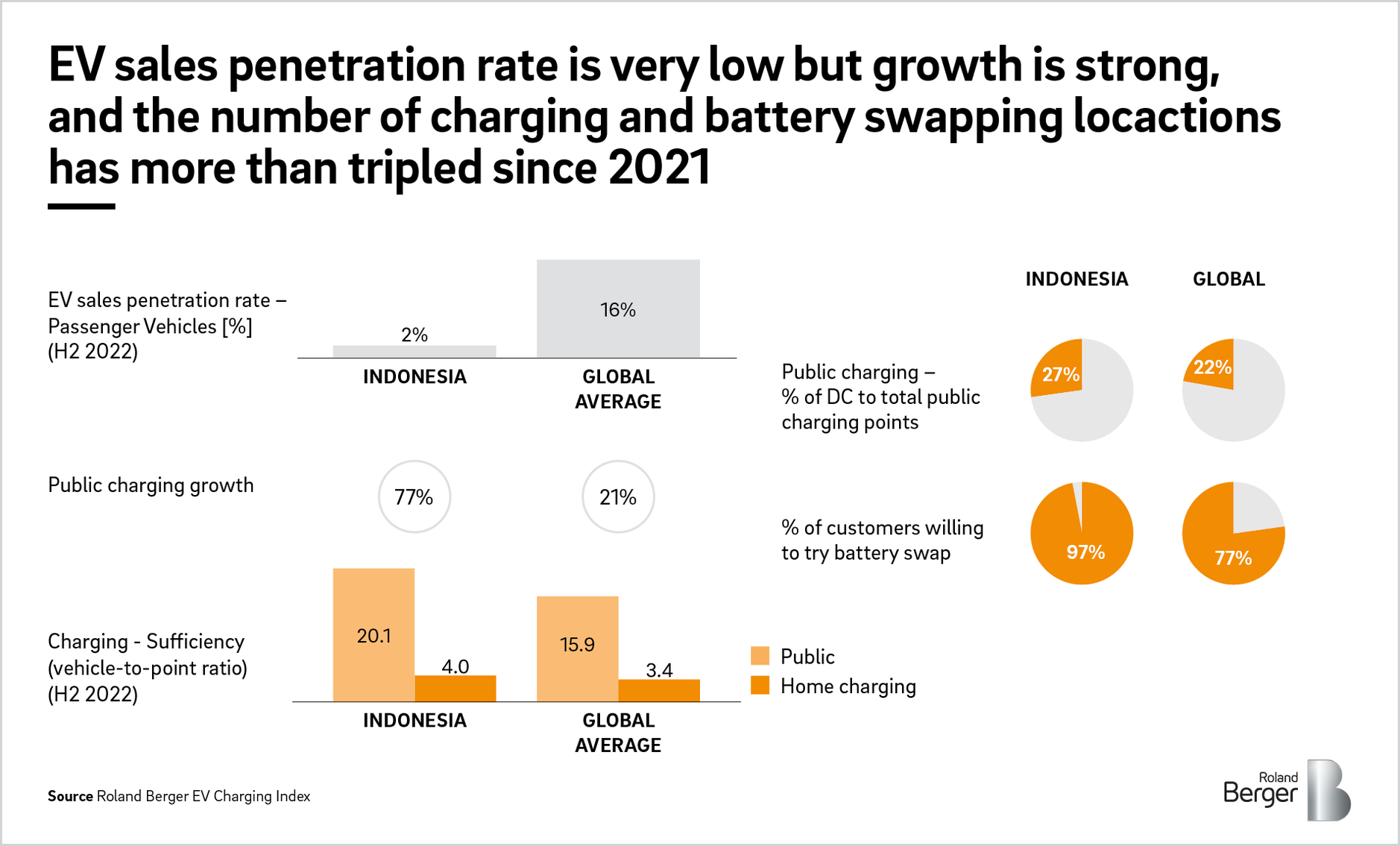
At 2%, the EV sales penetration rate is very low – well below the global average of 16%. But
growth is strong,
with the EV parc approximately 10 times larger at the end of 2022 than it was halfway through the year. The government has introduced fiscal incentives to encourage EV adoption, such as tax exemptions for certain battery electric vehicles (BEVs). Electric two-wheelers are also subsidized up to a price of IDR 7 million.
Indonesia has set ambitious manufacturing targets to play a greater role in e-mobility. Its abundant nickel resources are crucial for
EV batteries
and by 2025 it aims to sell 1.8 million domestically produced electric two-wheelers and 400,000 four-wheelers. The government has also granted the private sector access to state-owned BEV technology to encourage expansion in this area.
The ratio of vehicles to public charge points (20.1) is above the global average (15.9) but growth in Indonesia’s charging infrastructure is strong – at 77% this is well above the global average of 21%.
Overall, the number of charging and battery swapping locations has more than tripled from 2021 to 2022. Despite most infrastructure being concentrated around the Greater Jakarta area for now, this should soon spread elsewhere.