Performers and drivers
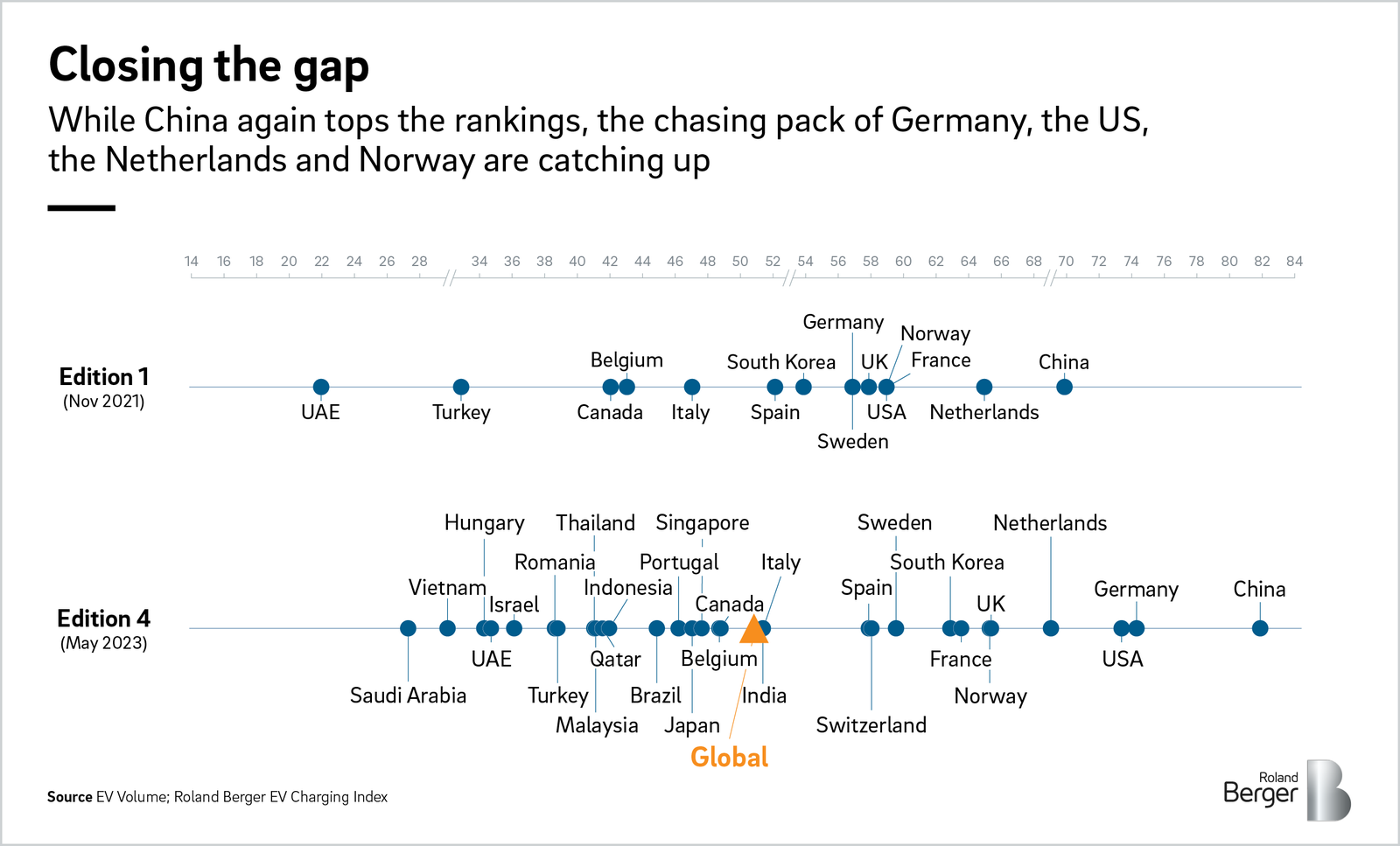
While Germany and the United States were the best performers in the top five, there were plenty of improvements elsewhere. At the other end of the table, Malaysia (41) and Indonesia (41) both jumped by 12 points, and even bottom-of-the-table Saudi Arabia leapt from 16 to 27 points. The improved performance of countries across the Middle East and
Southeast Asia
helped push up the average country score from 45 to 51 points, indicating a healthy and growing global EV charging market.
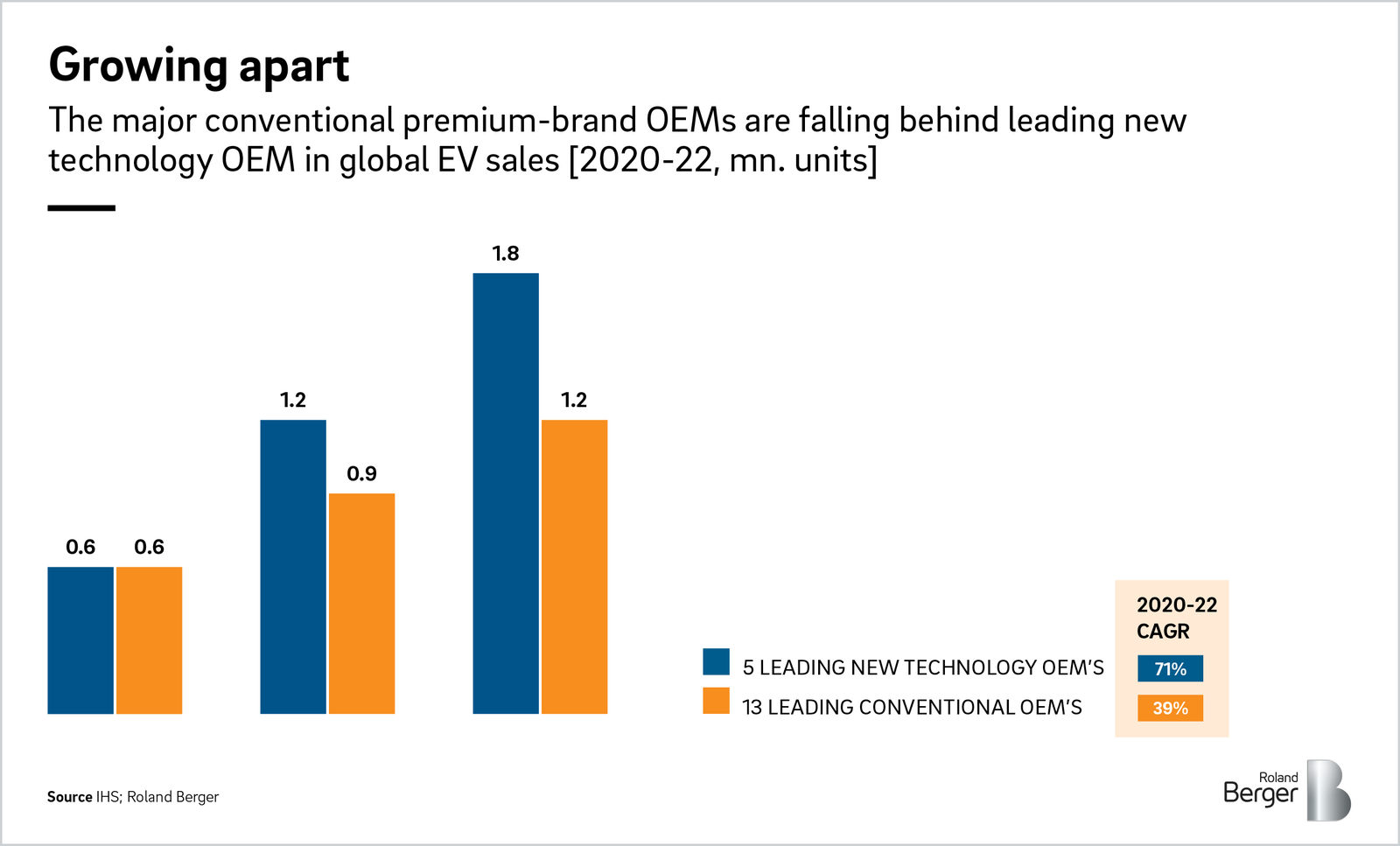
Several recent events in the EV market have helped to drive this overall increase. A key factor is that a price war has broken out. While the choice of higher-price segment EV models has always been strong in global markets, the pickings in the lower-price segment have been slim. OEMs have been slow to fill this gap, but are now acting. Tesla, for instance, is cutting prices on its existing models and is exploring a low-cost option, while BYD is set to offer its basic Seagull model from USD 12,000 in China.
Developments in the
charging market
itself are also having an impact. For example, in late 2022 Tesla began exploring opening up its much-envied and fast-expanding supercharger network to all EVs, while GM announced a major push into holistic charging services through its new subsidiary, GM Energy.
But perhaps the biggest development was the announcement of a series of new laws and investment in electrification by the US government. Its Inflation Reduction Act (IRA), National Electric Vehicle Infrastructure (NEVI) program and CHIPS and Science Act will together have a major impact on EV sales, charging infrastructure and semiconductor capacity, and provide billions in funding.