How will e-mobility evolve in Romania in the next few years?
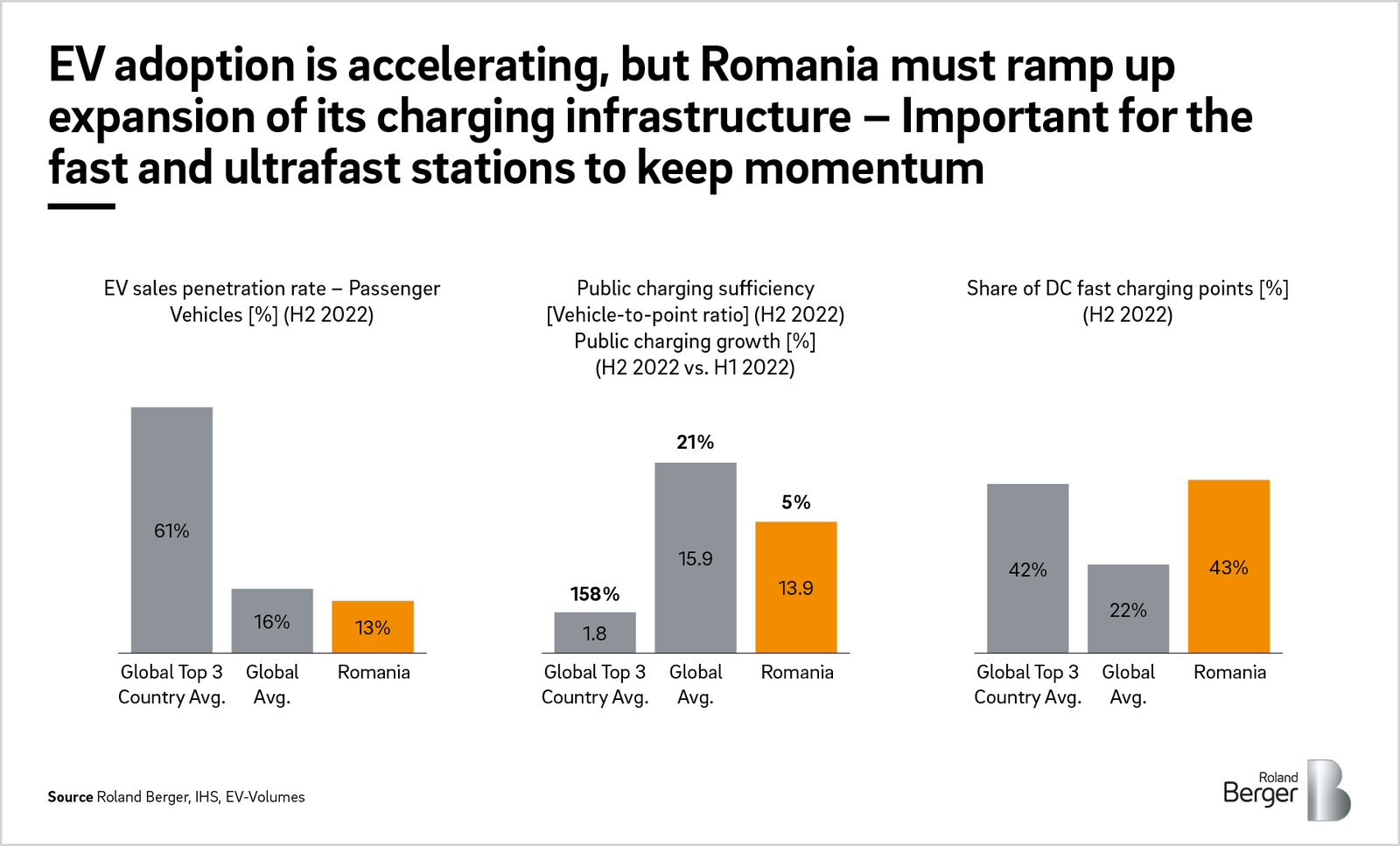
There are numerous state initiatives to expand the public charging network, which are likely to have a significant impact in the coming years. The National Recovery and Resilience Plan (PNRR), for instance, has committed to funding the construction of 6,500 charging stations by 2026, tripling the current number. And if the current trend of installing predominantly fast and ultrafast charging locations continues, it will provide a major boost to the overall EV market.
The outlook for EV sales is mixed. Subsidies from the Rabla Plus program are an important driver for the growth in EV adoption. But in the long term, these subsidies could limit sustainable development of Romania’s e-mobility market. Several European countries, including Germany, Sweden and the Netherlands, are gradually reducing or eliminating financial support for the purchase of hybrid or electric vehicles. This is driven by the fact that the total cost of ownership for EVs in these countries is nearing that of internal combustion engine vehicles. Key to this are the punitive measures for higher polluting vehicles such as taxation or low-emission zones – measures Romania is yet to adopt. If Romania continues its current trajectory, without introducing these sorts of policies, the Rabla Plus program could actually become a barrier to sustainable EV growth by fostering dependence on incentivization.