What are the current key trends in e-mobility in Italy?
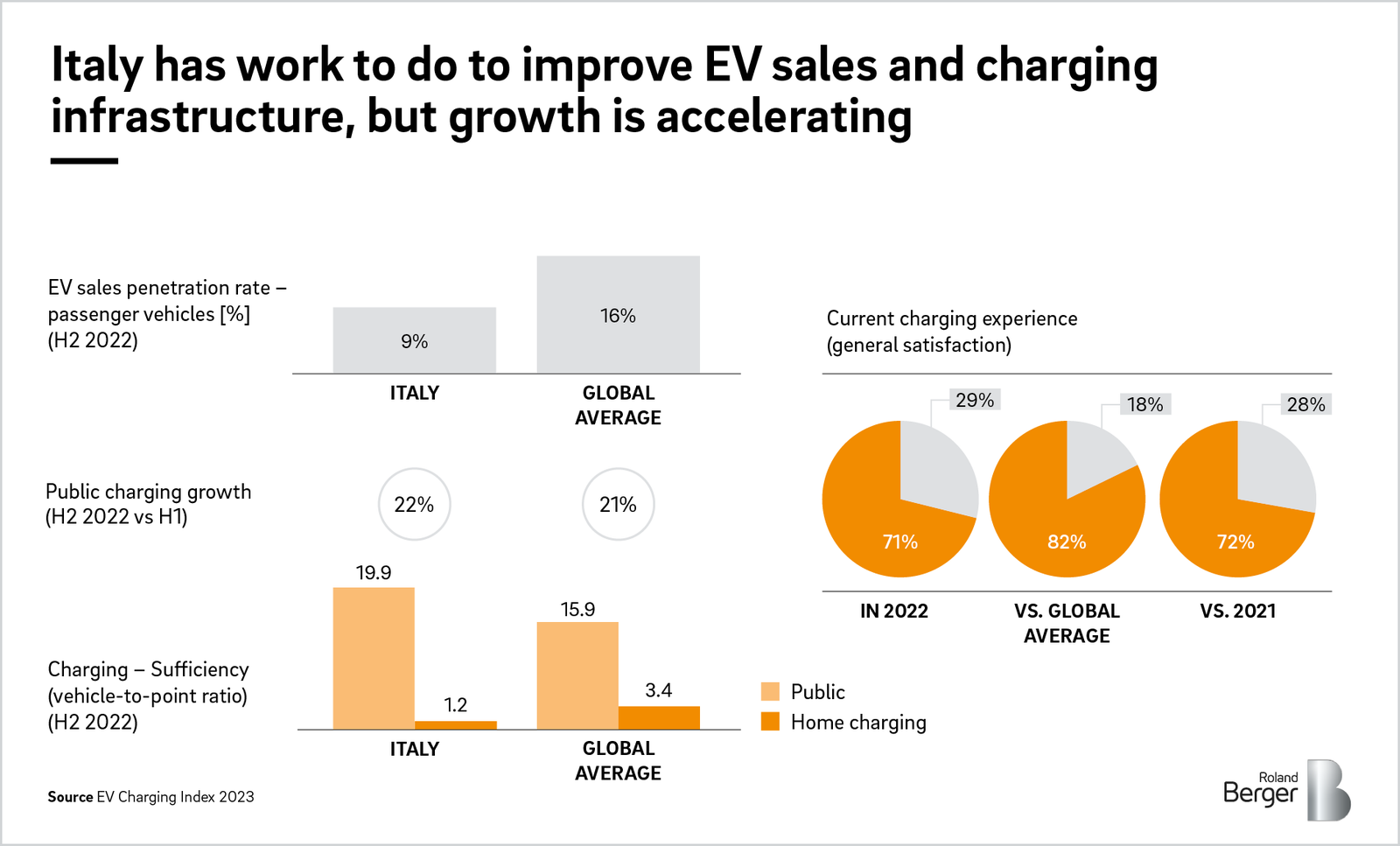
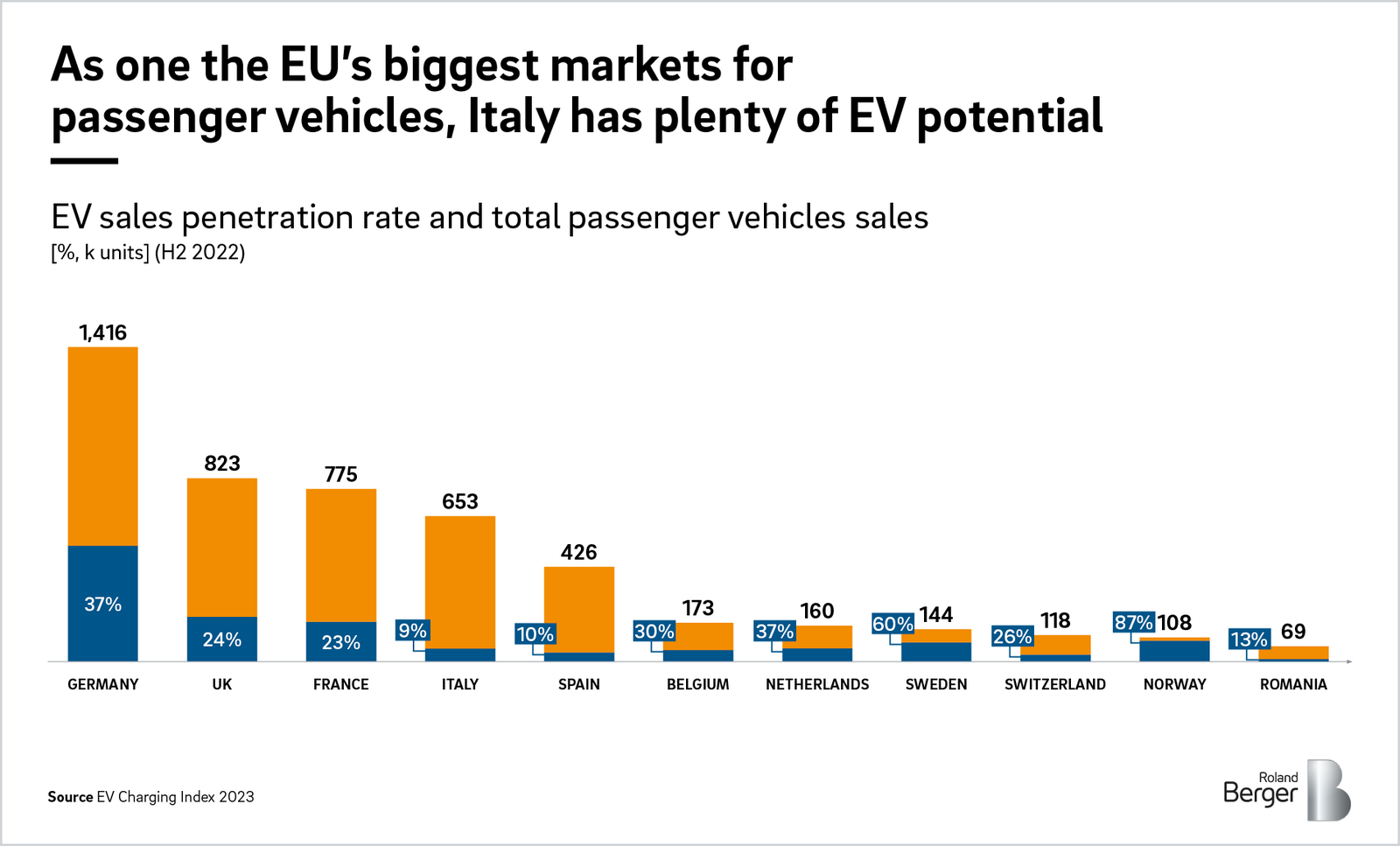
EV sales penetration suffered slightly in 2022 due to uncertainties over incentives. At 9%, the rate is some way below the global average of 16% but set to increase in 2023 with incentives now clearer. Italy is a highly attractive market, given the magnitude of the total market (fourth largest in EU, in terms of total vehicle sales). In its base scenario, the government has set a target of 6 million EVs by 2030.
In terms of public charging infrastructure, Italy’s vehicle-to-point ratio of 17.9 is just behind the global average of 15.9. However, its growth rate of 23% is better than the global average (21%). Destination charging is growing more rapidly than on-street charge points. The ratio of charge-points per kilometer remains low, though, particularly in southern regions. And just 12% of Italy’s public charge points are DC chargers – almost half the global average of 22%. It’s no surprise that general satisfaction with the current charging experience is below the global average (71% vs. 82%). Overall, public charging infrastructure is moving to high-power charge points of 90kW and upwards, which allows for a wide territorial coverage even with a low diffusion of charge points.