

Roland Berger’s analysis of consumer trends in Asia looks at the potential winners across categories, channels, and brands, offering valuable strategic insights.


Asian consumer trends: From growth to momentum in a complex landscape
How can brands and retailers turn Asia’s immense scale into sustained momentum?
Asia remains the engine of global demand, yet the landscape is becoming more complex each year. Spending patterns are diverging across markets, generations and income groups, while expectations around price, quality and convenience continue to rise. As the world’s largest and most dynamic consumer market, Asia is no longer a story of uniform expansion. Instead, it is a region where scale anchors, high-velocity growth accelerators and disciplined mature markets each set their own pace. For brands and retailers, the question is simple: how can they turn Asia’s immense scale into sustained momentum?

Our latest Asia Consumer Survey, based on 3500 participants across 12 APAC markets, reveals that the region’s growth is anchored by China and India, with a combined USD 23 trillion in consumption. Meanwhile, Southeast Asia’s “growth accelerators” like Vietnam, Indonesia, and the Philippines are forecasted to grow at 3%-7% CAGR, while mature markets such as Japan and South Korea focus on margin and value.

Yet, optimism is not universal. While India and China remain buoyant, mature markets like Japan and South Korea are more cautious, and consumer sentiment varies widely, even within high-growth economies. Understanding these nuances is now essential for leaders seeking to capture Asia’s next wave of growth.
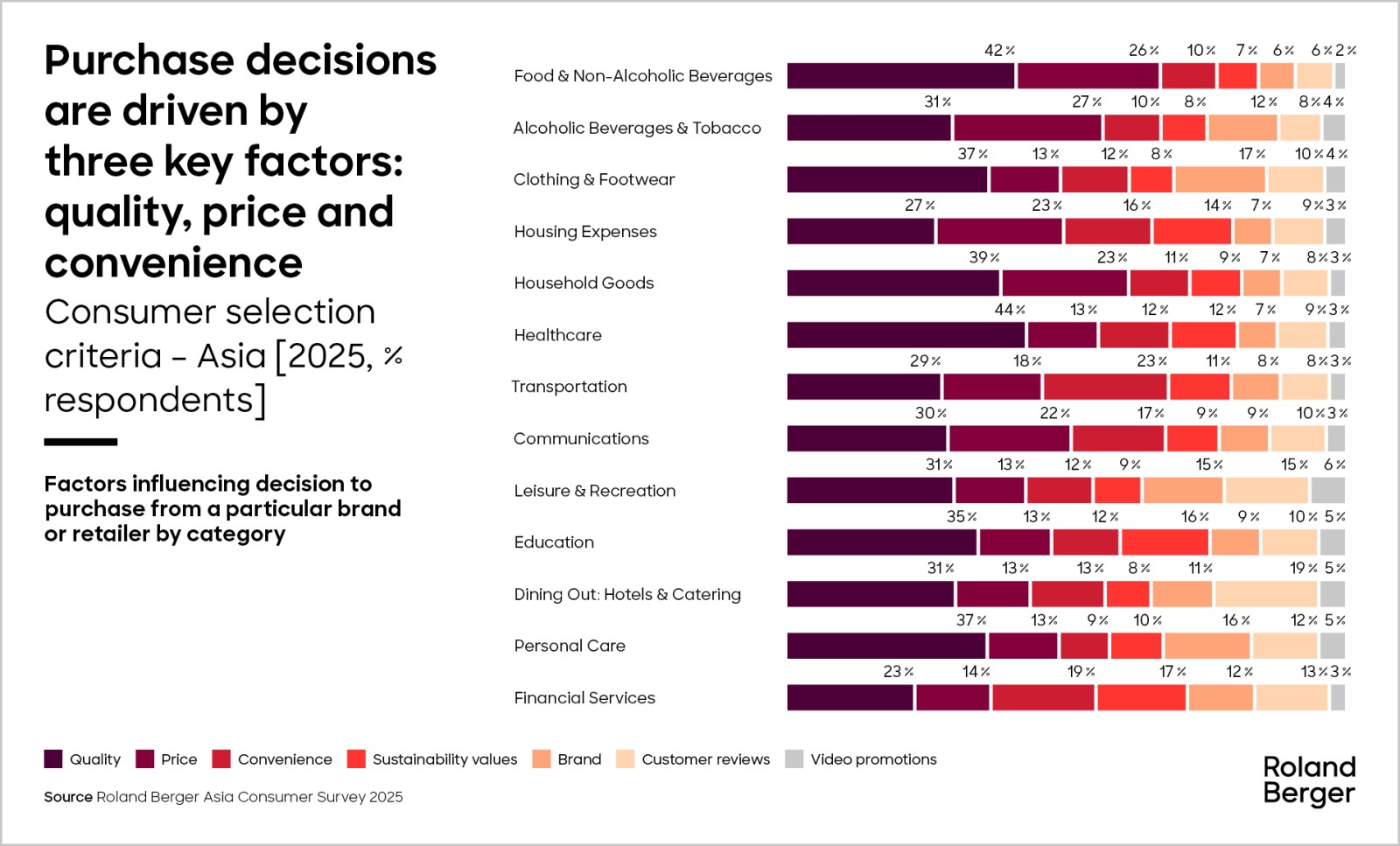
Quality, price, and convenience: the new value equation
Essentials-led spending dominates, with groceries, household goods, and clothing as the top categories. But the drivers behind purchase decisions are shifting. In mature markets like Singapore and Japan, price sensitivity is rising, even in premium categories. In contrast, developing markets are increasingly quality-focused, with consumers in Vietnam, Indonesia, and the Philippines trading up for trusted brands and better products.
Five personas, one region, many stories
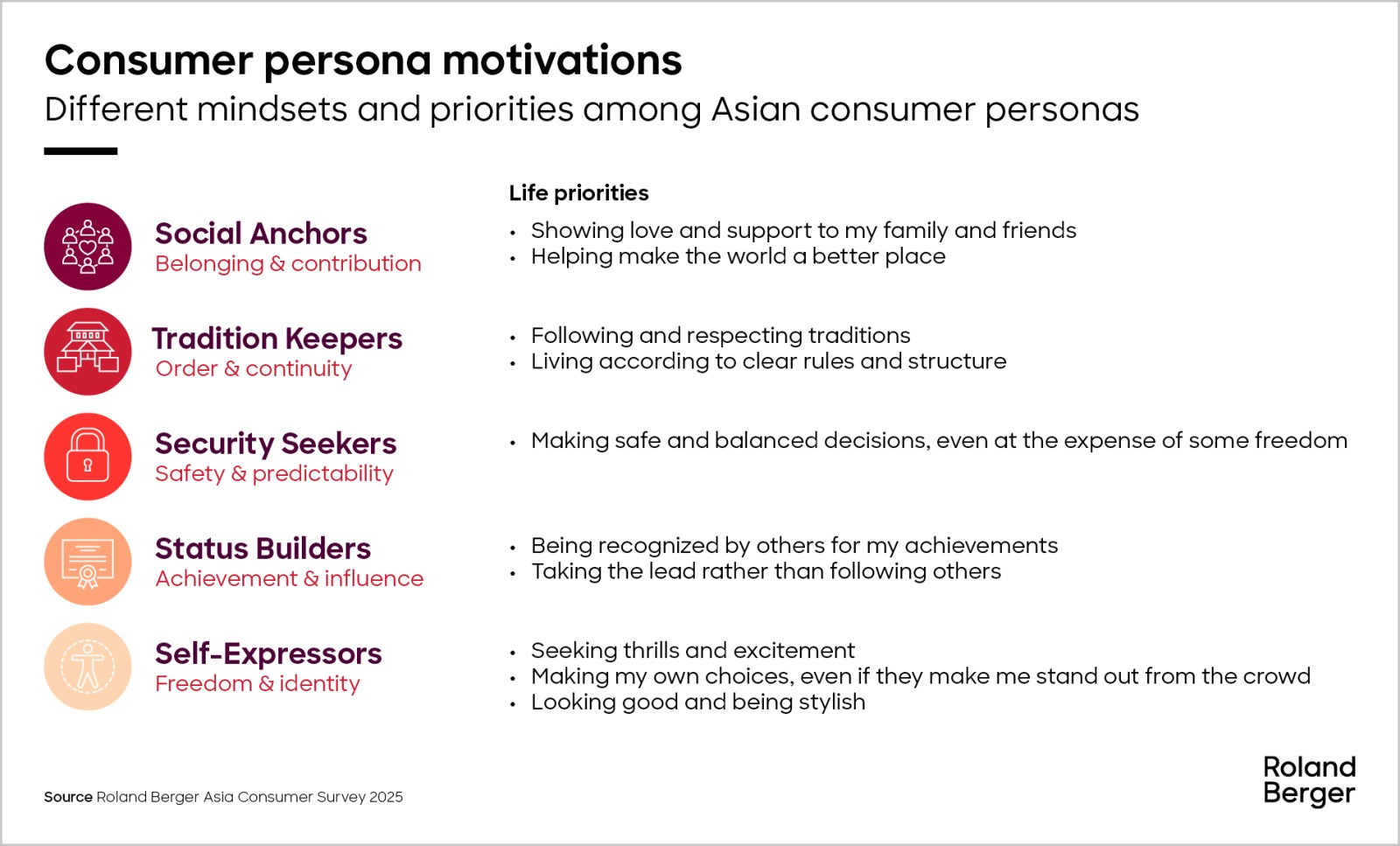
The study identifies five key consumer personas: Social Anchors, Tradition Keepers, Security Seekers, Status Builders and Self-Expressors. These archetypes shape spending patterns and priorities across the region, from the community-driven Filipino shopper to the quality-obsessed Vietnamese and the trend-driven South Korean. Understanding these personas is critical for brands aiming to localize their strategies and connect with Asia’s diverse consumers.
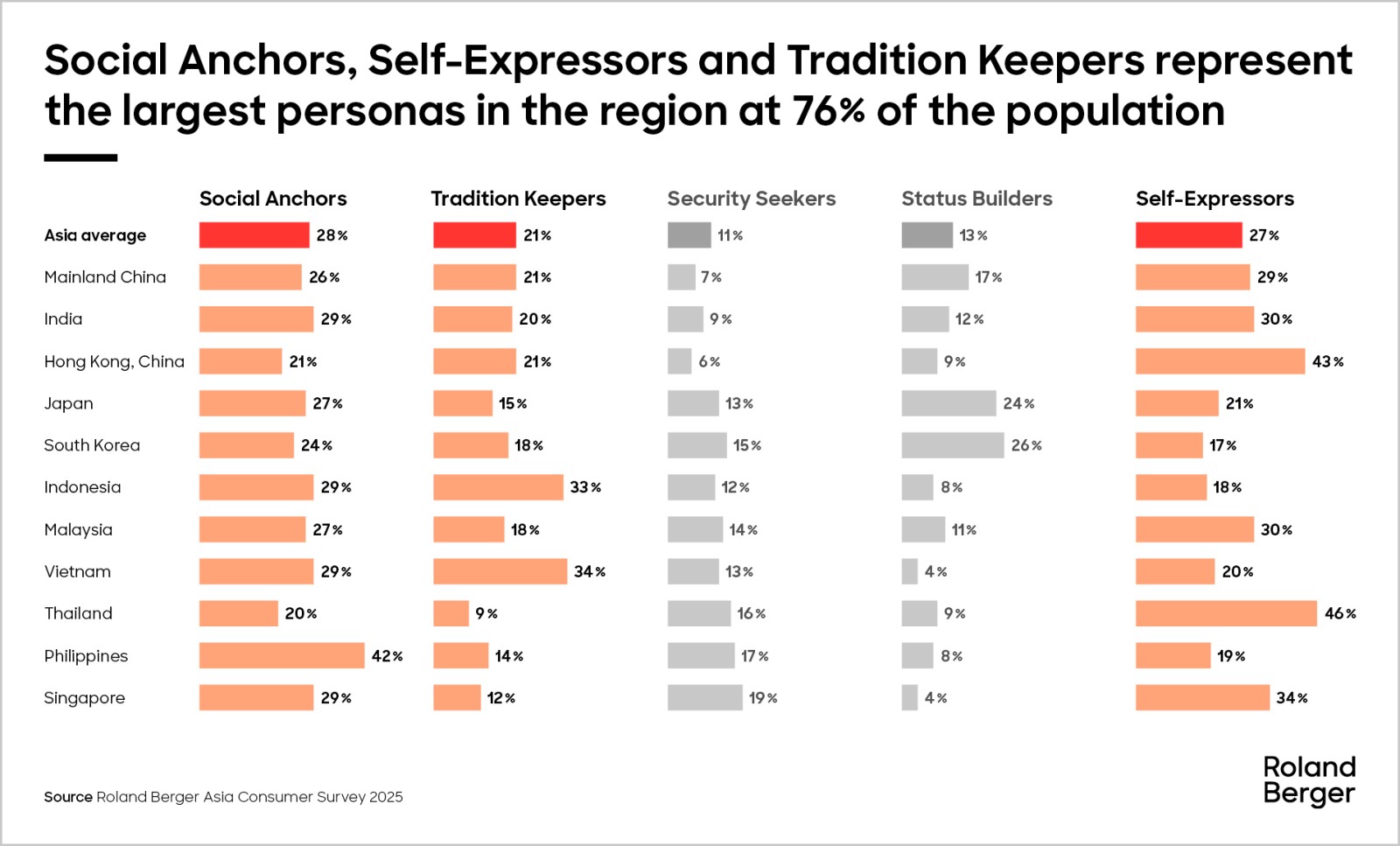
Our full study explores the five key consumer personas in greater depth, along with detailed analysis by age group and country.
Luxury making a comeback
Luxury is experiencing a resurgence as consumers gravitate back toward the foundational values of the category: exceptional quality, exclusivity and social prestige. This can be seen especially in apparel, beauty, and jewelry, but growth is concentrated in emerging markets.
Mature luxury markets are under pressure, with many potential new buyers unlikely to enter the category. For all brands, the message is clear: value is being redefined, and only those who can deliver on quality, trust, and relevance will win.

Omnichannel and experience are the new battleground
Physical retail remains a vital touchpoint, especially for trust and experience, even as digital channels grow. In-store experience, speed of delivery and seamless navigation are now baseline expectations. Brands must blend online and offline engagement, using omnichannel as both a differentiator and a necessity.
Brands that integrate data, logistics, and customer interactions across all touchpoints can build stronger loyalty, drive higher sales, and quickly adapt to changing market demands.
Strategic imperatives for leaders
To win in Asia, leaders should:
- Invest across scale anchors, growth accelerators and mature markets
- Anchor growth in essentials, but selectively premiumize
- Localize value strategies by market maturity and category
- Double down on brand equity and trust
- Leverage omnichannel across markets to drive differentiation
- Reframe sustainability as a quality and trust multiplier
The region’s advantages are clear: China’s unmatched scale and innovation, India’s rising affluence and digital adoption, Japan’s premium positioning and loyalty, South Korea’s trend-driven markets, and Southeast Asia’s youthful demographics and rapid urbanization.
However, challenges still persist, including uneven consumer confidence, price sensitivity in mature markets and the need for sharper value propositions.
Asia’s consumer future is complex, fast-moving and full of opportunity for those who act with precision and speed. For a deeper look at the personas, market contrasts and actionable strategies shaping 2026, download the full study.
Request the full PDF here
Register now to access the full study. Furthermore, you get regular news and updates directly in your inbox.
Further readings


