Fleet availability: the hidden constraint on railway performance
Rail
performance
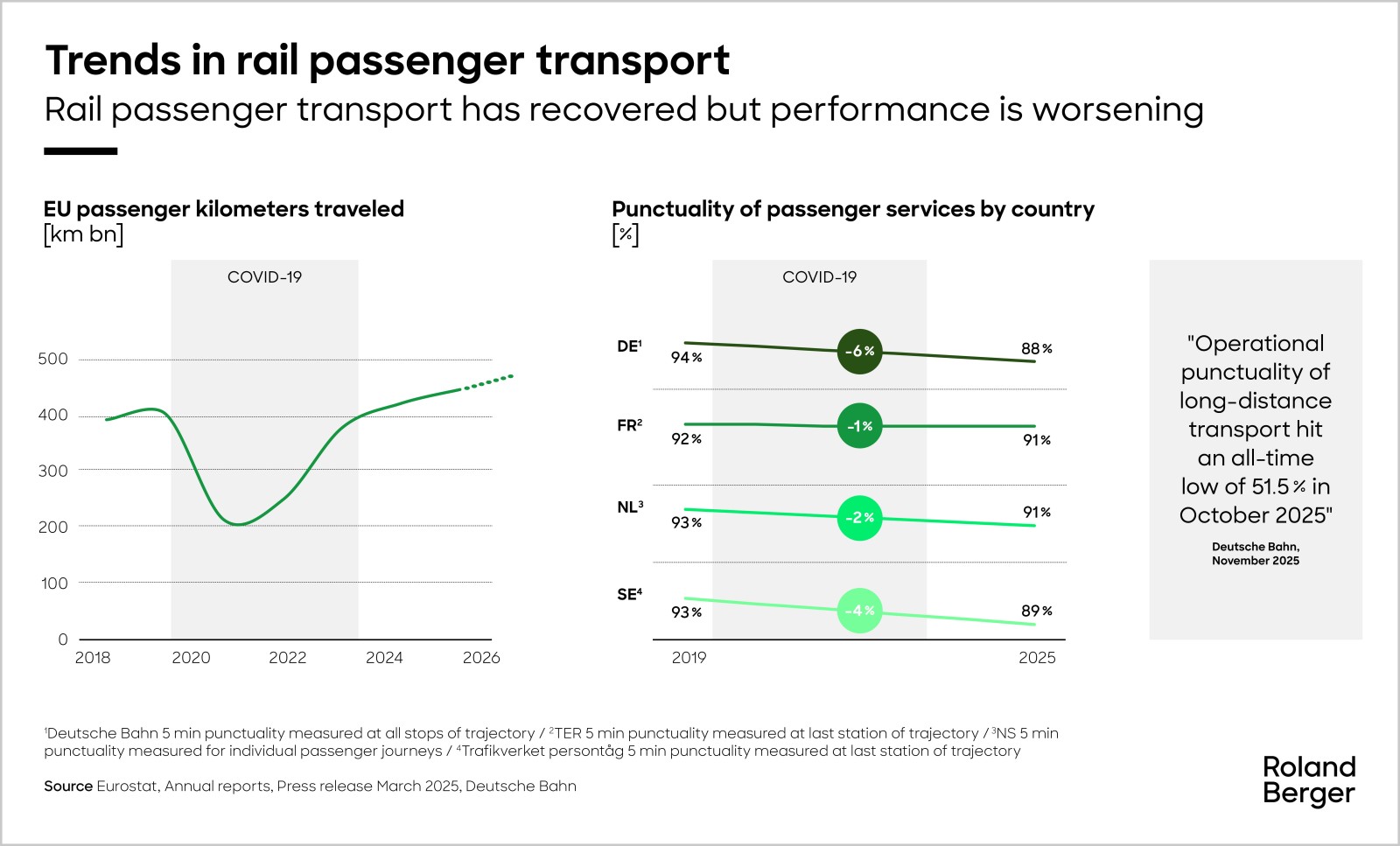
rarely deteriorates because of a single failure. Fleet maintenance, planned track shutdowns, and infrastructure disruptions reinforce one another, with fleet availability playing a central role. Too few service-ready trains weaken timetable resilience, make planned works harder to absorb, and can turn infrastructure incidents into cancellations. Low availability also affects shunting, stabling, planning, and crew deployment, making the entire system less flexible. While operators cannot control every infrastructure disruption or labor constraint, they can strongly influence how many
trains
are available and how quickly they return to service. The key question is therefore not simply why trains become unavailable, but why maintenance systems take so long to return them to service.
The challenge is not maintenance capacity. It is maintenance flow
The answer is not simply to add maintenance capacity. It is to improve maintenance flow: making work more predictable, returning trains faster, and using scarce capacity where it creates the most value.
Drawing on Roland Berger's work with European operators, this report identifies five recurring culprits behind extended train downtime:
- Workshop productivity: Mechanic shortages, absenteeism, skills gaps, and inflexible shifts reduce workshop capacity. Operators can unlock capacity through better planning, broader skills, and tighter shopfloor management.
- Fragmented triage: Limited end-to-end visibility leads to fragmented planning across depots and service sites. Better digital visibility and data-driven planning can improve prioritization and capacity allocation.
- Unreliable transport to maintenance sites: Moving defective trains for repair is often slow and complex. Mobile teams and timetable-integrated maintenance can reduce unnecessary transfers.
- Rising corrective demand: Unplanned maintenance demand is growing faster than the system can absorb. Better forecasting and capacity matching can help anticipate peaks and prevent overflow.
- Accumulated backlogs: Waiting, handovers, and fragmented ownership extend train downtime. Better pre-diagnosis, planning, and release discipline can significantly shorten turnaround times.
Addressing these issues can more than halve corrective turnaround times, cut preventive downtime by over two-thirds, and bring fleet unavailability down towards 15% – putting more trains into service while reducing cancellations and costly rolling-stock additions.
Strategic choices determine maintenance performance
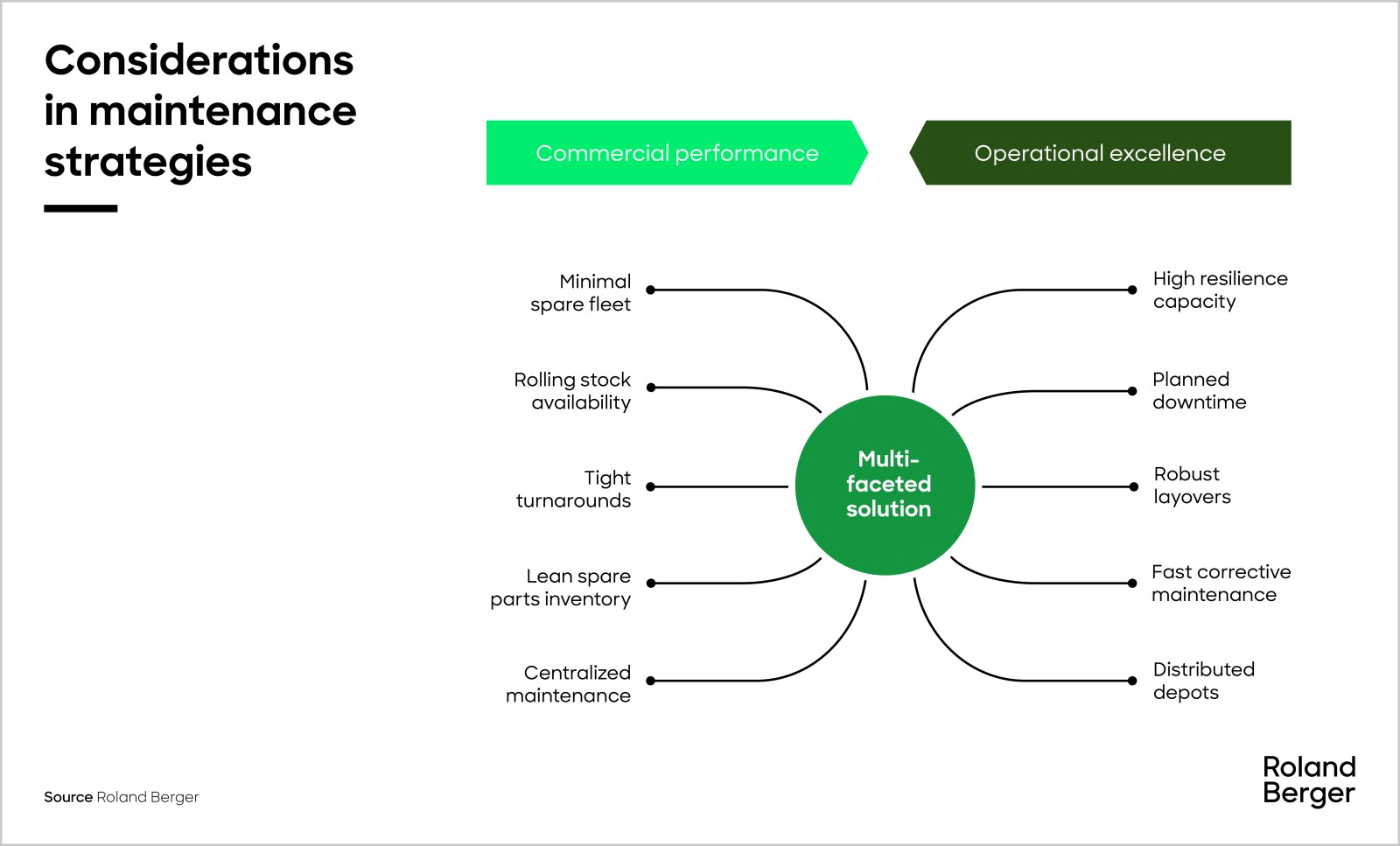
Improved maintenance is not about doing more work or accelerating every individual task. It is about deciding where the system must be strongest and aligning the operating model accordingly. Choices around reserves, depot footprint, planned downtime, and corrective response all involve trade-offs between utilization, resilience, scale, and complexity. Operators that make these choices explicitly can turn returning demand into reliable growth rather than mounting strain.

_background_w1280.jpg?v=1985908)


![{[downloads[language].preview]}](https://www.rolandberger.com/publications/publication_image/Roland-Berger_26-2127_Rail-maintenance-as-strategic-imperative_Cover_download_preview.jpg)


_person_320.png?v=1966195)