Publication
Opportunity Radar – Preparing procurement for the future

Opportunity Radar – Preparing procurement for the future

January 26, 2026

Short-, medium-, and long-term bets for CPOs

The Opportunity Radar builds on Roland Berger’s latest study “Procurement Endgame 2.0,” which explores how procurement could evolve over the next decade under four very different future scenarios shaped by technology and geopolitics. In this main study, procurement leaders are challenged to think beyond linear planning and prepare their organizations for a world that could range from seamlessly digital and stable to volatile with slow technological advancement, with each scenario demanding a distinct strategic response.

Unlocking procurement's next-move levers.

Once companies have clarified the likelihood of scenarios about the future, the question arises: What can companies do to thrive in these scenarios and shape their success in an uncertain world? In other words: What are the opportunities for businesses to navigate a fragmented and volatile environment while still striving for innovation, efficiency, and resilience? How can organizations adapt to a “better normal” that balances immediate challenges with long-term progress? Beyond the areas discussed below, new opportunities may emerge through advancements in technology, evolving business models, and shifts in global dynamics. Companies are advised to develop an effective radar for identifying these possibilities early on, while building the agility and strategic foresight needed to succeed in any scenario.

From scenarios to action

To move from “what might happen” to “what should we do now?”, Roland Berger has developed the Opportunity Radar as a dedicated deep dive on the Procurement Endgame. It translates the four future scenarios into concrete short-, medium-, and long-term opportunity spaces, helping procurement organizations identify no-regret moves and targeted bets that will pay off across different paths of technological progress and geopolitical stability.

Strategy

1. Short-term opportunities

Geopolitical warning radar

A tool to monitor global political developments that may impact supply chains, such as trade restrictions, conflicts, or sanctions. It helps procurement teams anticipate risks and proactively adapt strategies, ensuring supply chain resilience in volatile environments.

AI strategy

Companies should define a structured approach to leveraging artificial intelligence to optimize procurement processes. This includes automating routine tasks, enhancing decision-making through data-driven insights, improving supplier management, and identifying cost-saving opportunities. A strong AI strategy enables procurement teams to focus on strategic activities, increase efficiency, and adapt to dynamic market conditions. In doing so, procurement teams should look beyond popular buzzwords like GenAI and also embrace advances in areas such as data-driven optimization and algorithmic decision-making.

Risk-driven make-or-buy

Businesses evaluate whether to produce goods in-house or source them externally based on risk factors like supply chain stability, cost volatility, and resource availability. This ensures decisions align with minimizing risks and maintaining operational resilience.

2. Medium-term opportunities

Material substitution roadmap

A strategic plan to identify and transition to alternative materials when current resources become scarce, costly, or unsustainable. It helps ensure supply chain continuity, cost efficiency, and alignment with sustainability goals.

Innovation partnerships

Collaborating with suppliers, startups, or even competitors to co-develop new solutions, technologies, or processes. This approach drives value creation, enhances competitiveness, and fosters long-term strategic relationships.

Adaptability of supply base

Ability of suppliers to quickly adjust to changing demands, disruptions, or market conditions. A flexible and responsive supply base ensures continuity, resilience, and alignment with evolving business needs.

3. Long-term opportunities

Long-term options or access

Securing future rights or agreements to critical resources, even unconventional ones like space-based materials ("buy a piece of the moon"). This ensures resource availability, mitigates risks, and supports strategic planning for future needs.

Lobbying for materials

Engaging with governments, industry groups, or regulatory bodies to advocate for access to critical resources. This can help secure favorable trade policies, reduce restrictions, and ensure a stable supply of essential materials.

Path to mostly automated procurement

Strategic approach to integrating advanced technologies in all procurement processes and activities, such as AI and robotics, to automate repetitive tasks like order processing, supplier selection, and contract management. This allows procurement teams to focus on strategic activities, improve efficiency, and reduce errors.

Structure

1. Short-term opportunities

New digital colleague AI

Integrating AI tools as part of the procurement team’s organizational framework. These AI systems take on operational tasks, streamline workflows, and support decision-making, enabling a more efficient and strategically focused procurement structure.

Resource pools

Centralized groups of shared suppliers, materials, or capabilities that can be accessed across the organization. This structure enhances flexibility, efficiency, and resilience by optimizing the allocation of resources and reducing redundancies.

Agile methods

Flexible and iterative approaches to managing procurement processes. These methods emphasize adaptability, cross-functional collaboration, and rapid decision-making to respond effectively to changing market conditions and business needs.

2. Medium-term opportunities

Operational/strategic procurement

Dividing procurement into two distinct roles: Operational procurement focuses on day-to-day tasks like order management and contract drafting, while strategic procurement handles long-term planning, supplier relationships, and value creation. This separation improves efficiency and allows for a clearer focus on both operational execution and strategic goals.

Automated indirect purchasing

Use of technology to streamline and automate the procurement of indirect goods and services to a maximum. This reduces manual effort, increases efficiency, and allows procurement teams to focus on strategic priorities.

New organization models (not commodity based)

Procurement frameworks that move away from traditional commodity-focused structures. Instead, they are organized around products, value streams, business needs, or capabilities, enabling greater flexibility, innovation, and alignment with organizational goals.

3. Long-term opportunities

Scalable "firefighting" organizations

Designed to respond swiftly to unexpected challenges and disruptions in the supply chain. Emphasizing flexibility and adaptability, enabling teams to mobilize resources quickly, implement contingency plans, and maintain operational continuity, ultimately minimizing the impact of crises on procurement activities.

Virtualized procurement across the world

Leveraging digital platforms and technologies to facilitate global sourcing and collaboration among suppliers and stakeholders. Enabling organizations to access a broader range of suppliers, streamline communication, and conduct transactions remotely, enhancing efficiency and responsiveness while reducing geographical barriers in the procurement process.

Product owner is the new buyer

Shifts the focus to aligning purchasing decisions with product development and customer needs. Emphasizing collaboration between procurement and product teams, ensuring that sourcing strategies are directly tied to product outcomes, market demands, and innovation, ultimately driving value and responsiveness in the supply chain.

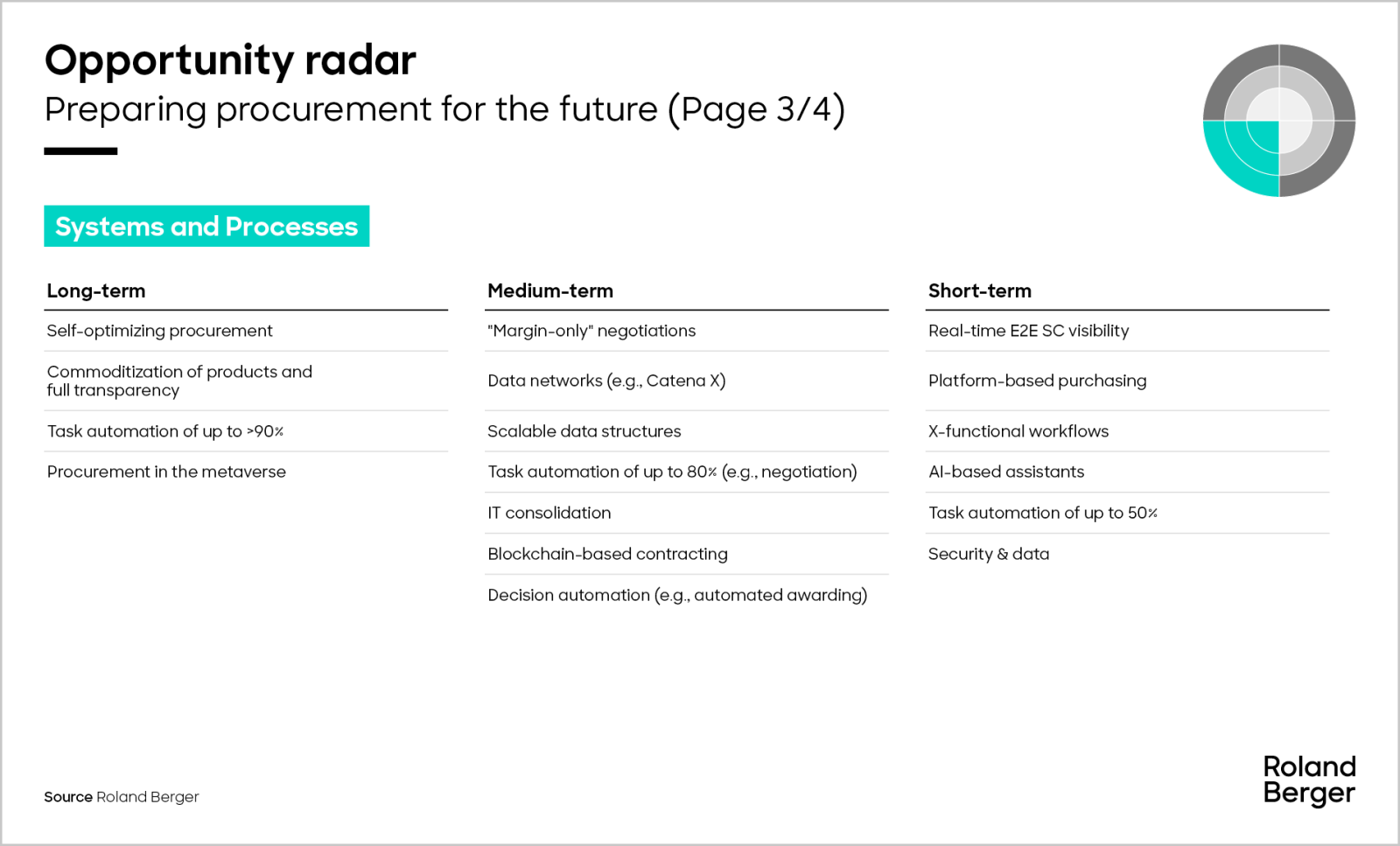
Systems and processes

1. Short-term opportunities

X-functional workflows

Collaboration across various departments to streamline processes and enhance efficiency. Facilitating the sharing of insights and resources, aligning objectives, and ensuring that procurement decisions are informed by a comprehensive understanding of organizational needs, ultimately leading to better outcomes.

Real-time E2E SC visibility

Enabling organizations to monitor and track the flow of goods and information through integrated digital tools and technologies, such as IoT sensors, data analytics platforms, and supply chain management software.

Task automation of up to 50%

Streamlining repetitive and time-consuming processes, such as order processing, invoice management, and data entry. Allowing teams to focus on strategic activities, reducing the risk of human error, and accelerating overall procurement cycles, leading to cost savings and improved productivity.

2. Medium-term opportunities

“Margin-only” negotiations

Focus solely on the profit margins of suppliers, prioritizing cost reductions while potentially overlooking other factors such as quality, service, and long-term relationships.

Blockchain-based contracting

Utilizes decentralized and secure technology to create transparent, tamper-proof agreements between parties. Enhancing trust, reducing the risk of fraud, and streamlining contract execution and compliance, ultimately improving efficiency and accountability in the procurement process.

Decision automation (eg., automated awarding)

Leverages algorithms and data analytics to streamline the procurement decision-making process. Reducing manual intervention, accelerating the awarding of contracts, and enhancing objectivity by ensuring that decisions are based on predefined criteria and performance metrics, ultimately improving efficiency and consistency in procurement outcomes.

3. Long-term opportunities

Procurement in the metaverse

Leverages virtual and augmented reality environments to enhance collaboration, visualization, and interaction among stakeholders. This innovative approach allows for immersive supplier presentations, virtual negotiations, and real-time simulations, enabling more informed decision-making and fostering stronger relationships within the procurement process.

Commoditization of products & full transparency

Focus on standardizing goods and services while providing clear visibility into pricing, sourcing, and supply chain practices. Enabling organizations to make informed purchasing decisions, encouraging competition among suppliers, and fostering trust by ensuring that all stakeholders have access to relevant information, ultimately enhancing value and efficiency.

Self-optimizing procurement

Leverages data analytics and automation to autonomously refine procurement strategies and processes. By continuously assessing performance metrics and market conditions, this approach enables organizations to adapt quickly, enhance supplier relationships, and maximize value, resulting in a more agile and efficient procurement function.

People

1. Short-term opportunities

Early integration of talents/specialists

Proactively engaging and integrating skilled professionals into the procurement function at an early stage. This ensures access to specialized expertise, fosters long-term commitment, and strengthens the organization’s ability to address complex procurement challenges.

Develop/hire future skills

Identifying and acquiring the competencies needed to adapt to evolving market demands enhances organizational capabilities. This approach ensures the team is equipped with the necessary expertise to drive innovation and improve overall effectiveness.

AI and digital literacy

Enhancing understanding and proficiency in AI and digital tools involves developing skills necessary to utilize technology effectively, enabling professionals to adapt to technological advancements and improve operational capabilities.

2. Medium-term opportunities

Leveraging “cognitive lens”

Applying diverse perspectives and analytical frameworks to enhance the understanding of market dynamics and supplier relationships, leading to more effective decision-making and innovative solutions.

Geopolitical & risk awareness training

Equips procurement professionals with the knowledge to assess global events and geopolitical trends, enhancing their ability to identify potential risks and opportunities in the supply chain. It fosters informed decision-making and strategic planning to mitigate risks associated with political instability, trade policies, and economic shifts.

Trade & compliance expertise

Ensures that procurement professionals understand and adhere to international trade regulations, customs requirements, and compliance standards. This knowledge helps mitigate risks related to tariffs, trade agreements, and legal obligations, facilitating smoother cross-border transactions and maintaining supply chain integrity.

3. Long-term opportunities

Upskill teams in crisis management

Equips individuals with the tools and strategies to effectively respond to disruptions and unforeseen challenges. This training enhances the ability to develop contingency plans, manage supplier relationships during crises, and ensure continuity of supply, ultimately safeguarding the organization’s operations.

Develop specialist know-how for new commodities

Acquiring in-depth knowledge and expertise related to emerging materials and products. This focus enables teams to make informed sourcing decisions, optimize supply chain strategies, and enhance product quality while effectively managing costs and risks associated with new market entrants.

Soft skills as a differentiator

Emphasizes the importance of communication, negotiation, and interpersonal abilities in achieving successful outcomes. These skills enhance collaboration with suppliers and stakeholders, improve relationship management, and facilitate effective problem-solving, ultimately driving better procurement performance.

Why the Opportunity Radar matters

The Opportunity Radar gives procurement leaders a structured view on where to invest next – from data-driven automation and new operating models to resilient supply setups and future-proof skills. It is designed as a practical navigation tool that complements the core study: Once the likely and preferred futures are understood, the Radar guides companies to the most relevant levers to secure resilience, efficiency, and innovation in any scenario.

Request the full PDF here

Register now to access the full insights of our study "Procurement Endgame 2.0. Furthermore, you get regular news and updates directly in your inbox.

Further readings
Load More